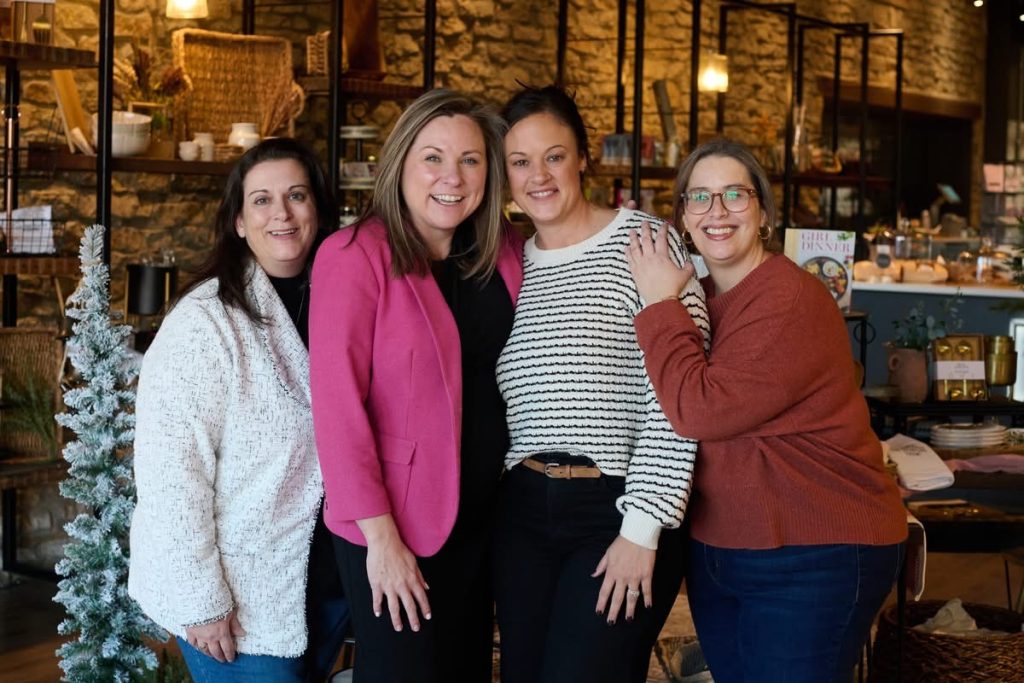
Letter To The Editor: Christa Horn
One Consistent Adult Can Change Everything: Why Our Community Needs More CASA Volunteers
By Christa Horn
The little boy sat in a plastic chair that was too big for him, his feet dangling inches above the floor. He was three years old and had already lived in four different homes. When the judge asked if anyone had anything to add before the hearing ended, one person spoke up.
His CASA volunteer.
She didn’t use big legal words. She talked about how he finally sleeps through the night now. How he runs to the door when he sees his foster dad’s truck. How he is learning his colors. How he still hides food in his pockets because he once didn’t know when his next meal would come.
That moment didn’t make headlines. But it changed the direction of that child’s life.
Court Appointed Special Advocates — CASA volunteers — are everyday people who step into extraordinary circumstances. They are trained community members appointed by judges to advocate for children who have been abused or neglected. In the middle of court hearings, case plans, placements, and uncertainty, the CASA volunteer becomes the one constant adult whose only job is to ask: What is truly best for this child?
In our community, too many children enter the child welfare system each year through no fault of their own. They lose their homes, their schools, sometimes their siblings, and often their sense of safety — all at once.
A CASA volunteer can’t fix everything. But they can do something powerful: show up.
They attend court hearings. They visit the child regularly. They talk with teachers, therapists, foster parents, and biological families. They make sure the child’s voice is heard in a system that can feel overwhelming and impersonal.
And the impact is real.
Children with CASA volunteers are more likely to receive needed services, succeed in school, and find safe, permanent homes sooner. But beyond the statistics, there is the human impact — a child who finally believes someone is paying attention.
I think of a teenage girl who once told her volunteer, “You’re the only adult who didn’t give up on me.”
I think of a sibling group who asked if their CASA could come to their adoption day because “she’s part of our family now.”
I think of a toddler who learned to trust again because one person kept their promise to come back.
Right now, there are more children in need of CASA volunteers than there are volunteers available. That means some children walk into courtrooms with no one whose sole focus is their well-being.
We can do better.
You don’t need to be a lawyer. You don’t need a social work degree. You just need compassion, reliability, and the willingness to stand beside a child when their world feels unstable.
If you’ve ever wondered how to make a meaningful difference — not in theory, but in one real child’s life — this is it.
One consistent adult. One steady voice. One advocate.
Sometimes, that is enough to change everything.
To learn more about becoming a CASA volunteer, contact Program Director Christa Horn at 620-215-2769 or email [email protected] of Form
Nevada Welcomes New Child and Adolescent Psychiatrist
NRMC Welcomes Child Psychiatrist
Nevada Regional Medical Center (NRMC) is pleased to welcome Dr. Janell Tabora to our team of specialty physicians. Dr. Tabora is a Board Certified Psychiatrist, specially trained in Child and Adolescent Psychiatry.
Focusing on a holistic approach to treatment, Dr. Tabora enjoys listening to a patient’s life journey to select the right path toward mental health and wellness. Some common conditions that Dr. Tabora can evaluate are the following:
- ADHD
- Anxiety disorders
- Attachment disorders
- Autism
- Bipolar disorder
- Depression
- Disruptive Mood Dysregulation Disorder
- Early Onset Schizophrenia
- Eating disorders
- Obsessive-Compulsive Disorder (OCD)
- Oppositional defiant disorder
- Panic disorder
- Personality disorders
- Post-traumatic stress disorder
Dr. Tabora is accepting new patients, ages 5 to 25, via convenient telehealth visits. When on-site, her office is located within the Primary Care Clinic. Appointments can be made by calling 417-448-3600.

From the Bleachers-747 by Dr. Jack Welch
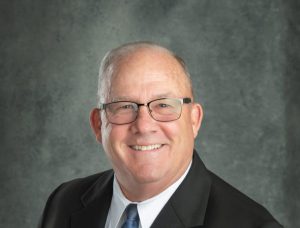
FROM THE BLEACHERS-747
BY DR. JACK WELCH
When College Football Became Professional
The national title game between Miami and Indiana will be remembered not just for the final score, but for what it represents. Indiana, a program long respected for basketball stands as the national champion for the first time in history. This would have been unthinkable just a few years ago. In today’s college football landscape, it makes perfect sense.
Indiana didn’t stumble into a national championship. They built it the modern way, through the transfer portal and NIL. This was not a slow build; multi-year plan defined by redshirts and recruiting classes growing together. This was a rapid transformation fueled by money, movement, and immediate results.
College football has abandoned tradition, it has become professional sports. The programs willing to change and invest accordingly have a chance to win. That is what Indiana did.
College football is no longer amateur athletics. Indiana’s football roster reportedly carried roughly $21.1 million in NIL spending, with marquee players like quarterback Fernando Mendoza earning more than $2 million. When you factor in total football operations expenses surpassing $61 million, the scale begins to resemble professional franchises more than traditional college programs.
Miami was in the same boat. Both teams took the field with rosters assembled less like college depth charts and more like professional free-agent lists. These weren’t freshmen growing into men within a system. These were proven players, recruited nationally and internationally, placed into schemes designed to win now.
History will judge today’s college coaches differently than those of the past. Yesterday’s great coaches were measured by how they built programs, developed players, and mastered the game itself. Today’s coaches are increasingly evaluated by how well they build rosters, manage NIL, navigate the portal, and assemble talent. The question for the future won’t be whether one era was better than the other, but whether coaching greatness can still be defined by teaching and leadership in a game now driven by acquisition and economics.
Indiana’s national championship is not an anomaly. It’s a blueprint. Spend wisely. Win the portal and raise the necessary funding. If done correctly, history can be rewritten in a single offseason.
College football didn’t die, it evolved into the professional ranks. Make no mistake, what we watched between Miami and Indiana wasn’t amateur athletics. It was professional football wearing college uniforms.
Thought for the week, “Change is inevitable. Those who adapt thrive, those who resist get left behind.” Jack Welch
Dr. Jack Welch serves as President of Fort Scott Community College. With a career spanning professional sports, public education, and rural community development, he brings a servant-leader mindset and a passion for building trust-driven cultures that empower people to thrive in the classroom, on the field, and in life. He is also the author of Foundations of Coaching: The Total Coaching Manual.
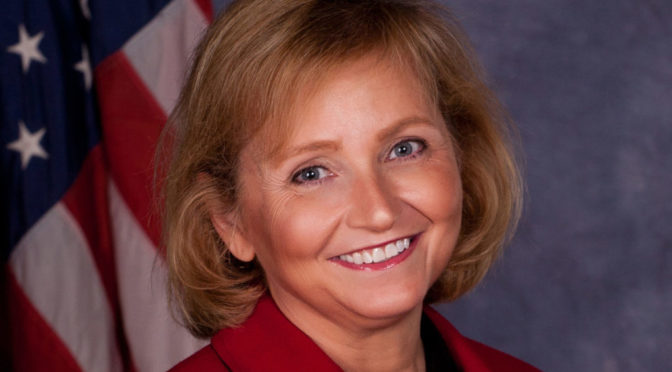
Legislative Update by State Senator Caryn Tyson
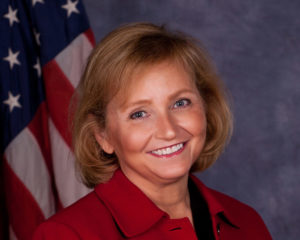
January 23, 2026
Property Tax Relief – The CAP Assessment Protection (CAP) Amendment (SCR 1616) has cleared the Senate Tax Committee, moving us closer to protecting Kansans from runaway property tax increases. Currently, there’s no cap on how much a property’s assessed value can rise. It has been reported in the past five years that Kansas saw a 45-52% surge in residential valuations statewide, with an average 26-32% jump in just the last three years. Linn County led the state with a 66% increase. (Thankfully the County has remained neutral since 2021, but other taxing authorities like the schools took all the increase). The CAP Amendment would limit annual assessment growth to 3% or less, using 2022 as the baseline and the limit stays in place even after a sale of the property. County appraisals remain unchanged; the taxable value becomes the lower of the unrestricted assessment or the capped value. By capping the biggest driver of your tax bill—the assessed value—the amendment shields homeowners from inflation-driven tax spikes and addresses the problem of taxes on unrealized gains. It’s a common-sense safeguard to keep Kansans in their homes.
Kansas City Chiefs Stadium Deal was discussed in recent House and Senate committee hearings because legislation creating a stadium authority must pass for the project to advance. Hall talk suggests over 100 lobbyists are pushing it. Committee proponents highlighted the revenue the project would generate for the state, but a Wyandotte County representative commented that similar promises for past STAR bond projects fell short. It’s a public-private partnership with approximately 60% public funding (mainly via STAR bonds – sales taxes in the affected area would be used to pay off the bonds). These deals often let private businesses tap taxpayer dollars for their projects.
Committee work is the focus at the beginning of any session. This is the stage where a bill, such as the CAP Amendment, undergoes its most rigorous scrutiny before ever reaching the floor of a chamber for a full vote. Committees are where legislators review language of a bill and hear testimony from conferees. During this phase a bill can be amended, refined, or even completely rewritten when the committee “works” a bill. Because committees act as gatekeepers, a bill’s passage out of a committee can be a significant milestone; it signals that the proposal has enough merit and support to be considered by the entire legislative body of the Senate or the House, whichever chamber the bill is currently located.
It is an honor and a privilege to serve as your 12th District State Senator.
Caryn Tyson
Kansas Senate, District 12
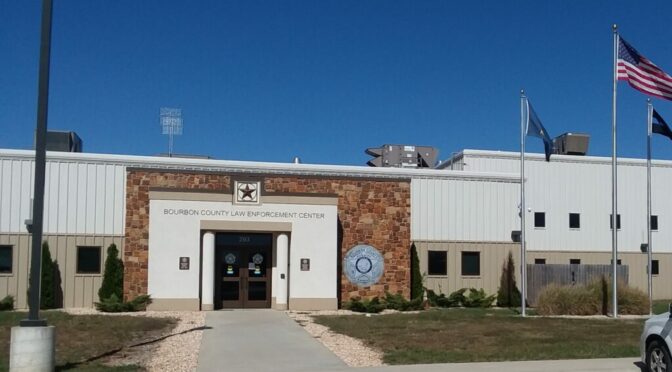
The Bourbon County Sheriff’s Office Daily Reports Jan. 26
I Was Born to Do This by Carolyn Tucker

Keys to the Kingdom
By Carolyn Tucker
I was Born to Do This
I had a 14-inch-diameter corner post that had been useful in years past, but was no longer needed. It was nothing more than an annoyance to mow around. Naturally, the responsibility of removing the post fell to my son. I watched Aaron on the tractor as he expertly operated the tractor’s front-end loader and pulled up the huge corner post. I was impressed with how easy Aaron made this massive chore look – it was like pulling a toothpick out of an ant hill! I walked over and complimented him on a job well done! He shot me a subtle smile and matter-of-factly said, “I was born to do this.” I wasn’t about to argue with him because the proof was in the pudding.
His statement, “I was born to do this,” reminded me of a song that the Happy Goodman Family made popular when I was in my teens. “Born to Serve the Lord” has been recorded by various artists, but nobody sings it like Vestal Goodman. The straightforward lyrics, penned by Bud Chambers in 1959, are as follows:
“From the dust of the earth my God created man. His breath made man a living soul. And God so loved the world He gave His only Son, and that is why I love Him so. My hands were made to help my neighbor. My eyes were made to read God’s Word. My feet were made to walk in His footsteps. My body is the temple of the Lord. I was made in His likeness, created in His image. For I was born to serve the Lord. And I can’t deny Him, I’ll always walk beside Him for I was born to serve the Lord.” Believers can be like Apostle Paul who had one passion, and that was to serve Christ by serving others.
Sometimes, when a subject of interest is over my head, I’ll ask an “expert” to explain it to me as if I’m in third grade. I like to challenge the individual to put it in the simplest terms so I can understand the answer as clearly as possible. Often times, Christ followers make following Jesus more complicated by thinking they’re supposed to be doing something earth-shattering for the kingdom of God. But Jesus very simply explained how we’re supposed to live as believers.
Jesus told His disciples, “You will lead by a completely different model. The greatest one among you will live as the one who is called to serve others, because the greatest honor and authority is reserved for the one with the heart of a servant. For even the Son of Man did not come expecting to be served by everyone, but to serve everyone, and to give His life in exchange for the salvation of many” (Matthew 20:26-28 TPT). In our dog-eat-dog world these scriptures seem ridiculous to nonbelievers. But when we are good and helpful to others, we’re actually loving and serving God.
Believers were born to serve the Lord so, instead of being afraid that God will call us to go to Africa as missionaries, it’s more likely He’s calling us to get off the couch and do good to the people we rub shoulders with and also strangers. Jesus plainly states that, “I was hungry and you gave Me food; I was thirsty and you gave Me drink; I was a stranger and you took Me in; I was naked and you clothed Me; I was sick and you visited Me; I was in prison and you came to Me. …Assuredly, I say to you, inasmuch as you did it to one of the least of these My brethren, you did it to Me” (Matthew 25:35-36,40 NKJV).
The Key: Let’s jump in with both feet and serve the Lord! We were born to do this.
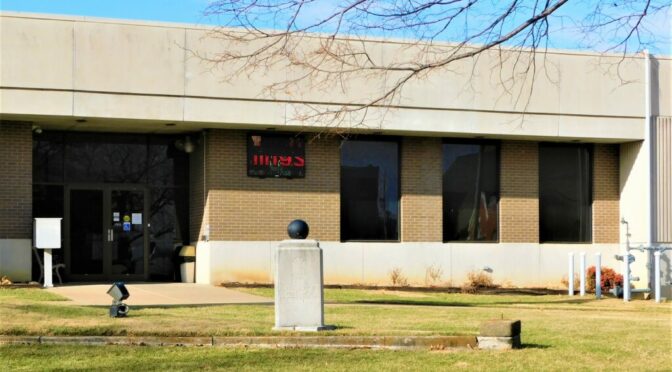
Bourbon County Commission Jan. 26 Meeting Agenda Summary
Bourbon County Commission Meeting Agenda: January 26, 2026
Date: January 26, 2026 Time: 5:30 PM Location: Bourbon County Commission
Meeting Agenda Outline
01.26.26 Agenda
-
Call Meeting to Order
-
Roll Call
-
Pledge of Allegiance
-
Prayer
-
Introductions
-
Approval of Agenda
-
Public Hearing (5:35 PM) – Vacation of Road
-
Resolution 08-26
-
-
Minutes
-
Commission Minutes 01.12.26
-
Commission Minutes 01.15.26
-
-
Approval of Consent Agenda
-
Accounts Payable 1.23.26 ($1,123,999.50) & 1.22.26 ($98,394.22)
-
Tax Corrections
-
-
Citizen Comments
-
Executive Session
-
K.S.A. 75-4319 (b)(1) – Motley
-
-
Department Updates
-
Payroll update – Milburn-Kee
-
Courthouse Space – Lora Holdridge
-
Inventory – County Clerk
-
Commission Minutes – County Clerk
-
County Clerk Procedures
-
2025 End of Year Financials – County Clerk
-
-
Old Business
-
Sewer update – Milburn-Kee
-
Handbook Follow-ups
-
-
New Business
-
Strategic Planning – Motley
-
Commission Calendar – Motley
-
-
Create Agenda for Next Meeting
-
Commission Comments
-
Adjournment
(Agenda source: Page 1)
Detailed Information Packet Summary
Resolution 08-26: Road Vacation (Page 3)
The commission is considering the vacation of a 62′ wide by 125′ section of 267th Street located in Woodard’s addition to Garland, Kansas. This resolution follows K.S.A. 68-102, which allows for the vacation of roads consisting of less than two consecutive miles. If approved, the County Clerk is instructed to publish the resolution for two consecutive weeks in the Fort Scott Tribune.
Meeting Minutes Summary: January 12, 2026 (Pages 4–8)
-
Reorganization: The board appointed Samuel Tran as Chairman and David Beerbower as Vice Chairman.
-
Board & Liaison Assignments: Commissioners finalized their roles on various boards (e.g., Fair Board, SEK Mental Health) and department liaison duties. Greg Motley was assigned Finance, while Samuel Tran took Public Works.
-
Public Safety: Mark McCoy discussed the critical need for a trained Emergency Manager and the current status of the Community Emergency Response Team (CERT).
-
Software Upgrade: The commission approved the purchase of “Hey Gov” software for approximately $1,100 to manage meeting agendas and minutes more efficiently.
-
Contract Approval: A contract with Schwab Eaton for annual bridge inspections was approved for a total of $43,910.
Special Meeting Minutes Summary: January 15, 2026 (Pages 9–16)
This meeting focused almost exclusively on a methodical review of the 65-page County Employee Handbook. Key updates included:
-
Elected Officials: Added language clarifying that while the handbook establishes general policies, independent elected officials maintain statutory discretion over certain operational matters in their offices.
-
Probationary Period: After debate, the commission settled on a 90-day probationary period for new employees.
-
Sick Leave Payout: A new policy was established allowing a 25% payout of sick leave for employees with at least 10 years of service.
-
Inclement Weather: Essential personnel will now receive time-and-a-half pay during courthouse closures, while non-essential staff receive regular pay.
-
Law Enforcement: Specific biweekly work schedules (86 hours) and overtime triggers were added to accommodate the Sheriff’s department.
Financials and Accounts Payable (Pages 17–81)
The packet includes extensive line-item documentation for accounts payable.
-
January 23rd Totals: $1,123,999.50. This includes significant payroll clearing accounts for various departments including the Appraiser’s office and Ambulance services.
-
January 22nd Totals: $98,394.22. Notable expenses include $19,589.36 for District Court (including courtroom hearing devices and software) and $10,443.72 for the County Treasurer’s department.
County Commission Calendar (Page 82)
The packet concludes with a 2026 statutory calendar outlining critical deadlines for tax foreclosures, budget certifications (due to the State by September 20th), and strategic planning sessions scheduled for February and March.


Obituary of Rose Mary Bailey
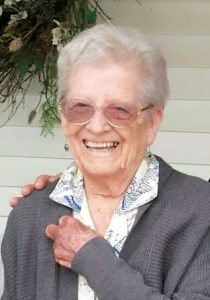
Rose Mary Bailey, 95, of Fort Scott, passed away Wednesday, January 8, 2026, at the Credo Senior Living Center in Fort Scott. She was born March 6, 1930, in Eve, Missouri, the daughter of Joseph Ray Clyburn and Edna Pauline (Weber) Clyburn. She married Arthur Leon Bailey December 18, 1949, in Garland, Kansas, and he preceded her in death on May 29, 2009.
Rose was active in Shriners Mobile Noble and Eastern Star, achieving her 75-year pin in the Topaz Chapter O.E.S. She was secretary of the bowling league, and also enjoyed playing cards.
Survivors include her son, Larry Bailey, of Fort Scott; her daughter Debra Holt and husband Randy, also of Fort Scott; six grandchildren, Justin Bailey, Jeremy Bailey, Ryan Bailey, Clint Holt, Ross Holt, and Haley Fry; twelve great-grandchildren, Dakota, Trevor, and Brayden Bailey, Madison Brothers, Shelby Bailey, Myla and Dani Bailey, Julian and Mara Fry, Rhys Holt, Knox and Eastyn Holt; two great-great-grandchildren, Kinzer and Colyns Brothers. In addition to her husband Arthur, she was also preceded in death by her parents, a sister, Margie Martin, and three brothers, Earl Clyburn, Joe Clyburn, and Donald “Bill” Clyburn.
Graveside services have been postponed due to weather. Memorial contributions may be made to Care To Share or Shriner’s Hospital and may be left in the care of the Konantz-Cheney Funeral Home, 15 W. Wall Street, P.O. Box 309, Fort Scott, KS, 66701. Friends and family may sign the online guest book and share memories at www.konantzcheney.com.

Death Notice of Jason Thomas Buffington

DEATH NOTICE
Jason Thomas Buffington, age 53, resident of Fort Scott, KS passed away Wednesday, January 21, 2026, at the Olathe Medical Center, Olathe, KS. There was cremation. Memorial services will be announced at a later date by the Cheney Witt Chapel.

Sharing the Road in the Winter by Lonnie Mengarelli
Sharing the Road in the Winter
By Lonnie Mengarelli
Fort Scott, Kan. — As winter hay feeding and field work is ramping up in the Southwind District, I was recently reminded how dangerous our roads can be for farmers. Tractors, sprayers, and tillage equipment move steadily from pasture to pasture and field to field, often at a crawl, while motorists impatiently line up behind them. It’s a scene immortalized in the Craig Morgan hit “International Harvester,” but in real life, the stakes are much higher than a country song lyric.
I reached out to my academic advisor at Kanas State to visit with him about farm equipment on public roads.
With increased interaction between farm machinery and passenger vehicles comes an increased risk of crashes and injuries, said Ed Brokesh, assistant professor in Kansas State University’s Department of Agricultural and Biological Engineering.
“When there is a collision with machinery on main roads, most of the time somebody is traveling at a higher rate of speed that greatly contrasts that piece of equipment,” Brokesh said. “That leads to rear-end or side-swipe incidents, and 39% of the time it involves a tractor.”
Wrongful passing and left-hand turns are also common causes of serious incidents. The danger, Brokesh explained, stems from the extreme size and weight difference between agricultural equipment and automobiles.
“The smaller party is the one that is going to take the brunt of the damage,” he said. “When there is harm — a fatality or an injury — it is usually to those in the pickup, car or utility vehicle.”
These realities place added responsibility on producers to ensure experienced operators are behind the wheel when equipment is on public roads. According to Brokesh, younger or less-skilled drivers are disproportionately involved in roading accidents.
“Those who are under 16 or are newly hired are more likely to get into trouble,” he said.
To reduce the likelihood of incidents, Brokesh recommends producers set minimum age requirements for employees who operate machinery on public roads.
“If someone is unfamiliar with a piece of equipment, let’s just not send them out on the road,” he said. “At a minimum, operators should have a driver’s license or learner’s permit.”
Training is equally important. Simply pointing to a tractor and telling a new hire to “go figure it out” is a recipe for disaster, Brokesh said.
“Take some time with them and explain the equipment, how it handles, and how it should be operated both in the field and on the road,” he said.
Other safety practices producers should prioritize include driving defensively, monitoring traffic in rear-view mirrors, properly marking equipment, cleaning reflectors, and replacing faulty lighting systems.
Still, Brokesh emphasized that roadway safety is a shared responsibility.
“This is a two-way street,” he said. “As an industry, we need to advocate for more training and awareness involving agricultural equipment on roads. Educating all motorists on how to safely share the road with farm machinery will lower the risk of accidents for everyone.”
For motorists and farmers alike, patience, visibility and awareness can mean the difference between a safe harvest season and a tragic one. Remember Farmers have the same right to use public roads as other vehicles. Share the road.
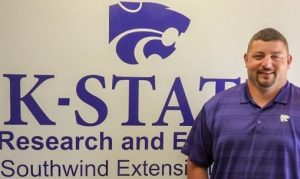
Lonnie Mengarelli is a K-State Research and Extension Agriculture agent assigned to Southwind District. He may be reached at [email protected] or 620-223-3720

HBCAT Awarded Pathways to Healthy Kansas $100,000 Grant

Jody Love, HBCAT & Rural Community Partners
Aura Brillhart, HBCAT & Rural Community Partners
Cristy Garrison Mitchell, Blue Cross and Blue Shield of Kansas
Darrell Pulliam, Rural Community Partners
Taylor Bailey, Fort Scott Community College
Malinda Bailey, Southeast Kansas Mental Health Center
Jennifer Epting, City of Mapleton
Lindsay Madison, Fort Scott Area Chamber of Commerce (HBCAT Board Member)
Healthy Bourbon County Action Team Announces Continued Pathways to a Healthy Kansas Investment and $75,000 in Implementation Awards
FORT SCOTT, KS, January 22, 2026 — In January 2025, the Healthy Bourbon County Action Team (HBCAT) was awarded continued investment through Phase 3 of the Pathways to a Healthy Kansas initiative, funded by Blue Cross and Blue Shield of Kansas®. HBCAT received a two-year, $100,000 Pathways Coordination Grant to support coalition leadership, planning, and implementation across multiple community health strategies in Bourbon County.
As part of the Phase 3 coordination process, HBCAT worked closely with its Local Health Equity Action Teams (LHEATs) to identify priority needs and recommend Pathways packages grounded in local data, lived experience, and community input. Through this community-driven process, five Pathways packages were selected for development.
Two of those packages advanced through required policy development and were subsequently awarded noncompetitive Pathways implementation grants totaling $75,000.
The Incubator Kitchen Package, awarded $50,000, is being implemented in partnership with The Kitchen Collective + Collaborative. Funding supports expanded access to licensed commercial kitchen space for food entrepreneurs, including a fee waiver program for income-eligible participants, equipment upgrades, outreach, and nutrition-focused programming. This work helps remove financial and structural barriers for individuals launching or growing food-based businesses while increasing access to healthy, locally produced foods in Bourbon County.
“This work is about building systems that work for real people,” said Rachel French, Co-Owner and Operating Partner of The Kitchen Collective + Collaborative. “Through our partnership with HBCAT and Pathways, we’re creating an ecosystem where food entrepreneurs can thrive, barriers are reduced, and community health and economic stability grow together.”

The Social Entrepreneurship Supports Package, awarded $25,000 and led by HBCAT, supports the expansion and formalization of HBCAT’s regional mentorship and Catalyst entrepreneurship programs. Funding is being used for paid local mentor stipends, participant incentives, program coordination, outreach, and technical assistance. These supports are designed to strengthen businesses whose work directly contributes to community health, including food access, behavioral health, social connectedness, and economic stability. This work is also supported through HBCAT’s Kansas Food Action Network efforts, funded by the Kansas Health Foundation, and implemented in partnership with the University of Kansas School of Business.
“For ten years, our work has focused on policy, systems, and environmental change because that is how you create lasting impact,” said Jody Love, President and CEO of HBCAT. “When communities design systems that make the healthy choice the default, individual behavior change becomes easier, more equitable, and more sustainable. These Pathways investments reflect that philosophy and the trust built through a decade of community-led work.”
In addition to these awarded packages, HBCAT continues active Pathways coordination and development on three additional initiatives. The Mapleton Multi-Modal Package focuses on improving walkability, safety, and access to physical activity in partnership with the City of Mapleton and Friends of Mapleton. The Health-Related Social Needs Package is being developed with Freeman Health System to address non-medical drivers of health such as transportation, food access, and care coordination. The Farm to School Package, in collaboration with USD 234, focuses on strengthening local food systems, agricultural education, and student access to fresh, locally grown foods.
Community members, small business owners, entrepreneurs, and local organizations interested in technical assistance, mentorship, and community support can learn more and sign up for services through HBCAT’s regional partner, Rural Community Partners, at ruralcommunitypartners.org.
Funding for these initiatives is being provided by Blue Cross and Blue Shield of Kansas® as part of Bourbon County’s Pathways to a Healthy Kansas grant.
About Pathways to a Healthy Kansas
Pathways to a Healthy Kansas is the largest community grant program ever funded by Blue Cross and Blue Shield of Kansas. The Pathways program provides community coalitions with the tools and resources needed to remove barriers and engage their communities in ways that improve active living, healthy eating, behavioral health, and commercial tobacco prevention. The grant funding for each community includes a coordination grant along with the opportunity to apply for noncompetitive implementation and achievement grants. For more information, visit bcbsks.com/pathways.
About Blue Cross and Blue Shield of Kansas
For more than 80 years, Blue Cross and Blue Shield of Kansas has built a reputation of trust with its members and contracting providers by providing outstanding customer service while quickly and accurately processing claims, fairly administering benefit plans and contracts, offering programs, services, and tools to help members improve or maintain their health, and operating under the highest ethical standards while being good stewards of premium dollars. Blue Cross and Blue Shield of Kansas is an independent licensee of the Blue Cross Blue Shield Association and is the state’s largest insurer, serving all Kansas counties except Johnson and Wyandotte. For more information, visit bcbsks.com.
Licensee Disclosure
Blue Cross and Blue Shield of Kansas is an independent licensee of the Blue Cross Blue Shield Association. BLUE CROSS®, BLUE SHIELD®, and the Cross and Shield Symbols are registered service marks of the Blue Cross Blue Shield Association, an association of independent Blue Cross and Blue Shield Plans. The Healthy Bourbon County Action Team is leading the Pathways initiative in Bourbon County and is not affiliated with Blue Cross and Blue Shield of Kansas.