Kansas Online Drivers Testing Exam Launched April 1
Kansas Department of Revenue Announces a Web-Based Written Driver’s License Exam Option
TOPEKA – On Thursday, April 1, 2021, the Kansas Department of Revenue’s Division of Vehicles launched KnowTo Drive Online, a web-based version of its driver’s testing exam, powered by Intellectual Technology, Inc. (ITI). The introduction of this testing service adds to the Department’s expanding online services it provides. With KnowTo Drive Online, Kansans have the opportunity to take their written test from the comfort of their home.
“The availability of an online written test has been on our list of customer service enhancements and we are happy to finally announce its arrival,” David Harper, Director of the Division of Vehicles, said. “This testing portal, coupled with our other online services, should greatly decrease the number of customers in the office and considerably reduce the duration of customer visits.”
Kansas is the newest state to offer testing through KnowTo Drive Online. ITI also hosts self-service kiosks in 13 states, which help motor vehicle agencies extend services to grocery stores and other places of convenience.
The KnowTo Drive Online testing portal is available 24/7 on the Division of Vehicles’ website at http://ksrevenue.org/vehicles. Fees are $10 for the first test and $8.50 for any re-test.
If preferred, the Kansas Driver’s License written version of the test will still be available to be taken in the office.
Kansas New Bills Signed Into Law
Governor Laura Kelly Signs Bill Requiring In-Person Learning Option, Other Legislation
~Governor Kelly signs school bill after all Kansas schools already offer in-person attendance options~
TOPEKA – Serving as a testament to her administration’s efforts to get Kansans back to school, back to work, and back to normal, Governor Laura Kelly signed SB63, and all unified school districts in Kansas will now provide a full-time, in-person attendance option for all students enrolled in kindergarten through grade 12.
“Since the pandemic began, my administration has prioritized keeping Kansans healthy, keeping businesses open, and getting kids back into classrooms,” Governor Kelly said. “Among other efforts, we earmarked vaccines specifically for school staff – and all teachers and staff members who wanted a vaccine have now received at least their first dose.
“As we maintain quick and efficient vaccine distribution, COVID-19 case numbers in Kansas continue to drop – and our schools have taken steps to safely and responsibly re-introduce in-person learning. Currently, every school in Kansas is already offering an in-person attendance option for students.”
Governor Kelly also signed the following bills into law:
Senate Bill 37 amends provisions governing agent licensing and renewal licensure requirements in the Uniform Agents Licensing Act and in the Public Adjusters Licensing Act, and also amends a statute governing the examination of applicants for agent licensure.
The bill also provides for an exemption and extension in complying with the continuing education requirements of licensed insurance agents serving on active duty in the National Guard or armed services of the United States for a specified period of time. SB 37 further requires certification by pre-need-only insurance agents that no other insurance business was transacted.
Senate Bill 99 amends law regarding vehicle dealer license requirements and vehicle display shows. Specifically, the bill authorizes the Director of Vehicles, the Kansas Department of Revenue, to issue a temporary display show license to a sponsor of a motor vehicle display show.
House Bill 2014 defines “military surplus vehicle” in the Uniform Act Regulating Traffic on Highways and in law regarding vehicle registration. It also authorizes the owner of a military surplus vehicle to register it with an annual fee.
House Bill 2172 amends the Kansas Water Appropriation Act by expanding the opportunity for the establishment of multi-year flex accounts for groundwater water rights to water right holders who did not have water use between 2000 and 2009.
House Bill 2270 places a limit of $100,000 on deposits into the State General fund each fiscal year from moneys from a levy placed on each fire insurance company doing business in Kansas for the purpose of maintaining the Office of State Fire Marshal.
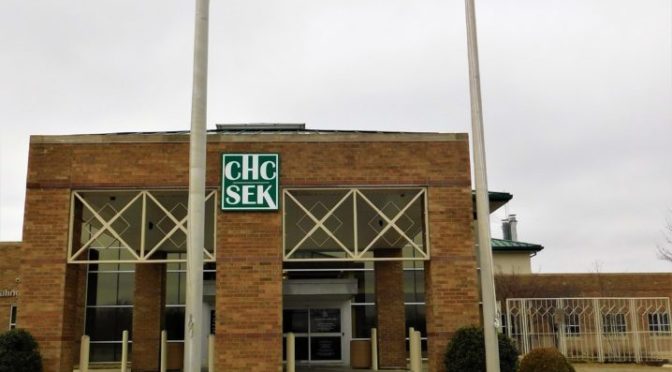
CHC/SEK to host Johnson & Johnson COVID-19 vaccine clinic
FORT SCOTT – The Johnson and Johnson one-dose COVID-19 vaccine will be available to all adults on Wednesday at the CHC/SEK Fort Scott clinic.
The vaccine will be available by appointment from 2 p.m. to 5 p.m. Currently, the federally allocated vaccine available at CHC/SEK is recommended for people age 18 and older. There is no cost to vaccine recipients.
CHC/SEK created https://chcsek.org/getmyshot where people can reserve their vaccine by filling out a contact form online. Using the web-based tool allows CHC/SEK to plan better for vaccine distribution. However, realizing not everyone has web access, the health center created a toll-free number, 866-888-8650 and a second number for Spanish-speakers 620-240-8940.
To learn more about the vaccine:
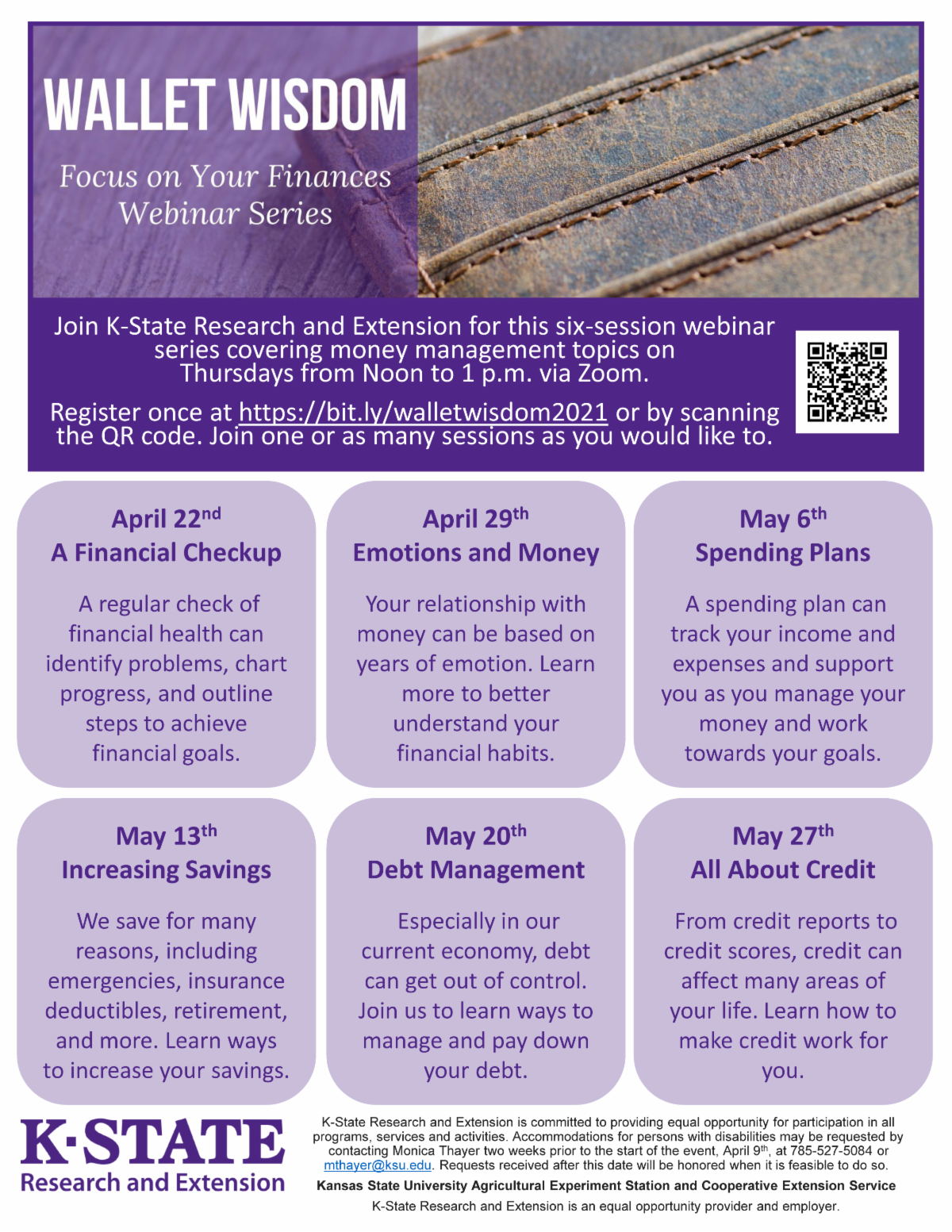
K-State Money Management Webinar April 22-May 27






Chamber Annual Celebration April 29
|
|

|
|
|
|
|
|

|
|
|
|
|
|
|
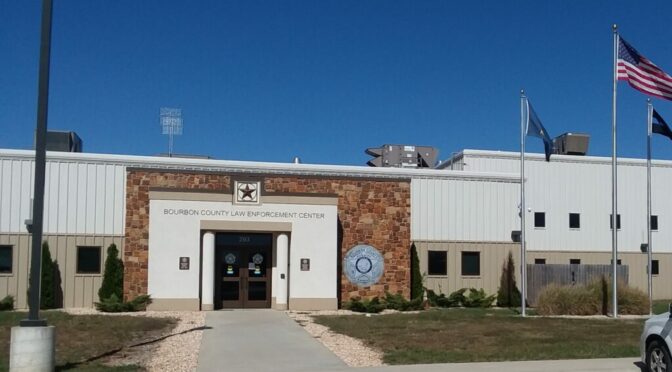
The Bourbon County Sheriff’s Office Daily Reports April 6
Pandemic Assistance For Ag Producers
USDA Announces Funding Available to Organizations to Assist Socially Disadvantaged Farmers and Ranchers under Pandemic Assistance for Producers Initiative
FSA Accepting CFAP 2 Applications Beginning April 5
WASHINGTON, April 5, 2021— The U.S. Department of Agriculture (USDA) Farm Service Agency (FSA) today announced the availability of $2 million to establish partnerships with organizations to provide outreach and technical assistance to socially disadvantaged farmers and ranchers. The funding was made possible by USDA’s new Pandemic Assistance for Producers initiative, an effort to distribute resources more broadly and to put greater emphasis on outreach to small and socially disadvantaged producers impacted by the pandemic. Today also marks the reopening of FSA’s Coronavirus Food Assistance Program 2 (CFAP 2) signup as part of the Pandemic Assistance for Producers initiative. Farmers and ranchers will have at least 60 days to apply or make modifications to existing CFAP 2 applications.
Cooperative Agreements
The cooperative agreements will support participation in programs offered by FSA, including those that are part of USDA’s Pandemic Assistance for Producers initiative. Interested organizations must submit proposals by May 5, 2021.
“USDA is committed to making financial assistance available to a broader set of producers, including to socially disadvantaged communities, and we know that we need partners to help make that happen,” said FSA Administrator Zach Ducheneaux. “This funding will support grassroots organizations and public institutions as we support their producers. I am excited to see their innovative, results-driven proposals to help us reach our producers, especially those who have not taken full advantage of the available assistance.”
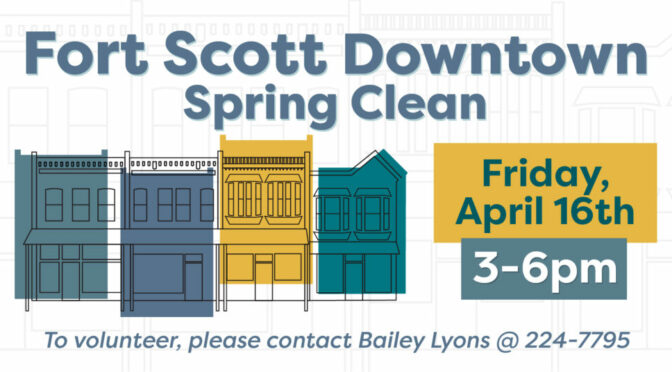
CHAMBER DOWNTOWN DIVISIONS PLANS SPRING CLEAN
The Downtown Division of the Fort Scott Area Chamber of Commerce has planned a Downtown Spring Clean on Friday, April 16th from 3 to 6pm. The committee is seeking project ideas and volunteers for the event to spruce up the Downtown Historic District.
The committee is asking for people to submit project ideas, or sign up to volunteer, preferably by this Wednesday, April 7th so projects and materials needed can be organized. All participants will receive a free t-shirt, courtesy of MyOneStop, and businesses/organizations who send a group of volunteers and/or provide a donation for materials, will be listed on the back of the
t-shirt. Donations may be made to the Fort Scott Area Chamber of Commerce and dropped off at 231 E. Wall St.
Those with project ideas or interest in volunteering may contact Bailey Lyons, Downtown Division Chair, at 620-224-7795 or email [email protected].
***
FS Downtown Quarterly Meet and Greet April 13
|
|
|
|

|
|
|
|
|
|

|
|
|
|
|
|
|
Timken Job Fair April 9,10




Legislative Update by State Senator Caryn Tyson
April 2, 2021
Property Tax Transparency – GOOD NEWS FOR PROPERTY TAXPAYERS
Senate Bill 13, stopping automatic property tax increases that result from higher valuations, was signed into law. Local property taxing authorities will have to provide notice of any proposed monetary increase and vote to go forward with the increase only after hearing public comments at an announced meeting. The new law has initial payments for the required notices and software changes, removing any excuse to raise taxes because of an unfunded mandate. It will also allow for normal maintenance on your property without increasing valuations, remove the property tax lid that was not working because of all of the exemptions, and allow county treasurers the option to setup property tax payment plans. It will not stop property tax increases; however, it will allow taxpayers and taxing authorities an opportunity to be heard before increases occur.
I worked diligently for a couple of years on this legislation and other bills to help improve the property tax system. I had meetings in locations away from Topeka where myself and other legislators heard the concerns of property tax paying Kansans from around the State. Senate Bill 13 is the results of those concerns. It’s a victory for Kansas.
Closing Power Plants
Talk about a trojan horse – Senate Substitute for House Bill (S Sub HB) 2072 is definitely one. On the surface the bill looks like it helps utility customers, however, it will eventually result in much higher utility bills and puts us on a path for a similar disaster that occurred in Texas. There were two parts to the bill. First, it allows some natural gas companies to bond the expenses for the extremely high rates during the record-freeze earlier this year and pass the expenses on to customers. Second, it allows utility companies to bond and pass on the expenses of closing plants to retail customers, including closing nuclear or coal plants. Think about it, the current debt and expenses to close the plant will be paid by customers “to the benefit of the bondholders, any assignee, and any other financing parties” until they are paid in full. It literally says that in the bill. It is a trojan horse that looks good but guarantees higher utility bills long-term.
I did what I could to block it. What is even more disappointing, the Chairman of the committee put the language in a house bill and the House concurred on the changes. The bill passed the Senate 33 to 7. I voted no.
Say No To A Veto of SB 50
The Governor is considering a veto of SB 50. Members of her tax study group are putting out messages saying if the bill becomes law Kansas would have to pay back federal money because of Biden’s version of the Cares Act. Twenty-one state Attorney Generals (AG) signed a letter challenging this federal overreach, including our KS AG. Most of the items in SB 50 have been voted on several times since 2018, predating Biden’s legislation. SB 50’s major components are: it addresses state income tax increases that resulted from the 2017 federal tax cuts, it increases the state standard deduction by $500, it provides language for collection of online sales tax (which is already the law), it stops any income tax obligation that results from stolen identity, it lines up the Kansas income tax filing deadline with federal dates while extending corporate filings by 30 days.
Too Many Bills
Over 40 pieces of legislation were worked on the Senate floor last week – too many to cover in this update. All of the legislation is posted online at www.kslegislature.org.
It is an honor and a privilege to serve as your 12th District State Senator.
Caryn