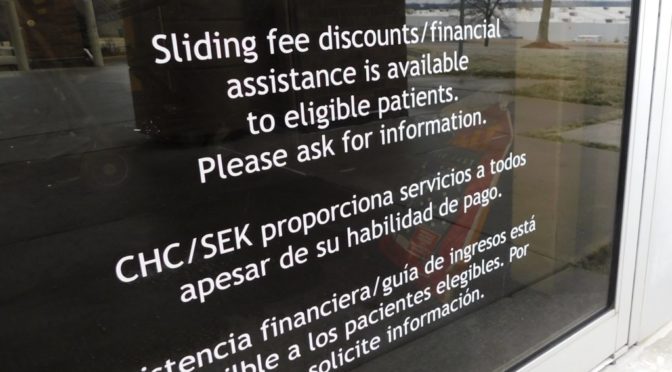
CHC/SEK: Not Possible To Pursue Mercy Building Repurpose

The Community Health Center of Southeast Kansas (CHC/SEK) Board of Directors took no action today toward establishing a “medical mall” within the former Fort Scott Mercy Hospital. Prior to finalizing plans for the construction of a new primary care clinic, CHC/SEK had spent the past month assessing the feasibility of remaining in the existing building.


“It was our goal,” said CHC/SEK CEO Krista Postai, “to see if we could recruit enough occupants to cover the cost of repurposing the former hospital built in 2002 at the cost of $30 million.”


“After analyzing costs over the last year and projecting expenses if the building’s space was fully utilized, we estimated that we would need about $800,000 to $1 million annually to cover utilities and maintenance plus the staff to keep the building maintained and fully operational,” said Postai, adding the bulk of that expense would have to be covered by CHC/SEK and Ascension/Via Christi who together would occupy a large percentage of the overall building.


CHC/SEK staff met with multiple people and organizations to discuss their interest including officials from Fort Scott Community College who identified opportunities for space for their nursing department, as well as additional dormitory space. We were especially appreciative of the Bourbon County Commission who had pledged “in-kind” support to take care of mowing, snow removal, etc., as well as the Mercy Health System who had tentatively committed funds for needed and future repairs.


“Altogether, we had tentative commitments from about a half dozen interested in being a part of the project which covered about 100,000 sq. ft. of the 125,000 sq. ft. of available space,” said Postai, who explained the entire building is 177,000 sq. ft. but about 50,000 sq. ft. is dedicated to mechanical space that supports the overall building operations.


“That was assuming Ascension/Via Christi remained in the existing ER and Diagnostic Imaging area, and we continued to occupy the clinic space plus the pharmacy,” she said.


“Unfortunately, we were notified Wednesday that after analyzing their options, Ascension/Via Christi had determined to remain in the existing building on a permanent basis was cost-prohibitive, and it was more fiscally prudent to build a new ER,” said Postai.


“We were told the existing ER space would need about $3 million in renovations and that, plus a lease payment adequate to cover the cost of their share of the facility, would make it far more expensive than a new facility,” said Postai. The CHC/SEK Board was prepared to make a go/no go decision at their Board meeting Thursday but after learning that Ascension/Via Christi was moving forward on their own construction, the board determined it was not possible to pursue this project without them.


“We all have to make hard decisions about what is best for our organizations and, unfortunately, we all have limited funds and have to maximize our capital investments,” said Postai adding that both organizations remain committed to providing services in Ft. Scott.


Both CHC/SEK and Ascension/Via Christi had already started designing new facilities on the existing campus and will proceed on, said Postai explaining CHC/SEK was planning a 25,000 sq. ft. to 30,000 sq. ft. facility facing Horton Street at an estimated cost of about $5 million.
Sheriff Martin On Recent Raises in Bourbon County

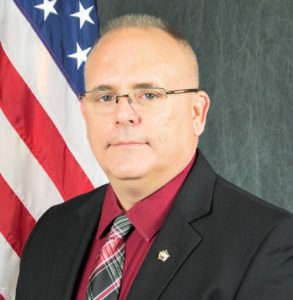
Bourbon County Sheriff Bill Martin. Submitted photo.

Bourbon County Sheriff Bill Martin is unhappy with the raises of administrative county employees, he said. He would have preferred giving input into raises in his office, including the one given him by the Bourbon County Commissioners.

A raise for elected officials became effective Dec. 15, 2019, according, to Bourbon County Commission minutes. This raised the clerk and treasurer’s salary to $47,248 annually, the register of deeds to 44,821 and the sheriff’s salary to $60,000.

Martin said in his budget request he had asked for a three-percent raise for all his employees.

“I did not request that large amount” for the sheriff’s position, he said.

There were no across-the-board raises given by the commission.

Martin said he was not aware of any raises until he received an email from Bourbon County Clerk Kendall Mason on Dec. 18, 2019.

At no other time was any raise amount ever discussed with me by the commission, not for myself or any member of my staff,” Martin said. ” I attended several commission meetings where I questioned the commission on budget figures for 2020 and, as usual, I was not ever given any answers.  At no time after I submitted my 2020 budget did anyone on the commission engage myself or my jail administration in salary discussions.”

In 2015 Martin had paid for a wage comparison survey and presented it to that Bourbon County Commission because he wanted to bring the salaries of the county employees as a whole up to standard amounts.

He felt it fell on “deaf ears” at the time, he said. It was a different set of commissioners.

For the 2020 Sheriff’s Office budget he had requested a three percent raise for his employees.

Instead, Martin’s salary was raised from $45,000 to $60,000.

He contends that discussions with him and his staff would have been beneficial to the decision making process.

“I am never provided with verbal information or written information as to where the money is put, cut or moved to in the budgets,” Martin said. “My door is always open for any discussion.”

Martin has two salaried employees.

“One of the two fell below the new income guideline set by the Federal Wage Law and the US Department of Labor,” Martin said.  “A captain at the correctional center fell under this ‘salaried employee category’ and therefore is required by law to have a salary increase.  If this wage increase is not performed, this employee would be eligible for overtime.  I can assure you that increasing this wage is far less harmful than allowing this employee to request overtime hours for all the overtime he works.  I am still unaware if this salary increase has been added to the correctional center budget.  The commission was made aware of this federal law… several months ago.”

Martin said the responsibility of the sheriff’s office falls to him.

“I am the face and the buck stops with me, so to speak, but they are the men and women with their lives on the line every, single day and every single night.  Christmas, Easter, Monday through Sunday.   They sign up to make a difference in their community where they live. It’s nice to be thanked and appreciated and compensated to prove yourself worthy.”


“Top-Heavy”

The county has two many administrative positions, Martin said.

“Our county is now so top-heavy with administration that the people in the offices and on the road and doing the jobs are unable to receive any fair raises and are far from a competitive wage for the jobs they are doing,” Martin said. “Our county has a road and bridge supervisor that makes over $60,880 a year plus benefits.  This county has a part-time, county counselor who makes $64,000 a year for 25 hours a week and has a private practice on the side; this is in addition to the county attorney who makes $50,000 a year.  This county now pays (not attacking the person) an economic development director… $70,000 a year plus benefits. As of January 1, we have a sheriff making $60,000., a county clerk, making $47,248 a treasurer making that same amount and a register of deeds making $44,821…We have three county commissioners who make $21,416 (each) per year plus benefits, which is another $64,248 plus benefits in a year.”

” I have been requesting additional deputies every year since I have taken office and every year, I am told that there is no money to spend,  budgets are close, overspending and overtime are out of control,” Martin said. “Yet, we have almost $200,000 in salaries for administrative staff, who hold jobs that should be performed by our road and bridge director and crews, the elected county clerk, our elected county attorney, and our elected county commission.  $200,000 would pay for other staff raises, staff who are on the ground working.” 

“It would pay for a much-needed school resource officer for Uniontown Schools plus a courthouse security officer, which is mandated by the state,” he said.  “I cannot get anyone to understand that when you pay a deputy a $35,000 a year salary, you are better off to hire two more deputies on the force and reducing the $60,000 in overtime pay.  I am contending that if they would not have raised my pay $15,000, they could have very easily allowed me to hire one new deputy and they would have been ahead money.  Where did all this money come from and how do we put these jobs back in the hands of the people who were elected to do them and eliminate all the huge salaries that we are paying right now.”     

The sheriff’s office operates around the clock much like an ambulance service or hospital does, he said.   And some of his employees are struggling financially.

“People do a great job for great pay,” Martin said.  “People do a decent job for decent pay and proud people show up to work to draw a wage rather than go on welfare.  Some of my employees can claim state insurance benefits for their families and that is shameful to think that we cannot provide a wage above the poverty level… I also have other employees who work two and three jobs and I cannot control what my employees do outside their duty time… during my time as a deputy, I worked three jobs to provide for my family and pay my bills.”


CHC/SEK: Not Possible to Pursue Mercy Building Repurpose

The Community Health Center of Southeast Kansas (CHC/SEK) Board of Directors took no action today toward establishing a “medical mall” within the former Fort Scott Mercy Hospital. Prior to finalizing plans for the construction of a new primary care clinic, CHC/SEK had spent the past month assessing the feasibility of remaining in the existing building.


“It was our goal,” said CHC/SEK CEO Krista Postai, “to see if we could recruit enough occupants to cover the cost of repurposing the former hospital built in 2002 at the cost of $30 million.”


“After analyzing costs over the last year and projecting expenses if the building’s space was fully utilized, we estimated that we would need about $800,000 to $1 million annually to cover utilities and maintenance plus the staff to keep the building maintained and fully operational,” said Postai, adding the bulk of that expense would have to be covered by CHC/SEK and Ascension/Via Christi who together would occupy a large percentage of the overall building.


CHC/SEK staff met with multiple people and organizations to discuss their interest including officials from Fort Scott Community College who identified opportunities for space for their nursing department, as well as additional dormitory space. We were especially appreciative of the Bourbon County Commission who had pledged “in-kind” support to take care of mowing, snow removal, etc., as well as the Mercy Health System who had tentatively committed funds for needed and future repairs.


“Altogether, we had tentative commitments from about a half dozen interested in being a part of the project which covered about 100,000 sq. ft. of the 125,000 sq. ft. of available space,” said Postai, who explained the entire building is 177,000 sq. ft. but about 50,000 sq. ft. is dedicated to mechanical space that supports the overall building operations.


“That was assuming Ascension/Via Christi remained in the existing ER and Diagnostic Imaging area, and we continued to occupy the clinic space plus the pharmacy,” she said.


“Unfortunately, we were notified Wednesday that after analyzing their options, Ascension/Via Christi had determined to remain in the existing building on a permanent basis was cost-prohibitive, and it was more fiscally prudent to build a new ER,” said Postai.


“We were told the existing ER space would need about $3 million in renovations and that, plus a lease payment adequate to cover the cost of their share of the facility, would make it far more expensive than a new facility,” said Postai. The CHC/SEK Board was prepared to make a go/no go decision at their Board meeting Thursday but after learning that Ascension/Via Christi was moving forward on their own construction, the board determined it was not possible to pursue this project without them.


“We all have to make hard decisions about what is best for our organizations and, unfortunately, we all have limited funds and have to maximize our capital investments,” said Postai adding that both organizations remain committed to providing services in Ft. Scott.


Both CHC/SEK and Ascension/Via Christi had already started designing new facilities on the existing campus and will proceed on, said Postai explaining CHC/SEK was planning a 25,000 sq. ft. to 30,000 sq. ft. facility facing Horton Street at an estimated cost of about $5 million.
Takin Notes Will Perform Jan. 31

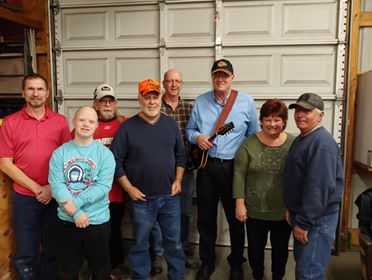
Members pictured are Brian Crites Kyle Crites, Randy Maple, Billy Beckman , Roger Bland, Dr Larry Buck, Terri Louk, Mike Church. Not pictured is our soundman,  Jeff Deal.

A band of friends from the Iola area will perform in Fort Scott at the Fort Scott Community College Round Room, Bailey Hall, on Friday, January 31 at 7 pm.

The public is welcome to come to listen to some old and newer country, rock, along with bluegrass and gospel music.

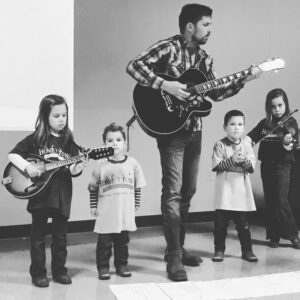
Special guests are the Matt Kloepfer family.

The Matt Kloepfer family. Submitted photo.


The band “Takin’ Notes” has played downtown several times and is looking forward to sharing their talents with you.

These bands have something enjoyable for everyone.

Admission is free so come on over and have a great evening with us!


FSCC Football Coach Pick Resigns: Nationwide Search Begins For Replacement

Fort Scott Community College has received a letter of resignation from head football coach Kale Pick as he will be seeking other opportunities within the coaching field, according to a press release from Kassie Fugate-Cate.

“FSCC thanks Coach Pick for his leadership that he brought to the institution during his four years on the coaching staff and wish him nothing but the best of luck as he moves forward with his career,” the release.

The institution will begin a nationwide search for a replacement in the coming days.

Obituary of Christina Hagood

Christina G. Hagood, age 93, a resident of Ft. Scott, Kansas, passed away Thursday, January 16, 2020, at the Via Christi Hospital in Pittsburg, Kansas.

She was born May 1, 1926, in Wichita, Kansas, the daughter of John Joseph Peters and Philomena Bachman Peters.

Christina married John Byron “Jack” Hagood on February 22, 1945.  Christina had worked for several years as a receptionist for the Basham & McKenna Clinic and for Ft. Scott Family Physicians.  She later provided childcare for area families.

She was a member of the Mary Queen of Angels Catholic Church.  Christina was a devoted wife, mother and grandmother.  She enjoyed cooking, gardening and tending her houseplants.  In earlier years, she had been a member of the ONO Club.


Survivors include her three children, Margaret “Peggy” Lewis, of Ft. Scott, John Hagood and his wife, Barbara, of Medicine Lodge, Kansas and Mike Hagood, also of Ft. Scott. There are four grandchildren, John Cauthon (Beth), of Ft. Scott; Christina Hagood, of Overland Park, Kansas; Mary Anne Lunsford (Daniel), of Bonanza, Arkansas and Joseph Hagood, of Wichtia, Kansas; two great-grandchildren, Ashlyn and Lucas Lunsford as well as numerous nieces and nephews.

Her husband, Jack, preceded her in death on April 17, 1967.  She was also preceded in death by her son-in-law, Tim Lewis; four brothers, John, Francis, Elmer and Chuck Peters and two sisters, Sister Mary Timothy Peters and Sister Mary Matilda Peters who were both Sisters of St. Joseph.


Father Yancey Burgess will conduct Mass of Christian Burial at 10:00 A.M. Tuesday, January 21st at the Mary Queen of Angels Catholic Church.

Burial will follow in the U. S. National Cemetery.

The rosary will be recited at 6:00 P.M. Monday evening at the Cheney Witt Chapel.

Visitation will follow from 6:30 to 7:30 P.M. at the chapel.

Memorials are suggested to the Mary Queen of Angels Catholic Church and may be left in care of the Cheney Witt Chapel, 201 S. Main, P.O. Box 347, Ft. Scott, KS 66701.  Words of remembrance may be submitted to the online guestbook at cheneywitt.com.

Dermatologist by Patty LaRoche

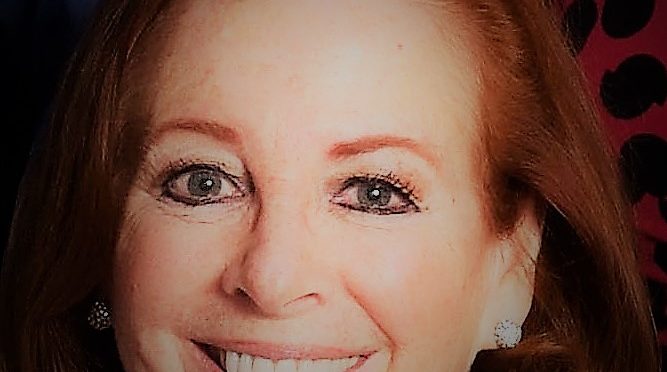
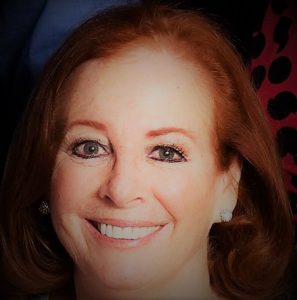
Patty LaRoche

My face smells like milk. By tomorrow, my cheeks will curdle. As it turns out, whole milk is the only remedy for a reaction my face is having to a medicine recommended by my dermatologist to destroy “potential” skin cancers (cancers hiding under the freckled, sun-damaged layer of epidermis which was caused 50 years ago when having a tan was my way to feel validated).

Those days are over. OVER!

I’d like to think that in my teens, had there been a warning on the Crisco or Iodine I used to lather my skin, or had I perhaps tanned on the ground and not on the roof, the sun-damage results might be less horrific Then again, being 19 years old and invincible, there is a very strong chance such warnings would have gone unheeded. So, here I am, paying a painful price for something that Crisco should be responsible for.

Three weeks ago, I began my treatment. Within a few weeks, I was told, those surfacing cancers would “scab and flake away.” That’s it. Scab and flake. No biggee.

So you can imagine (and I assure you this came as a great surprise to me) what it was like when it felt as if a porcupine were quilling me 24/7 while a bonfire torched my forehead, cheeks and chin, and a herd of mosquitoes targeted my face to itch like the dickens. Pricks. Burns. Itches. All at the same time.

Bottom line? I might have leprosy, and when I sent a picture to my dermatologist, expecting her to tell me to get to an E.R. “immediately” or I would lose my face, I was astonished when instead she said, “Yep. That’s what it’s supposed to look like,” a message that was reinforced today when I ran into a friend who had gone through the same treatment, sharing that I wouldn’t be successful until my facial sores left blood on my pillow.

Have there been no medical advancements since the 16th century?

Whatever. Today I hustled off to buy whole milk which, after splashing it on my face, gave me some relief. Thank you, Jesus. Of course, I still look like I have a dreaded disease, but at least the pain is gone…at least for now.

I wonder if my face before this treatment is what sin looks like to God. Hidden (denied is probably a better description), and if I don’t deal with it, easy to ignore. But then something happens to bring my sins to the surface (I’m caught in a lie with the I.R.S. or confronted about gossiping or brag about some recent success, for example), and I am forced to deal with the ugliness of how I have displeased my Heavenly Father. Oh, I might find temporary relief if I apply a few milky excuses or blame someone else for my actions, but a heart-glimpse in the mirror shows that the evil is still there, exposed and needing to scab and flake away.

Fortunately, like the cream I used to bring my underlying cancers to the surface, there is a way to expose and deal with my sin: I ask God to reveal areas in my life that are displeasing to Him; I read the Bible to understand what He expects from me; and I ask forgiveness. And how does God respond? According to Psalm 103:12, The LORD is compassionate and gracious, slow to anger, abounding in love. he does not treat us as our sins deserve or repay us according to our iniquities. as far as the east is from the west, so far has he removed our transgressions from us.

Get that? God’s removal is permanent. See you later, Aggravator. I could only wish to say the same for my skin.

Governor applauds Congressional passage of USMCA


Citing its importance to Kansas exports and the state’s economy, Governor Laura Kelly and Secretary of Agriculture Mike Beam expressed praise today for Congressional passage of the United States-Mexico-Canada Agreement (USMCA).


“This is an important and welcome development in Kansas, especially as our farmers and ranchers struggle to rebuild after an historic year of natural disasters,” Governor Kelly said. “With more than 95 percent of the world’s consumers living outside the United States, world markets offer tremendous growth opportunities for Kansas agriculture. USMCA will create enhanced export opportunities and help Kansans capitalize on the increased global demand for food and agriculture products.”


Secretary Beam also cited the positive impact for Kansas producers.


“This agreement is great news for Kansas, especially Kansas agriculture,” he said. “Mexico and Canada are consistently in the top three trade partners for Kansas so maintaining these strong relationships is critical for agricultural exports in the state.”


Canada and Mexico are Kansas’ first and third largest export markets for Kansas food and agricultural commodities, totaling nearly $1.58 billion in 2018 or 41.1% of our total trade.


USMCA is a significant development for Kansas farmers and ranchers. With a downturn in commodity prices, the agriculture sector is at a critical crossroads. The passage of USMCA provides Kansas farmers, ranchers and agribusinesses a degree of certainty during some uncertain times. It also instills confidence in the state’s top trade partners and neighbors that the U.S. can be counted on as reliable suppliers of food and agricultural commodities.


According to the office of U.S. Secretary of Agriculture Sonny Perdue, under USMCA all food and agricultural products that have had zero tariffs under the North American Free Trade Agreement (NAFTA) will remain at zero tariffs. Since the original NAFTA did not eliminate all tariffs on agricultural trade between the United States and Canada, the USMCA will create new market access opportunities for United States exports to Canada of dairy, poultry, and eggs, and in exchange the United States will provide new access to Canada for some dairy, peanut, and a limited amount of sugar and sugar-containing products.

Independent Medical Laboratory Coming to Fort Scott Feb. 3

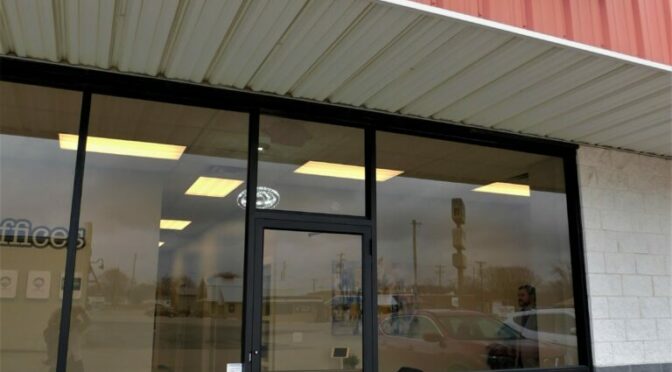
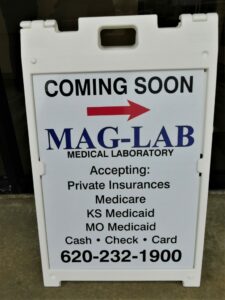
The sign in the front window of the new Mag-Lab office, tells the phone number to call for more information: 620-232-1900.

Mag-Lab, an independent medical laboratory, headquartered in Pittsburg, KS will be opening a Fort Scott satellite office on Feb. 3, 2020.

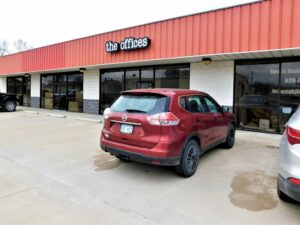
The office will be located in the building just north of Subway Restaurant at 1711 S. National, Suite C2.

Hours are 7 a.m. to noon, Monday through Friday.

For more information contact: 620-232-1900.

The Offices, a set of professional office spaces being developed by Legweak LLC.

With specimens taken that morning , the results will be delivered to the doctor that afternoon.

“Complicated testing we send off to a reference lab,” Phlebotomist Sharon Newell said.

“If it’s a body fluid, we can test it,” Newell said.

“We can have anybody out in a few minutes,” she said. “There is not a lot of paperwork hassle. You have to have a doctor’s script if going through insurance.”

Gary and Jeannie Petersen are the owners of the lab.


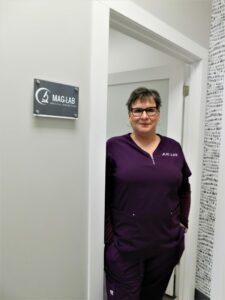
Sharon Newell, the phlebotomist, stands in the doorway of the new Mag-Lab office in Fort Scott.

When one enters the lobby of the set of offices, there is a doorbell on the wall for contacting each of the personnel in the offices.

Currently, Mag-Lab is the only renter, but two more are on the horizon.

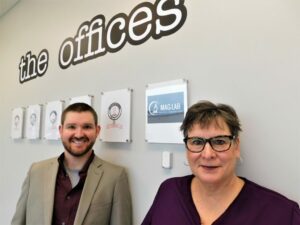
Brian Holt, medical technologist and Sharon Newell, phlebotomist stand in the lobby of The Offices, where the new Mag-Lab is located. The doorbell for notifying that clients are in the lobby is located behind Sewell.

Dr. Elias Tawil is the medical director of the lab.

The Kelly Budget: Continuing Progress

Governor Laura Kelley’s plan keeps promises to Kansas schools, expands affordable healthcare, pays over $600 million in debt, provides property, food sales tax relief


Topeka, Kan. — The second budget recommendation offered by Governor Laura Kelly delivers on her continued commitment to rebuilding Kansas after a decade of crisis. It maintains funding for Kansas public schools, includes funding to expand Medicaid, continues to phase out the “Bank of KDOT,” pays over $600 million in debt and provides over $117 million in commonsense tax relief.


“Kansas has made tremendous strides in recovering from the last decade of fiscal chaos,” Kelly said. “This balanced budget builds on that progress and positions Kansas to begin a new decade of shared prosperity and growth. I look forward to input from lawmakers and working with them to enact it.”


Kelly’s budget restores fundamental principles of Kansas fiscal responsibility:


    • Achieves Structural Balance: The Governor’s Budget Recommendation maintains structural balance, ensuring that state expenditures do not exceed revenues. It also meaningfully reduces the state’s irresponsible reliance on one-time funds.


    • Rebuilds State Savings: The Kelly Budget includes a statutorily required ending balance totaling $627.8 million. The 8.0 percent ending balance exceeds the amount required by law, a reflection of Gov. Kelly’s commitment to fiscal discipline.


    • Reduces State Debt: The Kelly budget retires $602.5 million of debt in FY 2020. This includes fully repaying the $264.3 million balance of the loan issued in calendar year 2017 from the Pooled Money Investment Board. It also pays off the $69.8 million balance of IMPACT bonds at the Department of Commerce. Paying $268.4 million will eliminate KPERS layering payments that resulted from skipping normal contributions to the system in FY 2017 and FY 2019. Altogether, paying these debts early saves an estimated $212.6 million in interest, as well as freeing up the related debt payments in future years.


Additionally, the Kelly budget accomplishes critical policy goals:


    • Keeps Funding Promise to Kansas Schools: In June 2019, the Kansas Supreme Court unanimously ruled that Kansas had enacted a plan that fulfills the state’s constitutional obligation to adequately and fairly fund public schools. The Court endorsed the 2019 proposal offered by Governor Kelly and approved by the Legislature, which increases investment in education by roughly $90 million a year, accounting for inflationary increases at the rate of 1.44 percent through FY 2023. The Governor fully funded this plan in the FY 2021 budget, putting Kansas on track to increase school funding by $431.1 million through FY 2023.


    • Medicaid Expansion: The Governor’s recommendation includes $17.5 million to expand KanCare, the state’s Medicaid program. Expanding eligibility for the program will allow 150,000 low-income Kansans to access critical health-care coverage. This will not only improve the health and vitality of Kansas communities, information presented at the Governor’s Council on Medicaid Expansion showed that expanding Medicaid could also create new jobs across the state. 


    • Closing the “Bank of KDOT”: Since taking office, Kelly has restored investment in Kansas roads and bridges by $213 million. This budget reduces State Highway Fund transfers by an additional $73.1 million in FY 2021. Assuming state revenues remain stable, this will keep Kansas on track to fully close the “Bank of KDOT” by the end of the Governor’s first term. This will enable Kansas to fulfill the promises of T-WORKS and also enact a new transportation plan in FY 2021 without a tax increase.


    • Targeted Food Sales Tax Relief: The Governor’s tax policy recommendations provide food sales tax and property tax relief, and level the playing field by modernizing antiquated sales tax laws. Replacing the current non-refundable food sales tax credit with a new refundable food sales tax credit will provide $53.2 million in food sales tax relief beginning in tax year 2020.  Repealing the current non-refundable food sales tax credit after December 31, 2019, will save approximately $10 million in SGF receipts in FY 2021. Under the Governor’s proposal, the Department of Revenue estimates that more than 540,000 tax filers will claim $63.2 million in refundable food sales tax credits beginning in FY 2021.


    • Property Tax Relief: The Governor has also prioritized property tax relief. For the first time since 2003, resuming the State General Fund transfers to the Local Ad Valorem Tax Reduction Fund is included in the Governor’s budget recommendation. This will provide $54.0 million in local property tax relief beginning in FY 2021.


    • Public Safety: To address the growing overpopulation issue in our prisons, the Governor recommends expanding bed capacity and treatment capacity by renovating unoccupied buildings near the Winfield Correctional Facility and the Lansing Correctional Facility. These renovated facilities will add dedicated substance use treatment beds for offenders who need it, as well as adding capacity for geriatric care for aging and seriously ill inmates.


“I appreciate the bipartisan collaboration between the Executive and Legislative branches throughout the last year to rebuild Kansas after a decade of crisis,” Kelly said. “This budget will help ensure our progress. It honors all the funding promises made by the 2019 Legislature, continues to sustainably and fairly re-invest in Kansas communities and provides much-needed tax relief in the form of a food sales tax rebate and property tax cuts. I am confident that if we work together to enact this commonsense agenda, Kansas will undoubtedly begin the new decade strongly positioned to prosper and grow.”

The Governor’s full budget recommendation can be viewed here.


Bourbon County Local News