Minutes are unapproved until the next meeting.
CITY OF FORT SCOTT
CITY COMMISSION MEETING
Minutes of May 4th, 2021 Regular Meeting #9
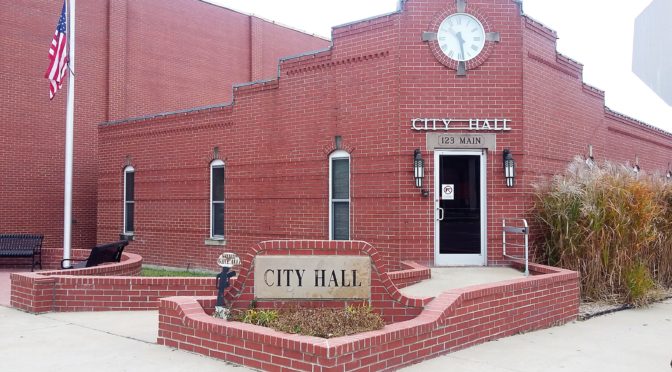
The regular meeting of the Fort Scott City Commission was held May 4th, 2021 at 6:00 p.m. in the City Commission Meeting Room at City Hall, 123 S. Main Street, Fort Scott, Kansas.
ROLL CALL:
Commissioners P. Allen, K. Allen, and R. Nichols were present with Mayor J. Jones presiding. L. Watts connected by Zoom.
INVOCATION: Associate Pastor, Brian Rhoades, Grace Baptist Tabernacle, said a prayer asking God for guidance for the City, our Government and City officials.
AUDIENCE IN ATTENDANCE: Travis Shelton, Russell Lingerfelt, Michael Mix, Susan Bancroft, Brian Rhoades, Michael Hoyt, Bill Lemke, Shawn O’Brien, Nancy VanEtten, Jerry Morgan, Emilie Zalfini, Shane Wood, Nancy Maze, Peter Earles, Janice Allen, and Allyson Turvey.
PROCLAMATIONS/RECOGNITIONS: None
ADDITIONS TO AGENDA: City Manager asked that Earles Engineering proposal for Cooper Street Final Design be added to the agenda under Consideration.
R. Nichols moved to add Earles Engineering proposal for Cooper Street under Consideration. J. Jones seconded. All voted aye.
ADDED EARLES ENGINEERING PROPOSAL FOR COOPER STREET FINAL DESIGN TO AGENDA UNDER CONSIDERATION.
CONSENT AGENDA:
-
Approval of minutes of the regular meeting of April 20th, 2021 and special meeting of April 27th, 2021 and amended minutes of April 6th, 2021.
-
Certificate of Appropriateness – Unsung Heroes Park sign murals
-
Consideration to Pay – HDR Engineering, Inc. – $7,335.00-River Intake Project
-
Approval of Cereal Malt Temporary Beverage License – Good Ol’ Days – Beer Tent – June 4th & 5th, 2021
R. Nichols moved to approve the Consent Agenda. J. Jones seconded. K. Allen, R. Nichols, L. Watts, and J. Jones voted aye. P. Allen voted no. Motion carried 4-1.
APPROVED CONSENT AGENDA.
Public Comment:
(Sign up required. Comments on any topic not on the agenda and limited to 5 minutes per person, at Commission discretion) – Michael Hoyt – Mr. Hoyt informed the Commission that the minutes they just approved from the April 6th meeting, that he would like to change one thing under his name under public comment. It says the City Attorney said, and he quoted “this is a pointless discussion unless we hear from the County”. It is not a pointless discussion. It was a voter citizen comment area and should be taken as that. You should also add the Mayor’s final comment as he was just trying to give us a heads up to make it more correct.
K. Allen asked if that could be added to the minutes.
Diane Clay, City Clerk, said that she wanted to point out that the minutes are not verbatim and not typed word for word.
Mr. Hoyt asked that they be changed.
K. Allen said that it doesn’t hurt to go back and listen and change them if needed.
K. Allen made a motion to change the minutes on April 6th on the citizen comment section. P. Allen seconded. K. Allen, P. Allen and J. Jones voted aye. R. Nichols and L. Watts voted no. Motion carried 3-2.
APPROVED TO CHANGE THE MINUTES ON APRIL 6TH, 2021 ON THE CITIZEN COMMENT SECTION TO ADD THE MAYOR’S COMMENTS.
Minutes from April 6th, 2021 – City Comment section – Michael Hoyt, citizen – Mayor Jones comments:
“Mr. Hoyt handed Bob Farmer, City Attorney, a copy of the United States Constitution. He asked him what the 21st amendment was. He answered that it was a repeal of the 18th amendment allowing the sale of alcoholic beverages.
Bourbon County Commission – This morning at their meeting they have dictated to us on how they are going to handle an advisory board for an HR Assistant/Administrator and that we are going to share. He has been very active in these discussions. This is no reflection on the person appointed. That’s not the way we do it. We solicit letters of interest and then you vote on them. He doesn’t see why this should be any different on an advisory board shared by the County or with the City.
K. Allen said that this is the first time he has heard about this.
Mr. Hoyt said that they were speaking on shared services or interlocal agreement. Both terms were thrown but Justin advised that it was going to be a shared service.
City Attorney said until the County notifies us, and we see it in black and white, it’s a pointless discussion. He said he appreciates the heads up, but he doesn’t know how we talk about something that we don’t know anything about.
Josh said “that Michael was just bringing it to our attention and to be aware.”
Mr. Hoyt’s next item was he was handing out research and history he has done on the 1% sales tax that is levied within the City. In 1983, this body passed an ordinance or a resolution describing how they would spend the sales tax. It describes an election and those election ballot questions have been sought after, and as of this morning, they had not been found. It gives some other details of how the sales tax was passed by contacting the state tax bureau. In 1987, there was another resolution that says that we’re going to renew the same tax, but we didn’t sunset it like we did in 1983. It would sunset after four years. He is finding this very suspect and doesn’t know what happened but feels there is a valid enough flaw in these two elections and these two resolutions, that he will be putting together a petition to repeal the 1% sales tax in the City of Fort Scott. He will time it to be on the November ballot so we will not be involved in a special election thing again. He wants to give you an opportunity to fix it. If you as a body can come up with a charter ordinance that reflects what the intent of the voters were in 1983 and 1987, we have not yet determined what resolution levied that tax. If you can put together a resolution to fix it, he’s fine, otherwise, you stand to lose it. He will remind you how did Charter Ordinance 31 work for you. He’s not trying to devastate the City. All he is trying to do is make us do it right. There were no reductions or income elimination taxes. He said to keep reading the newspaper articles. They almost describe an 1983 election that didn’t occur. He is here to inform you that he is putting together a petition to repeal the sales tax and will start as soon as he gets the ballot question and the sufficiency on the petition from Justin Meeks.
Pete asked how do we fix this? Is there a way we as a body can fix this?
Mr. Hoyt said that there is a way and that Bob would have to advise you. Either by a charter ordinance and then the electors would have 60 days to object, or a resolution that would put it back on the ballot. It would be confusing because you would be voting for and against it in the same ballot. He doesn’t want us to be devastated by a revenue shortage, but he just wants us to do it right. The allocations of the revenue was 80% streets, 10% one thing and 10% another. Get a mix of the two that you can live with in the 1983 and 1987 resolutions, and he will stay home.
City Manager Report and Comments: Jeremy Frazier, City Manager, informed the Commission on April 19th, he met with the Good Neighbor Action Team, (GNAT) to discuss efforts and strategies of this organization. They serve a really good purpose in this community. They are a volunteer organization and are supported by donations, and if we want to see our community improve, we need to support this cause. They work hand in hand with the City and we receive those donations and have a good relationship. He met with local housing developers and hope to see some homes built. He and Ally met with the Lowell Milken Center about their upcoming construction at the Unsung Heroes Park. He attended a meeting with on Mayco Ace project and the CDBG grant. The first Fort Scott Forward forum was held on April 27th and well attended. The Chamber of Commerce held their annual dinner. It was very well attended and organized. The Chamber should be very proud of this event. He congratulated those who won well deserved awards also. He attended the Fire Department staff meeting. Public Works has a weekly staff meeting with the engineer present. The engineer is working on the utility rate study currently. Susan is assisting with this. This study will compare the existing rates to the future rates of the City. The importance in doing this study is to determine if the current rate structure can generate sustainable revenues to operate, maintain, and rebuild the current infrastructure of the City. Cooper Street is an ongoing project. It is a redesign, mill and overlay. We are waiting on a design from our engineer. There is a proposed item on the agenda to complete the design of this street for later in the meeting. The engineer is working on a parking lot assessment at 1st and National. It is a City owned lot. It could become public parking. The alley improvement behind Common Ground coffee shop is still ongoing. There have been interviews conducted for the Tourism Manager position and an offer should be made by the end of the week. The Street Advisory Board met and recommended a 2022 Capital Improvement plan with over 22 sections of street to consider.
Director Reports: Allyson Turvey-Smart Growth/T-Mobile Update – Ally Turvey, Community Development Manager, informed the Commission that she wanted to update them on a couple of new Smart Growth initiatives that have come our way. They learned a couple of weeks ago that there is a new rural grant program offered as a initiative between T-Mobile and Smart Growth America. They started discussing how to go after this grant program. They will be offering 25 – $50,000 grant awards every quarter for the next five years. There is a lot of funding available. The first round of applications are due in July. She also received a call from Mr. Smith of Smart Growth to remind her that Fort Scott was responsible for the introduction of T-Mobile and Smart Growth. T-Mobile came to Fort Scott in 2018 and shot a video here. Multiple rounds of this grant funding will be able to be accessed. Mr. Smith felt that there was a good chance for the City to receive this grant. Mr. Smith also brought to her attention that there is a $3 million hometown tech-over contest. One rural community within the United States will win a $3 million techover award. That is $200,000 in placemaking opportunities, with the assistance of Smart Growth, a Little League field makeover, public space connectivity, and additional T-Mobile resources for our education sectors for our local military. There is a lot of potential here. He gave us the inside scoop on what we need to do. Anyone can submit an entry into the contest. It is a picture or a video of what makes Fort Scott special and a 400 character limit of the explanation of the picture. She asked any resident of the community to submit a picture or a video. The more submissions the further you get into the contest. He also suggested the City submit a home run video. She has reached out to Ward Kraft to assist the City is creating this video. She asked Larry Gazaway to do the voice over on this video. This will be very competitive.
Old Business: None
Appearances:
Emilie Zalfini – NLC Presentation – Emilie said that she is here this evening representing Home Serve, which is a service warranty line program. They are endorsed by the National League of Cities. They have been in business for 17 years. This program addresses issues with aging underground infrastructure which is starting to plague a lot of communities in the United States. This is a program that is available to all homeowners. They partner with the community and their goal is to educate homeowners that they are responsible for the water and sewer lines on their property and also offer protection on their internal water and sewer lines and their in-home plumbing. There is no cost to the City at all. A lot of homeowners don’t understand their responsibility of the lines on their property. Their company would send a letter to each homeowner and let them know which portion of their line that they are responsible for. The City logo would be used on their letter also. The City would review the marketing material before it is mailed also. If the homeowner takes part of this program and has an issue, they have a toll free number they can call and receive assistance within 24 hours. This company will use local contractors. If the homeowner utilizes this program, they would receive up to $8,500 of coverage per incident. The in-home plumbing has a $3,000 per incident limit. There in an incremental revenue program that is offered to the City. It is $.50 per month per paid warranty program. The City can either accept this royalty or can give it back to the homeowner. It is paid to the City once a year. They have three mailings a year to market this program. If the City wanted to enter into an agreement with Home Serve, they would need to enter into a marketing agreement with them. They have 26 partners in the State of Kansas.
Kevin said that he would like time to look this program over and discuss at a later date.
Shawn O’Brien – Requests for closure of streets for Good Ol’ Days event:
Old Fort Blvd. from Wall Street to National Avenue
Main Street from Skubitz Plaza to Third Street
Scott Street from Wall Street to Second Street
Wall Street from National to Scott
First Street from National to Scott Street
Second Street from National to Scott Street
Use of Memorial Hall for Baby Contest and Talent Extravaganza
Heritage Park at corner of First and Main
Parking lot behind Heritage Park
Parking lot at corner of Third and Main
Parking lot at Second and Scott
Parking lot at Wall and alley between Main and Scott
Parking lot between Memorial Hall and the Library
Parking lot between National and Block House (Carnival will begin setting up here on Tuesday, June 2nd)
Parking lot between Old Fort Blvd. and H & H Realty Agency (Carnival will begin setting up here on Tuesday, June 2nd)
Old Fort Blvd – South side from National to alley (Carnival will begin setting up here on Tuesday, June 2nd)
Skubitz Plaza – (No special set up for event this year, but need Old Fort Blvd closed when tents go up Friday on east bound from Main. All closed Friday.
Use of City Hall for their staging area on Friday and Saturday.
Shawn said that this is the 40th celebration of Good Ol’ Days this year. They are excited to have this event this year after not being able to due to Covid last year. The theme this year is Family, Friends, and Fun. A free zip line will be offered this year as well as balloon artists. He asked the City Commission to approve the above closures and consider making a donation towards this event. He received the authorization to hold the event from Becky Johnson, Public Health Officer.
K. Allen moved to approve the street closures for Good Ol’ Days and authorize the City Manager to determine a donation for the event. L. Watts seconded. All voted aye.
APPROVED THE STREET CLOSURES FOR GOOD OL’ DAYS AND AUTHORIZE THE CITY MANAGER TO DETERMINE A DONATION FOR THE EVENT TO BE HELD JUNE 3, 4, AND 5TH, 2021.
Public Hearings: None
New Business:
-
Consideration of Conditional Use Permit – 10 N National – Allow residential living on the first floor – Allyson Turvey, Community Development Manager, informed the Commission that on March 1st, 2021, the Planning Commission met on the Conditional Use Permit for 10 N. National to allow first floor residential living. This was approved unanimously by the Planning Commission and recommended approval to the City Commission. This property is currently in the Land Bank and the proposed owner would like to see all the zoning completed before it is purchased from the Land Bank. The front of the property will resemble a coffee shop and the residential apartment will be at the back of the structure.
R. Nichols moved to approve the Conditional Use Permit at 10 N. National to allow residential living on the first floor. L. Watts seconded. All voted aye.
APPROVED THE CONDITIONAL USE PERMIT AT 10 N. NATIONAL TO ALLOW RESIDENTIAL LIVING ON THE FIRST FLOOR.
(Kevin Allen left the room at 6:49 p.m.)
-
Request to Pay – Skitch’s Hauling & Excavation Invoice – $1,914.00 – City Manager said that this is the invoice for March for port-a-potty services.
J. Jones moved to approve the invoice for Skitch’s Hauling & Excavation in the amount of $1,914.00. R. Nichols seconded. All voted aye.
APPROVED INVOICE FOR SKITCH’S HAULING & EXCAVATION IN THE AMOUNT OF $1,914.00 FOR MARCH 2021.
(Kevin Allen returned to the room at 6:50 p.m.)
-
Consideration of Curbside Pickup Program – Allyson Turvey, Community Development Manager informed the Commission that this program allows for downtown restaurant curbside pickup and is a temporary elimination of parking spaces for quick pickup of food. Downtown restaurants may submit an application for placement of signage which will be installed by Public Works. There have been parking issues in the downtown area. There were some businesses that placed some signage specifying that they were asserting authority over public places. They have been working to get those signs removed. In doing that, they know there is a need for pickup spots for restaurants. There are still people who are more comfortable ordering ahead and then picking up at a designated area. This resolution and program allows for curbside pickup zones for restaurants in the downtown area. These would be 15 minute parking spaces. These are not enforceable and any business could utilize these parking spaces. The owners of restaurants would have to submit the application.
Josh asked if the applications would go before the City Commission for approval.
Ally said that this application process gives the City Manager the authority to approve the application.
Discussion was held regarding the date. It was recommended to change the date on the resolution to expire on January 1st, 2022.
Ally said that restaurants located on arterial streets may have one sign with a maximum of two signs per block. Restaurants located on non-arterial streets may have two signs with a maximum of four signs per block.
Discussion was held regarding the 15 minute parking sign that Papa Don’s has currently. Ally said that they came before the City Commission to request this sign several years ago.
R. Nichols moved to approve the Restaurant Curbside Pickup Program and review this program on January 1st, 2022. The resolution was also moved to be approved with the expiration date to reflect January 1st, 2022. L. Watts seconded. All voted aye.
APPROVED RESTAURANT CURBSIDE PICKUP PROGRAM AND TO REVIEW THIS PROGRAM ON JANUARY 1ST, 2022. APPROVED RESOLUTION NO. 7-2021 DIRECTING THE CITY MANAGER TO ESTABLISH A DOWNTOWN RESTAURANT CURBSIDE PARKING PROGRAM IN RESPONSE TO THE COVID-19 CRISIS AND TO DETERMINE THE LENGTH OF TIME THAT PARKING IS PERMISSIBLE IN AREAS DESIGNATED FOR THE CURBSIDE PARKING PROGRAM.
-
Consideration of RFQ’s – Wastewater Treatment Plant Engineering – City Manager said that an interview team reviewed six engineering firms that submitted RFQ’s. It was unanimous that Earles Engineering be approved for the Wastewater Treatment Plant process evaluation and design improvements at the plant.
Michael gave a brief description of what the project will consist of.
Peter Earles said that his firm will submit a contract with the fee and it will come back before the City Commission for approval.
P. Allen moved to award the Wastewater Treatment Plant Engineering to Earles Engineering, Inc. of Pittsburg, Kansas. K. Allen seconded. All voted aye.
APPROVED TO AWARD THE WASTEWATER TREATMENT PLANT ENGINEERING TO EARLES ENGINEERING, INC. FOR PROCESS EVALUATION AND DESIGN IMPROVEMENTS AT THE PLANT.
-
Discussion of Proposed and Recommended Deed Restrictions from Lake Fort Scott Advisory Board Committee – City Manager said that the Lake Advisory Board met on April 10th and recommended deed restrictions for City owned lake lots.
Nancy VanEtten, Chairperson for the Lake Advisory Board, informed the Commission that their Committee met recently. Most of the meeting was spent discussing the work completed by the subcommittee, chaired by Shane Wood, on Smart Growth and Planning at the Lake. The purpose of the subcommittee was to develop a short and long range plan for the Lake and any City owned property around the lake so there is a consistent plan. The group met twice and composed suggested deed restrictions for City owned lake lots.
Shane Wood informed the Commission that there were nine individuals on the subcommittee. It was comprised of east and west side Lake residents as well as full time and part time residents at the Lake. Shane asked if the proposed City property for sale is by the two gazebos on the east side.
Kevin pointed out that the Lake Committee did make some changes to the deed restrictions. He wanted to point out that this applies to City owned property only.
Josh said that the Commission hasn’t decided for sure what lots they will be selling yet.
Shane said that the deed restrictions are as follows:
Any lots sold by the City of Fort Scott are to be used solely for single family residential use, whether year around or seasonal, and related garages or outbuildings. All commercial, industrial, retail, and multi-family housing uses are prohibited. The property may also not be subdivided in any way without the express approval of the City of Fort Scott City Commission. These restrictions will be deemed a covenant which runs with the property and binding on purchaser and successors or assigns of the purchaser.
Additional recommendations – Must be a stick framed home.
Phase 1 included in the Smart Growth Plan:
-
City of Fort Scott to sell property on the East side of the Lake where the gazebos are located (property north of Lot 858 and property south of Lot 728). Each property would be subdivided into two lots).
-
100% of the money generated by the sale of the lots would go to establish a Lake Fort Scott budget.
-
The Lake budget would be used to fund and make improvements to the camping area on the west side of the lake such as general cleanup, remodeling of the shelter house, new concrete pads, and utility hookups for campers, etc.
Kevin said that the money and projects would be reviewed by the City Commission before any action would be taken with the Lake funds.
Josh said that his suggestion is to put this on the next agenda after all of the Commission has time to review these recommendations.
Randy said he would like to see a work session on this topic. He would like to see more details. He feels his responsibility is that the tax paying citizens in Fort Scott get the best benefit in return on their dollars. He would just like more details.
Pete said he is not convinced either way yet. He said that he doesn’t know how we got in the position where we have County properties around the City lake. The City built the lake.
City Manager suggested a work session next Tuesday.
Pete asked that the Commission also discuss street improvements at the work session.
K. Allen moved to hold a work session next Tuesday, May 11th, 2021 at 7:00 p.m. to discuss the sale of City property at Lake Fort Scott and street improvements. P. Allen seconded. All voted aye.
Approved to hold a work session next Tuesday, May 11th, 2021 at 7:00 p.m. to discuss the sale of City property at Lake Fort Scott and street improvements.
-
Consideration to purchase mini-excavator – City Manager said that the streets, water, sewer, stormwater departments are in dire need of an additional mini excavator. It was requested a Bobcat be purchased so the parts will interchange. The City’s purchasing policy allows for using cooperative contracts to procure equipment where bidding has already been accomplished. The State contract through Sourcewell is in the amount of $65,430.18 for an E-60 Series Bobcat Compact Excavator.
K. Allen moved to approve the Sourcewell State contract to purchase an E-60 Series Bobcat Compact Excavator at a price of $65,430.18. L. Watts seconded. All voted aye.
approved the SourceWEll State contract to purchase an E-60 Series Bobcat Compact Excavator at a price of $65,430.18.
7. discussion and possible action for Earles Engineering Contract for the design of Cooper Street from 20th Street to 23rd Street – City Manager said that before them is the proposal for the reconstruction of Cooper Street from 20th Street to 23rd Street. He received this today. The amount for the final design is $19,200. After this is approved, work will begin within three days and they will have six weeks to complete the design. This is a budgeted item.
Discussion was held about opening Cooper Street from 18th to 20th at this time since we are waiting on engineering.
Peter Earles said that should not be a problem.
P. Allen moved to approve the contract for the final design of Cooper Street from 20th Street to 23rd Street with Earles Engineering, Inc. at the cost of $19,200. K. Allen seconded. All voted aye.
approved the contract for the final design of Cooper Street from 20th Street to 23rd Street with Earles Engineering, Inc. at the cost of $19,200.
Reports and Comments:
-
Commissioner Reports and Comments:
L. Watts – Nothing to report.
R. Nichols – Wanted to express his condolences to the Phil Hammons family. Phil was a well known community member who recently passed away this week.
P. Allen – Pete shared a video of the pothole patcher with the Commission and the public. He stated that we are way behind in street improvements. He said that our streets are an embarrassment to the City of Fort Scott. Our streets are affecting our quality of life issues. Our streets are very expensive to reconstruct. He referenced the National project of 7 blocks about 7 years ago and spent $7,000,000. Our current funding will amount to $750,000 per year. He mentioned using the pothole patcher machine to redo 23rd Street from Highway 69 to Horton Street. There will be a trainer here next week to train the City crew on how to properly use this machine. He also discussed rock and the correct size of rock that we need for this machine.
Bill Lemke mentioned that the City is replacing the hoses on the pothole patcher machine and rebuilding it.
K. Allen – Kevin thanked the Lake Committee people for coming to the meeting tonight.
Kevin asked about the caretaker house at Gunn Park and if any progress had been made on it.
City Manager said that we need to discuss this more in depth.
Kevin asked about the rock for Shelter #1 at Gunn Park.
Jeremy said he is aware of it and will take care of it.
Kevin also echoed his condolences to the family of Phil Hammons. He will be missed.
J. Jones – Nothing to report.
City Attorney Report and Comments: Nothing to report.
Executive Session:
J. Jones moved that the City Commission recess into Executive Session for the purpose of discussing non-elected personnel in K.S.A. 75-4319(b)(1). The open meeting will resume in the Commission meeting room at City Hall at 8:55 p.m. R. Nichols seconded. All voted aye. This included the City Commission and City Attorney.
J. Jones moved that the City Commission come out of Executive Session at 8:55 p.m. L. Watts seconded. All voted aye. Motion carried.
Josh brought up the idea of changing the meeting date time for the June 1st meeting as he is leaving town that day. This will be discussed at the next meeting.
Adjournment:
J. Jones moved to adjourn the meeting at 8:59 p.m. R. Nichols seconded. All voted aye.
ADJOURNED MEETING AT 8:59 P.M.
Respectfully submitted,
Diane K. Clay, M.M.C.