There will be a Special Meeting of the Fort Scott City Commission held at 5:30 p.m. on Monday, September 13th, 2021. This meeting will be held to consider the following:
Consideration of change order on ladder fire truck
Consideration of payment for ladder fire truck
Consideration of donation of current ladder truck
Consideration of change order for Eagle Block Building
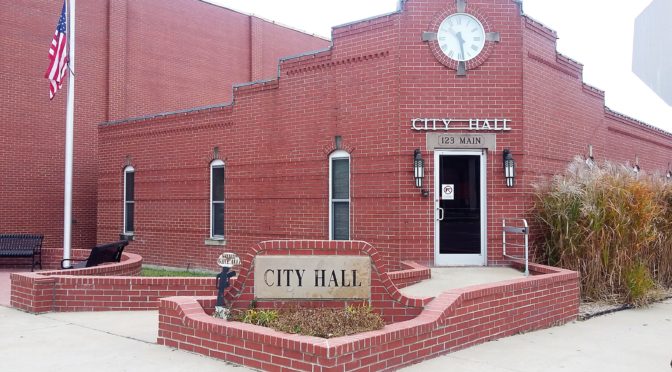
This meeting will be held at 123 S. Main Street in the City Commission meeting room. This meeting will be broadcast on the City’s You tube channel. This meeting is open to the public.
MEETING HELD IN THE COMMISSION ROOM WITH NO PUBLIC ATTENDANCE (PUBLIC
ATTENDANCE VIA YOUTUBE)
Call to Order
Flag Salute
Approval of Minutes from previous meeting
2022 Budget Hearing
Eric Bailey – Road and Bridge Report / Sheriff Department Vehicle
CIC Contract
David Neville – Executive Session – KSA 75-4319(b)(1) To discuss personnel matters of individual nonelected personnel to protect their privacy
Robert Coon – A+ Bail Bonds
Kevin Davidson – Wages & Budget
Lora Holdridge – (Roads) Executive Session – KSA 75-4319(b)(2) For consultation with an attorney for the public body or agency which would be deemed privileged in the attorney-client relationship
County Counselor Comment
Susan Bancroft, Finance Director Comment
Public Comment
Elected Officials Comment
Commission Comment
Justifications for Executive Session:
KSA 75-4319(b)(1) To discuss personnel matters of individual nonelected personnel to protect their privacy
KSA 75-4319(b)(2) For consultation with an attorney for the public body or agency which would be deemed privileged in the attorney-client relationship
KSA 75-4319(b)(3) To discuss matters relating to employer-employee negotiations whether or not in consultation with the representative(s) of the body or agency
KSA 75-4319(b)(4) To discuss data relating to financial affairs or trade secrets of corporations, partnerships, trust, and individual proprietorships
KSA 75-4319(b)(6) For the preliminary discussion of the acquisition of real property
KSA 75-4319(b)(12) To discuss matters relating to security measures, if the discussion of such matters at an open meeting would jeopardize such security measures.
Governor Laura Kelly Announces Funding for Frontline Nurses and Care Workers
~$50 Million in Funding Going to Nurse & Care Workers as Strain on Hospitals Continues to Increase~
TOPEKA – Governor Laura Kelly today announced $50 million available for hospitals to either provide premium pay or improve retention of nursing resources and support personnel, approved by the SPARK Executive Committee. This emergency funding will provide immediate support for Kansas hospitals to manage the current COVID-19 surge and address critical shortages in nurse staffing across the state.
Qualified facilities may use the funding for either premium pay as defined in ARPA or for funding a program designed by the facility to improve the retention of nursing resources and support personnel. Premium pay may be distributed by the hospitals to frontline employees in the manner that they believe is most appropriate to ensure retention of critical resources and maintenance of staffed hospital beds.
“Many of our nurses are risking their lives every day to save Kansans from COVID-19 – and the immense strain on our hospitals is causing them to be exhausted and disheartened,” Governor Laura Kelly said. “They’re taking on extra shifts and caring for more patients than they can handle – and it’s our responsibility to give them the support they need.
“Frontline nurses need this funding to continue battling the COVID-19 surge here at home. I sincerely thank all Kansas frontline nurses and health care workers for all they do to protect our communities from the threat of COVID-19. I encourage all Kansans to do their part and get vaccinated immediately – for our health care workers, for our businesses, and for our families.”
The funding can provide frontline nurses and care workers with premium pay by increasing their hourly wages up to $13 per hour. Hospitals can apply for these State Fiscal Recovery Funds and receive funding based on their number of nursing resources, and will have discretion over how to distribute premium pay.
Additionally, hospitals will be allowed to use the funding for alternative purposes to retain staff if it meets compliance with ARPA guidance. Funding in retention programs must be spent on pay and associated benefits of qualified employees.
By October 31, 2021 and for each month thereafter, all Qualified Facilities receiving funding shall report the following to the Office of Recovery and the SPARK Committee:
The number of nurses on a full-time equivalence basis staffing ICU beds and non-ICU beds as of the most recent pay period ending prior to September 15, 2021, broken out by contract nurses and employees.
The number of nurses on a full-time equivalence basis staffing ICU beds and non-ICU beds as of the most recent pay period ending prior to or on October 31, 2021, broken out by contract nurses and employees.
How much of the money received by the Qualified Facility has been earned under the program to date.
The number of weeks the Qualified Facility has had the program in place.
The number of frontline clinical employees and nurses who left the employment of the Qualified Facility during the period from June 1, 2021 to August 31, 2021.
The number of frontline clinical employees and nurses who left the employment of the Qualified Facility during each month from September 1, 2021 to February 28, 2022.
For any terminations of clinical frontline workers and nurses from September 1, 2021 through February 28, 2022, the number of such terminations and the reason given for all voluntary and involuntary terminations.
All current Covid-related policies, such as testing policies, quarantine policies, and vaccine policies, and any changes thereto with the date such changes were announced and implemented.
Julie Glass, a nurse at Newman Regional Hospital in Emporia, posted to the hospital’s Facebook page last month: “It’s come to a point where you not only pray for your family member to not get COVID, but you pray that they don’t have any other illness or medical emergency either because there’s not enough space or staff for them to receive adequate medical care.”
Governor Kelly believes it is imperative to act now and protect the health and safety of our frontline nurses. This funding will ensure that Kansas hospitals are adequately equipped with experienced staff, rural hospitals can keep their doors open, and nurses can appropriately be compensated for their tireless and courageous work throughout this pandemic.
COVID-19 cases continue to rise across Kansas with a daily average of 1,331 new cases from August 30 to September 7 – levels not seen since January 2021. On September 10, the Kansas Department of Health and Environment (KDHE) reported 4,302 new COVID-19 cases since the last update two days prior. Hospitalizations continue to rise, with 612 hospitalized COVID patients as of September 10. This poses a challenge for hospitals to be able to provide surge support staffing and incentivize nurses to stay at their current pay rates.
More information will be provided to eligible Kansas hospitals in the coming days about how to access and properly allocate this funding to their nurses and frontline care workers.
Ashley Shelton was selected for the county clerk position at the Bourbon County Republican Party Convention on Sept. 9.
“I have worked in the Bourbon County Clerk’s Office since June of 2020,” Shelton said.
Shelton graduated high school at Yates Center and moved to Bourbon County in 2002 to attend Fort Scott Community College.
She and her husband Scott and have two boys ages 10 and 3.
“I have learned a lot from Kendell (Mason, the current clerk) during my time in her office and I feel that I could fulfill the duties of the county clerk position although I know I have big shoes to fill and a lot to learn,” Shelton said.
“Since I am deputy-clerk I will be acting clerk as of Sept. 14, until I receive my appointment from the state,” she said.
Shelton replaces Kendell Mason who resigned after nine years as county clerk. Mason’s last day is Sept. 13.
“The Republican Party notifies (the governor) who they selected and the governor will send a letter appointing her to that position,” Mason said.
“She will serve until November 2022, when there will be an election,” she said.
The clerk’s office is located in the north wing of the Bourbon County Courthouse on National Avenue.
The Bourbon County Clerk duties, taken from the county website are:
Serves as Secretary to the Board of County Commissioners; attends Commission meetings; prepares and posts agendas and keeps meeting minutes; maintains proceedings of Commission meetings, including all contracts and agreements entered into by the County.
Prepares annual budgets for most townships and fire districts and all cemeteries, watersheds, and light districts in the County.
Receives and compiles all budgets submitted by County entities, cities, townships, the community college, school districts, and all special districts.
Compiles, calculates, and prepares tax levies.
Prepares real estate, personal property, and state assessed tax roll, including special assessments, and certifies to County Treasurer.
Accumulates and files a bonded indebtedness report for all taxing entities in the County.
Carries out all elections and certifies to the Secretary of State; maintains voter database; accepts filings for public office; keeps financial statements of expenses from the county, city, school district candidates.
Provides Accounts Payable and Payroll functions for all County departments; receives all claims filed against the County.
Provides checks and balances to property transfers, motor vehicle collections, and Treasurer’s daily ledger activities.
Serves as the County Freedom of Information Officer.
Maintains fixed asset inventory for the County.
Provides assistance to County residents in preparing Homestead Property Tax Refund and Food Sales Tax Applications for the Kansas Department of Revenue.
Issues Cereal Malt Beverage Licenses to establishments outside the city limits and issues Firework Permits to stands throughout the County for 4th of July week.
KCC denies requests based on lack of jurisdiction and legal restrictions, but assures consumers state and federal level investigations continue
TOPEKA – The Kansas Corporation Commission (KCC) issued orders denying two motions filed by the Natural Gas Transportation Customer Coalition (NGTCC) relating to gas prices during February’s winter weather event.
The first motion asked the Commission to subpoena documents from S&P Global Platts Gas Daily relating to its daily price index. While acknowledging the concerns, the Commission order states that jurisdiction to investigate wholesale market manipulation lies with the Federal Energy Regulatory Commission (FERC), which has already opened an investigation.
“While NGTCC may raise legitimate concerns, this Commission is simply not the forum for such an investigation. This Commission is focused on the behavior of its jurisdictional utilities and whether they acted reasonably and prudently, under the circumstances. However, if suppliers, traders, or other entities engaged in market manipulation or price gouging within the wholesale market, as NGTCC posits, FERC’s investigation is intended to uncover such actions.”
The second request was that invoices from Kansas Gas Service’s suppliers be made public. In denying that motion, the Commission determined that supplier invoices satisfy the definition of “trade secret” as defined by K.S.A. 60-3320 and are protected as propriety information as set forth by the U.S. Supreme Court and the Kansas Supreme Court. The order notes that giving the public access to the invoices would not aid the Commission in its investigation because the KCC’s Staff, NGTCC, and all other parties to the docket, including the Kansas Attorney General’s Office and the Commission itself, already have full access to the documents. The Attorney General’s office is investigating February’s wholesale gas prices as part of its consumer protection probe.
“Therefore, between Staff, CURB, and the AG, the general public is well represented in this proceeding. NGTCC has not demonstrated that disclosure will benefit the public interest. Conversely, the record demonstrates disclosure of the information as requested in NGTCC’s motions holds great potential to harm current and future Kansas natural gas customers through higher purchased gas costs. A general argument in favor of transparency cannot outweigh this very real harm to customers.”
All regulated Kanas utilities are required to work with the KCC to determine how the February gas prices will be passed on to ratepayers. While Federal and State investigations into the matter continue, the Commissioners emphasized their expectation that Kansas natural gas consumers will be compensated in the future if price gouging or market manipulation is uncovered.
The Street Advisory Board will meet on Thursday, September 9th, 2021 at 4:00 p.m. at the City Commission Meeting Room at 123 S. Main Street. This meeting is open to the public.
This meeting will be made available via the City’s you tube channel at City of Fort Scott.
Dave Trabert, Chief Executive Officer of the Kansas Policy Institute, Overland Park, sent an email response to fortscott.biz‘s feature on the USD 234 Budget on Sept. 2.
“Under the new Truth in Taxation legislation, mill rates are reduced by law so that new valuations produce the same dollar amount of property tax…hence the name ‘revenue-neutral rate,'” Trabert said. “If the school district wants to take in more property tax dollars next year, they have to notify taxpayers of their intent, hold a public hearing, and then vote on the entire tax increase they impose.”
USD 234 Board Clerk/Business Manager and Certified Public Account Gina Shelton’s answers to Trabert are in blue ink.
“Correct – which we did,” Shelton said in a response to the Trabert email that fortscott.biz sent her. “What is missing from that statement is that we are to adopt a revenue-neutral rate based upon an estimated assessed valuation.”
Gina Shelton. Submitted photo.
“In general terms, it is a simple formula: Assessed Valuation (a) X Mill Rate (b) = Property Tax Assessed (c). If (a) and (b) stay the same, an entity would be revenue-neutral. If (a) increases and (b) stays the same = higher property tax assessed. If (a) increases and (b) decreases = lower property tax assessed/revenue neutral (depends on how much (b) is). “
“The school district only controls (b).”
” What the formula does not consider are things like 1) Collection Ratio 2) Neighborhood Revitalization (or other economic programs administered through other entities) and 3) the Assessed Valuation is an estimate.”
“This year, we received two separate revenue-neutral rates due to an error on the part of one of the utility companies. We also know that there is a larger taxpayer in our county that has applied for exemption, yet it was not backed off from the estimated assessed valuation. The exemption is retroactive to the date within the application. These are all factors that were considered when recommending being Revenue Neutral or not.”
“There is also a timing factor. We are very early on in a bond payback. Our bond is why the school district’s mill rate is as high as it is. We are committed to being good stewards of our taxpayers’ commitment.”
“When we reworked the bond in 2020, we were able to save our taxpayers $5,792,515.15 and will be able to pay it back five years earlier. However, we still have a way to go before that bond is paid off – September 1, 2035.”
“I don’t believe it is fiscally responsible to adjust the bond mill. The bond mill has to be considered because for the school district to qualify to be revenue neutral – we would have had to adjust our mill rates in all of the other funds (since the 20 mills in our General Fund is set by statute).”
” We know we have capital outlay needs for our district to maintain our facilities. Deferred maintenance costs more money. We did not feel it prudent to reduce the mill in the Capital Outlay fund.”
“In our LOB fund, we use a big part of this to pay for utilities. We were advised to budget 6% increases in electricity and 18% increases in gas. What would we cut to make up for those increases? What opportunities would we cut for our kids?”
“Gina Shelton’s claim that the LOB resolution has no impact on property tax is simply not true,” he said. The only way that could happen is if they adopted the revenue-neutral rate of 13.431. They choose to increase property tax… by 1.7% if they adopted the proposed mill levy. If the district adopted each of their proposed mill rates, they increased the burden on taxpayers by close to 2%.”
“In fact, it is claims like hers that drove taxpayers to demand the Truth in Taxation legislature,” Trabert said.
“I’ve never spoken to Mr. Trabert, to state that ‘claims like hers’ without having a single conversation with the person shows how very political this is.”
” I believe in transparency in government. I also firmly believe in being fiscally responsible. Our board has always been transparent about the challenges and positives of our school district to our community. Our board considered the pros and cons and made the decision based on the recommendation we made.”
“We collected the information from each county clerk via Open Records requests,” he said.
“Any entity that does not follow the Truth in Taxation law is prohibited from spending above the revenue-neutral rate,” Trabert said.
“We are fully aware of this requirement,” Shelton said. Prior to the due dates set by the state, we discussed publicly what Revenue Neutral means for our taxpayers as our board meetings.”
“At the board’s July 12th board meeting there was a motion made to allow us to submit paperwork to the county to allow us the option to not be revenue neutral.”
“We declared to the county by the July 20th due date.”
“We held a detailed special budget/RNR presentation on July 30th, where we had one member of the public attend. This was an hour-long meeting meant to educate our community.”
“We then published in the Fort Scott Tribune newspaper on August 11th. After publishing, I only had one taxpayer come into ask questions and look at our budget.”
“I have always encouraged our taxpayers to please sit down with me to look at our budget to help explain what we do with those funds.”
“We then held a hearing on August 25th at 5:30. We received no comments or questions from the public at this hearing although the intention of that is to allow for that feedback.”
“We held our budget hearing on August 25th at 6:00. We also received no comments or questions during this hearing as well. Both were well attended.”
“Our community supports our kids. I’m sure Mr. Trabert has concerns regarding property tax – as we all do – however, he does not live, work, or send his kids to school here.”
“As someone who attended public schools in Fort Scott, lives here and has a student attending USD 234, my continued commitment has always been to be fiscally responsible of the dollars our taxpayers trust us with.”
“I believe our students are worth more than a political debate on property taxes. Mr. Trabert has not taken any time to call and discuss our particular district with us, but decides to contact the press? This leads me to believe that his concern is more with taxes in general versus our particular district or the challenges we face. Let’s work toward a workable, positive solution – our kids deserve that.”
“Kansas Policy Institute is a nonprofit research and education organization that protects constitutional rights and economic freedom,” Trabert said. “I am the CEO and work in our Overland Park office. Here is some background on our history and mission. https://kansaspolicy.org/about/”
“We were instrumental in getting the Truth in Taxation law passed.,” he said. “Senator Caryn Tyson, who represents most of Bourbon County, can also provide information on the legislation.”
“I have great respect for Senator Tyson. We have had several conversations where we discussed the challenges that face school districts. Challenges in addition to the fiscal side of schools. She knows how important our students are and how much our great state depends on their success. Public education provides opportunities that no other state program provides -both in the “right now” and for our future. The success and education of our students warrants our investment in them.”
The Kansas Department of Corrections is pleased to announce the release of two new grant opportunities for Juvenile Crime Community Prevention.
These grants will support communities in providing services to youth that are at risk for juvenile delinquency, victimization, and juvenile justice system involvement.
These grants are being made available to both governmental agencies (i.e., counties, judicial districts etc.) as well as community-based agencies and service providers (i.e. non-profits).
Applicants can submit requests for grant funds for both fiscal year 2022 (1/1/22 – 6/30/22) and fiscal year 2023 (7/1/22 – 6/30/23) on these applications.
These grants will have two tracts.
The first grant application is for Juvenile Crime Community Prevention for Nonspecific Areas of Prevention with a Matching Fund Requirement. Applications can target any area of juvenile crime prevention and is not limited to any specific priority area. This grant will require a $1-for-$1 local or private funds match.
The second grant application is for Juvenile Crime Community Prevention while targeting one of four priority areas (i.e., crossover youth, homeless youth, jobs/workforce development for youth, and runaway youth). This grant will not require matching funds.
Both grants require the development and implementation of evidence-based juvenile crime prevention programs and practices
All applications, including all related documents and completed signatory approval pages, are due October 29, 2021.
If you have questions regarding these grants or need assistance please contact either:
Kansas Department of Revenue Reminds Customers of Online Services Available
TOPEKA – As the COVID-19 pandemic continues to impact the state, the Kansas Department of Revenue reminds its customers that many of the services provided in its offices can also be completed online. This includes, for many Kansans, renewing driver’s licenses and making tax payments, whether current or delinquent.
“Reminding our customers that these options are available merely reiterates our continued mission to provide services and assistance safely and efficiently, even during a pandemic,” said Secretary of Revenue Mark Burghart.
If an office visit is necessary for driver’s license services, KDOR heavily encourages making an appointment. Customers with an appointment receive priority. Information about making an appointment can be found at ksrevenue.org/DOVAppointmentInfo.
Office visits to KDOR Taxpayer Assistance Centers require an appointment. Those appointments can be made by going to kdor.ks.gov/apps/appointmentscheduler.
Governor Laura Kelly Encourages Kansans to get a Flu Shot
TOPEKA – Governor Laura Kelly this week, after receiving her flu shot, emphasized the importance of all Kansans getting a flu shot to stay healthy and reduce the strain on Kansas hospitals.
“Increased flu-related visits to the hospital would increase strain on our hospitals, many of which are at critical capacity, or close to it,” Governor Kelly said. “I encourage all Kansans to get a flu shot to protect themselves and their communities from illness.”
Flu Facts:
The COVID-19 vaccine does not protect against the flu. Getting both vaccines is important to be fully vaccinated against both viruses.
The COVID-19 vaccine and the flu vaccine can be administered together.
Flu vaccinations should be received by the end of October, if possible. However, as long as flu viruses are circulating and unexpired flu vaccine is available, flu vaccinations should be given.
The flu vaccine has been shown to reduce flu related illnesses, and the risk of serious flu complications that can result in hospitalization or death.
The same public health practices that mitigate the spread of COVID-19: mask wearing, physical distancing, avoiding crowds, and washing hands often.
“Last year we learned that the mitigation measures like social distancing, wearing masks and washing your hands helped stop the spread of influenza,” said Lee Norman, M.D., Secretary of the Kansas Department of Health and Environment. “Kansans should get the flu vaccine and take mitigation measures to protect themselves and their families.”
“The commonsense mitigation efforts are proven to prevent the spread of illness,” Governor Kelly said. “If we all pull together, get vaccinated, and take these practical steps to stay healthy, we can protect the health and safety of our communities and our economy.”
For information on flu prevention and where to find a flu vaccination site near you, visit the Kansas Department of Health and Environment website at www.kdheks.gov/flu.
MANHATTAN, Kansas — The Kansas Department of Agriculture Division of Animal Health has received notification of a confirmed case of West Nile virus (WNV) in a horse in Shawnee County.
“West Nile virus is a preventable disease, and we know that annual vaccinations have proven highly effective for horses,” said Kansas Animal Health Commissioner Justin Smith. “Unfortunately, the infected animal had not been vaccinated for this virus. We strongly encourage all horse owners to consult with your local veterinarian and make a vaccination plan for your horses.”
WNV is a virus that can infect humans, horses, birds and other species. Horses infected with WNV can have symptoms that range from depression, loss of appetite and fever to severe neurologic signs such as incoordination, weakness, inability to rise, and hypersensitivity to touch or sound. WNV can be fatal in horses. If you see symptoms of WNV in your horse, contact your veterinarian immediately.
The virus is carried and transmitted by mosquitoes; although both horses and humans are susceptible, it is not directly contagious from horse to horse or from horse to human. Horse owners should work diligently to reduce the mosquito populations and their possible breeding areas, including removing stagnant water sources and using mosquito repellents. WNV is a reportable disease in Kansas, which means the law requires any confirmed case must be reported to the KDA Division of Animal Health.
For more information about West Nile virus or other animal disease issues in Kansas, go to the KDA Division of Animal Health website at www.agriculture.ks.gov/AnimalDiseases. Information about WNV risk for humans can be found on the Kansas Department of Health and Environment website at www.kdheks.gov/epi/arboviral_disease.htm.