|
|

|
|
|

|
|




|

|
|
|
|
|
|
|
|
|
|
|
|
|
|
|
|
|
|
|
|
|
|

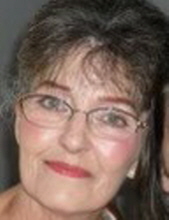
Survivors include her two daughters, Shar Brumfield of Tucson, Arizona and Colleen Williams (Terry) of Olathe, Kansas; three grandchildren, Brittani Gregory, Ashlinn Nixon and Jon Stager and eight great-grandchildren, Tony, Miles, Rody Jr., Valentina “Little Beautiful”, Addy, Cooper, Trinity and Cameron. Also surviving are a brother, Gary “Buddy” Stone of Wichita, Kansas, Diana Kimmell of Ft. Scott and two nephews, Steven and Darren Belcher.
A memorial service will be held at 2:00 P.M. Friday, September 24th at the Cheney Witt Chapel. Memorials are suggested to the Wounded Warrior Project and may be left in care of the Cheney Witt Chapel, 201 S. Main, P.O. Box 347, Ft. Scott, KS 66701. Words of remembrance may be submitted to the online guestbook at cheneywitt.com.
Reminder: COVID-19 Booster Doses Not Yet Approved
~~Official approval happens AFTER CDC adopts recommendations from FDA and ACIP~~
“The following are the COVID-19 vaccines our health departments are able to administer at this time: Moderna for individuals 18 years and older. Now carrying Pfizer, which is FDA approved for individuals 12 years and older,” Rebecca Johnson, Southeast Kansas Multi Health Department said. “We are also are able to give an additional dose of Moderna or Pfizer to those individuals who are moderately to severely immunocompromised. We have a limited supply of the Johnson & Johnson COVID-19 vaccine for those individuals 18 years and older.
“We also have flu shots available at this time for the public. Mondays are walk-in days. Call for an appointment otherwise. Allen County: (620)365-2191; Anderson County: (785)448-6559; Bourbon County: (620)223-4464; Woodson County: (620)625-2484.”
TOPEKA – On Friday, Sept. 17, the first step was completed in COVID-19 vaccine booster shots. However, there are three steps that still need to happen before certain Kansans can receive a booster shot.
What has been approved:
What still needs to happen:
In August 2021, an additional dose of Pfizer-BioNTech or Moderna COVID-19 vaccine was approved for individuals who are moderately or severely immunocompromised. These additional doses are not considered booster doses and remain available.
###
NEWS RELEASE
Monday, September 20, 2021 – 12:15 p.m.
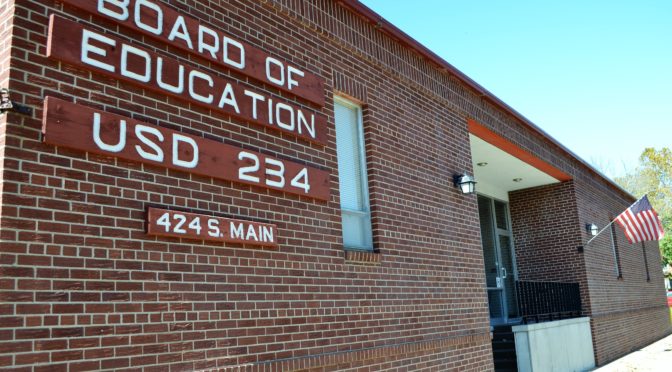
Members of the USD 234 Board of Education met at the Board of Education Central Office on Monday, September 20, 2021, for a special board meeting.
President James Wood opened the meeting. Mr. Wood opened the Budget Hearing. Gina Shelton, Business Manager/Board Clerk, presented information regarding the 2021-22 budget. Mr. Wood closed the Budget Hearing
Board members approved the 2021-22 budget.
The board adjourned.
NEWS RELEASE
Monday, September 20, 2021 – 12:00 p.m.
Members of the USD 234 Board of Education met at the Board of Education Central Office on Monday, September 20, 2021, for a special board meeting.
President James Wood opened the meeting. Mr. Wood opened the Revenue Neutral Hearing. Gina Shelton, Business Manager/Board Clerk, presented information regarding the Revenue Neutral Hearing. Mr. Wood closed the Revenue Neutral Hearing.
Board members approved the following:
· Resolution 21-07 – To Adopt LOB Percentage
· Resolution 21-08 – A Resolution expressing the Property Taxation Policy of USD 234 Fort Scott with Respect to Exceeding the Revenue Neutral Tax Rate for Financing the Annual Budget for 2021-22
The board adjourned.
NOTICE OF AND AGENDA FOR
MEETING OF
FORT SCOTT CITY COMMISSION
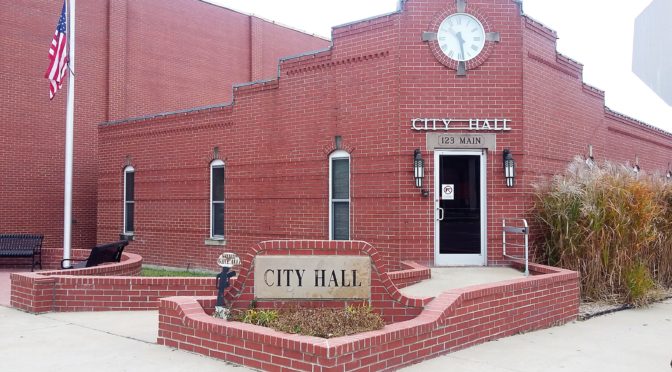
CITY HALL COMMISSION MEETING ROOM
123 SOUTH MAIN STREET
SEPTEMBER 21, 2021
6:00 P.M.
Call to Order
Roll Call:
K. Allen P. Allen R. Nichols L. Watts J. Jones
II. Flag Salute:
Invocation: Led by: (To be Announced)
Approval of Agenda:
Proclamations/Recognitions:
Consent Agenda:
Approval of minutes of the regular meeting of September 7th, 2021, and special meeting of September 13th, 2021.
Approval of Appropriation Ordinance 1296-A totaling $344,867.81.
Request to Pay – HDR Engineering, Inc. – $2,895.01 – River Intake Project Engineering
Request to Pay – Allgeier Martin & Associates – $2,805.46 – Clarifier Painting engineering fees
Request to Pay – Nuss & Farmer, P.A. – $2,978.50 – August legal fees
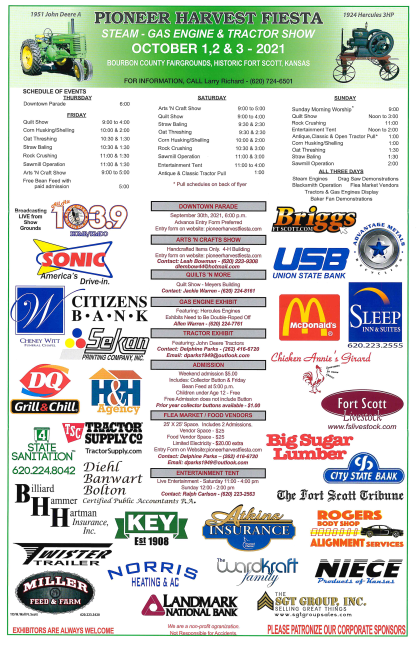
Parade Permit – Pioneer Harvest Fiesta – September 30th, 2021
Request to Pay – SE Kansas Regional Planning Commission – $3,000 – Administrative fees for Ladder Truck Grant
August financials
Engineering Firm Update:
Public Comment:
(Sign up required. Comments on any topic not on agenda and limited to five (5) minutes per person, at Commission discretion)
Public Hearings: None
Old Business:
Consideration of allocation to Bourbon County C.A.S.A. of the 6th Judicial District
Appearances:
Jody Hoener – Prairie Pathways
Kirk Sharp – Gordon Parks Celebration – October 7th to 9th, 2021
Finance Director Update:
Interim City Manager Update:
New Business:
Consideration of Change Order for Below-Grade Project – Owenby Construction and Pay Request #2 – $19,425.00
Discussion of definition of Emergency Purchase in the City’s purchase policy
Discussion of Codes in reference to having a bathroom and kitchen in a residence
Discussion of Buck Run Community Center safety fire lane
Discussion of additional mowing contractor
Discussion of Employee Benefits Program
Discussion of Infrastructure Program
Discussion of sale of Lake properties
Consideration of bid for French drain and sump pump on North National project
XIII. Reports and Comments:
a) Commissioners Reports and Comments:
b) City Attorney Reports and Comments:
XIV. Executive Session – If requested, (please follow script in all motions for Executive Sessions)
XV. Adjournment:
Updated: Agenda
Updated: Minutes on 9/7/2021 (Changed verbiage on Kevin Allen invoice to show Discussion was held on the definition of emergency purchase) – Also on Cooper Street changed the turning lane to 23rd Street when I put 20th Street originally)
Removed: Discussion of HR Agreement between City and County (The agreement is not finalized yet – Bob is out of the office this week)
Removed: Tom Havron and Tom Robertson – Discussion of Ty Cullor field (The agreement is not finalized – Bob is out of the office this week)
Added: August financials paperwork
Added: Infrastructure Projects Funding documentation (Susan gave me her paperwork today)
Added: Appearance – Kirk Sharp – Gordon Parks Celebration (Received his request today)
Added: Consideration of Bid – French Drain and sump pump on North National project (City Manager asked that this be added)
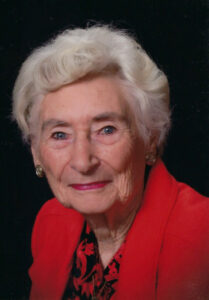
Clara Brewer, 97, of Fort Scott, passed away, Saturday evening, September 18, 2021 at the home of her daughter, Mildred Hall. She was born, December 18, 1923 in Yates Center, Kansas the daughter of Albertis Orville “Bert” and Moma Mary Martin Hodge.
She married Ivan E. Brewer, August 2, 1941, in Pawnee Station, Kansas, and he preceded her in death on January 27, 1997.
Clara was a member of Fort Scott High School Class of 1941, and the Hiattville United Methodist Church. She was also a 75-year member of the Ideal Chapter #369 Order of the Eastern Star, and was active for 25 years with 4H work, as well as County Extension work. Clara was also a volunteer with the Mercy Hospital Auxiliary and The Beacon, Inc. for many years.
Clara is survived by a daughter, Mildred Hall of Fort Scott; a son, Charles Brewer and Paula of Fort Scott; five grandchildren, Donald Hall and Jolene, Dana Lea Ussery and Tim, Rachel Wagner and Kevin, Paul Brewer and Laura Vogelbacher and Barry, and twelve great grandchildren, Kole Wagner, Solomon Brewer, Gabe Harris, Kayla Wagner, Chloe Harris. Abby Harris, Payton Vogelbacher, Madeline Vogelbacher, Erin Hall, Ashten Lampe and Ben, Katie Ussery, and Brooke Ussery.
In addition to her husband, Ivan, she was preceded in death by her parents, a sister, Mildred Hodge and a brother, Milton Hodge.
Rev. Carl K. Ellis will officiate funeral services for Clara Brewer, 2:00 p.m., Tuesday, September 21, 2021, at the Hiattville United Methodist Church under the direction of the Konantz-Cheney Funeral Home.
Burial will follow in the Memory Gardens of Bourbon County Cemetery.
The family will receive friends from 6:00 p.m. to 7:00 p.m. Monday evening, September 20, 2021, at the funeral home.
Memorial contributions may be made to the Hiattville United Methodist Church and may be left in the care of, the Konantz-Cheney Funeral Home, P.O. Box 309, 15 W. Wall St, Fort Scott, KS 66701. Condolences may be submitted to the online guestbook at konantz-cheney.com.
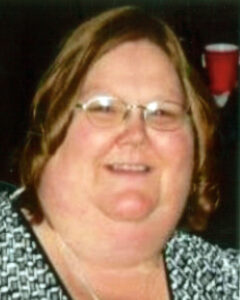
Marsha Louise Lancaster passed away on September 19, 2021, at the age of 54. Marsha was born in Fort Scott, Kansas, on March 1, 1967, to Cecil Otis and Vivian Louise (Towle) Lancaster.
A graduate of Fort Scott High School Class of 1985, Marsha then attended Fort Scott Community College School of Cosmetology.
Marsha worked briefly as a beautician before starting a job at Great Plains Deli, located in old Belltown. What once was Great Plains Deli in Belltown is now Marsha’s Great Plains Deli on south National, famous for generous sandwiches and a welcoming lady at the register with the gift of gab.
Marsha and her deli, over the years, have become known by people from all around the world. All of her nieces and nephews, at one time or another, worked at the deli with their beloved Aunt Marsha.
Anyone who has ever known Marsha, loved Marsha. One of the most caring, compassionate, and loving people around, Marsha will be deeply missed by our entire community. Marsha loved her community and continuously supported her local Tiger and Greyhound sports teams, whether it be by sponsoring teams financially, working late to feed them, or sitting on the sidelines, rooting them on.
She especially loved when her nieces and nephews were playing.
With Marsha’s passing, Fort Scott has lost a valuable piece of our community, but nothing compared to the piece that her family has lost. Family was everything to Marsha, and Marsha was everything to her family.
Marsha is preceded in death by her parents and her best friend, Mary Ann Guss.
Survivors include her two brothers, Tom and wife, Kay Lancaster, and Don and wife, Gwen Lancaster; her two sisters, Debbie Baxley and Carolyn and husband, Gary Washburn; nine nieces and nephews, Matt, Adam and wife Bridgett, Brian and wife Amanda, Keith and wife Amy, Kyle and wife Sarah, Shelly and husband Dan, Sara, Margie, and Donnie; her aunts Ruth Spencer and Eloise Towle; Jade Johnson and family and numerous other family members and friends.
Rhonda Dunn will conduct funeral services, Saturday, September 25, 2021 at 11:00 A.M. at the Cheney Witt Chapel.
Burial will follow in the Memory Gardens Cemetery. The family will receive friends from 5:00 – 7:00 P.M. Friday at the Cheney Witt Chapel.
Memorial are suggested to the Fort Scott High School Booster Club or Care to Share and may be left in care of the Cheney Witt Chapel, 201 S. Main, P.O. Box 347, Ft. Scott, KS 66701. Words of remembrance may be submitted to the online guestbook at cheneywitt.com.

SEPTEMBER 24TH & 25TH
HOMEMADE CRAFTS, BAKE SALE, UNIQUE ITEMS, BREAKFAST/LUNCH
7:00 A.M. to 4:00 P.M.
Sausage rolls (jalapeno & cheddar) Taco
(cheddar) Sandwich – BBQ
Biscuit & Gravy Chicken Salad
***All proceeds to building fund.
Head down to Flavortown on September’s Humanities Hotline
Topeka – Humanities Kansas (HK) announces four new stories now available on the Humanities Hotline.
Topics on the toll-free hotline feature unique Kansas stories about Wichita’s Keeper of the Plains sculpture,
podcasting, John Brown, and poetry. The Humanities Hotline is free and available anytime, day or night, to
anyone with a landline or smartphone at 1-888-416-2018. Hotline topics change monthly.
The Humanities Hotline offers a menu of short Kansas stories, both serious and lighthearted, that are
researched and presented by experts from across the state.
This month, the Museum Director and Curator
of the Mid-America All-Indian Museum, Erin Raux, shares the story of Blackbear Bosin, the artist behind
Wichita’s iconic Keeper of the Plains sculpture. David Tamez, Editor-in-Chief and Co-Founder of Lawrence
Talks shares the inspiration for his podcast series Charla de Merienda–or “snack talks.”
Natalie Vondrak
from the Watkins Museum gives us a brief history of legendary Kansan John Brown in preparation for their
new national traveling exhibit, Encountering John Brown.
Danny Caine, poet, and owner of The Raven
Bookstore in Lawrence reads his poem The American Kid West from his new book, Flavortown.
These
hotline selections are available through September 30, 2021.
The Humanities Hotline provides an accessible alternative to today’s Zoom culture and encourages the
people of Kansas to participate in lifelong engagement with the humanities. The hotline was developed as
a way to combat social isolation and bridge the technology divide with stories that could be easily
accessed without the need for internet.
The Humanities Hotline is free and available to all Kansans and can be especially helpful to those without
access to broadband.
Statewide partners include Abilene Public Library, ArtsConnect Topeka, Augusta
Public Library, Clearwater Public Library, Coffey County Library System, Dorothy Bramlage Public Library
in Junction City, Emporia Public Library, Finney County Public Library in Garden City, Garnett Public
Library, Goddard Public Library, Hays Public Library, Lawrence Public Library, Lowell Milken Center for
Unsung Heroes in Fort Scott, Museum of World Treasures in Wichita, Norton Public Library, Ottawa
Library, and Wamego Public Library.
Contact HK if your organization would like to be considered as a
Hotline partner.
Call the Humanities Hotline at 1-888-416-2018. For more information visit humanitieskansas.org.
About Humanities Kansas
Humanities Kansas is an independent nonprofit spearheading a movement of ideas to empower the
people of Kansas to strengthen their communities and democracy. Since 1972, HK’s pioneering
programming, grants, and partnerships have documented and shared stories to spark conversations and
generate insights. Together with statewide partners and supporters, HK inspires all Kansans to draw on
history, literature, ethics, and culture to enrich their lives and to serve the communities and state we all
proudly call home.
###
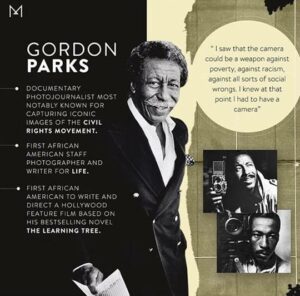
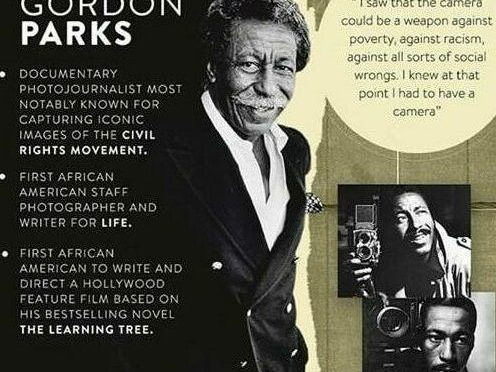
The Gordon Parks Museum is pleased to announce the grand opening and ribbon-cutting event of the Learning Tree Film Trail and the “Lunch and Learn” presentation
“Gordon Parks: Fort Scott and The Learning Tree Revisited”.
The grand opening and ribbon cutting of the Learning Tree Film Trail will be Thursday, October 7, 2021, at 8:00 a.m.
The grand opening will be at Gunn Park, Shelter House #1, 1010 Park Ave. Fort Scott.
This is one of the locations that was used during filming in 1968.
Brochures with maps will be available to help locate the other signs on the trail.
This will be the kickoff event of the 17th & 18th Annual Gordon Parks Celebration events and will also be held in conjunction with the Fort Scott Area Chamber of Commerce Coffee.
The film trail is a series of signs located at the different locations where the filming of The Learning Tree took place. The signs will also include QR codes along with a virtual tour of the identified scene locations of the film.
There will also be a “Lunch and Learn” presentation later the same day Thursday, October 7, 2021, with keynote speaker, John Edgar Tidwell, Professor Emeritus of English at the University of Kansas.
The presentation titled “Gordon Parks: Fort Scott and The Learning Tree Revisited”.
This will be held at Danny and Willa Ellis Family Fine Arts Center from 11:50 a.m. to 1:00 p.m.
The event is free to the public and participants are able to bring their lunch and drinks with them. Box lunch and drink are available for $8. Dessert will also be available.
Local historian Arnold Schofield will open with a short presentation on the history of Gordon Parks and his return visit to his hometown of Fort Scott, Kansas, in 1950, as documented in the book Back to Fort Scott.
Mr. Schofield will then introduce keynote speaker, John Edgar Tidwell, for a presentation on Gordon Parks’ The Learning Tree legacy in comparing and contrasting the book and film.
The presentation will also cover the importance of the cultural and historical impact of them both, along with the story and subject matter compared to today.
The Gordon Parks Museum has received a grant from the Fort Scott Area Community Foundation and Humanities Kansas to assist with funding support for this project.
The Gordon Parks Museum extends an invitation to the public to attend both of the events, especially the citizens of Fort Scott, Bourbon County, and the four-state area.
About Humanities Kansas
Humanities Kansas is an independent nonprofit spearheading a movement of ideas to empower the people of Kansas to strengthen their communities and our democracy. Since 1972, our pioneering programming, grants, and partnerships have documented and shared stories to spark conversations and generate insights. Together with our partners and supporters, we inspire all Kansans to draw on history, literature, ethics, and culture to enrich their lives and serve the communities and state we all proudly call home. Visit humanitieskansas.org.
###