All posts by Submitted Story
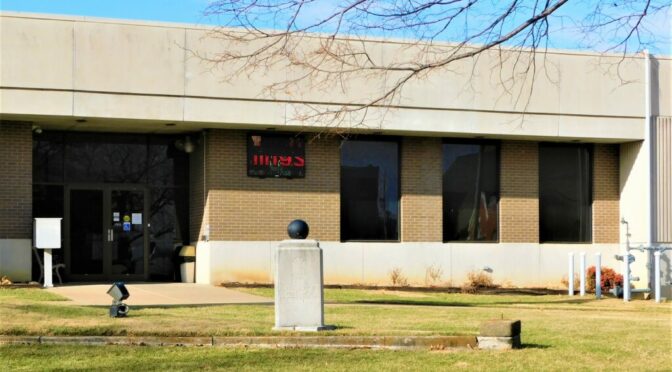
Parent Empowerment Circle is April 27 Agenda
Parent Empowerment Circle
Sunday, April 27, 2025
First Southern Baptist Church, 1818 South Main, Fort Scott, KS
Agenda
1:30 PM – Sign the attendance sheet and get name tag
1:30-1:45 PM – Meet and Greet Time with other attendees
1:45 PM – Round table introductions: Please briefly introduce yourself, why you are attending today and what you hope to gain from coming to this meeting.
2:00 PM – Introduction of special speaker via Zoom
2:10 PM to 2:40 PM – Presentation of special guest speaker (Recorded for later playback, link will be on the KSRE Southwind District Website)
2:40 PM to 3:00 PM – Question and Answer time with special guest (NOT RECORDED)
3:00 PM to 3:15 PM – Other questions, comments, suggestions
3:15 PM – Dismiss meeting but you are welcome to chat with other attendees
3:15 PM to 3:30 PM – Clean up space and leave building
Next meeting: May 25, 2025, 1:30-3:30 PM at this same location
Thank you all for your support!
Cherri Walrod
Community Health Worker
K-State Research and Extension Southwind District

The CHW project has received funding and support from K-State 105, Kansas State University’s economic growth and advancement initiative for all 105 counties in Kansas. Learn more at k-state.edu/105.
What’s Happening in Fort Scott April 25 Edition
|
|||||||||||||||||||||||||||||||||||||||||||||||||||||||||||||||||||||||||||||||||||||||||||||||||||||||||||
|
|||||||||||||||||||||||||||||||||||||||||||||||||||||||||||||||||||||||||||||||||||||||||||||||||||||||||||
|











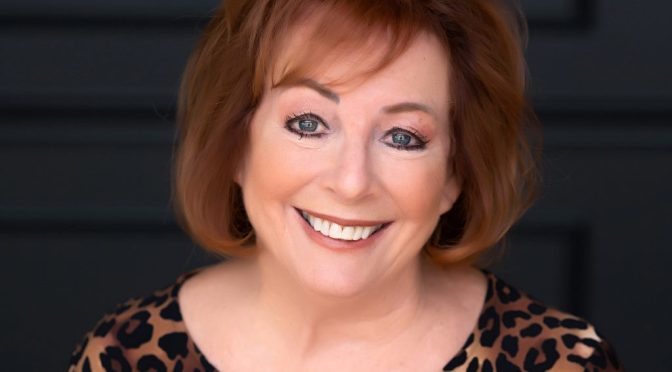
Negativity by Patty LaRoche
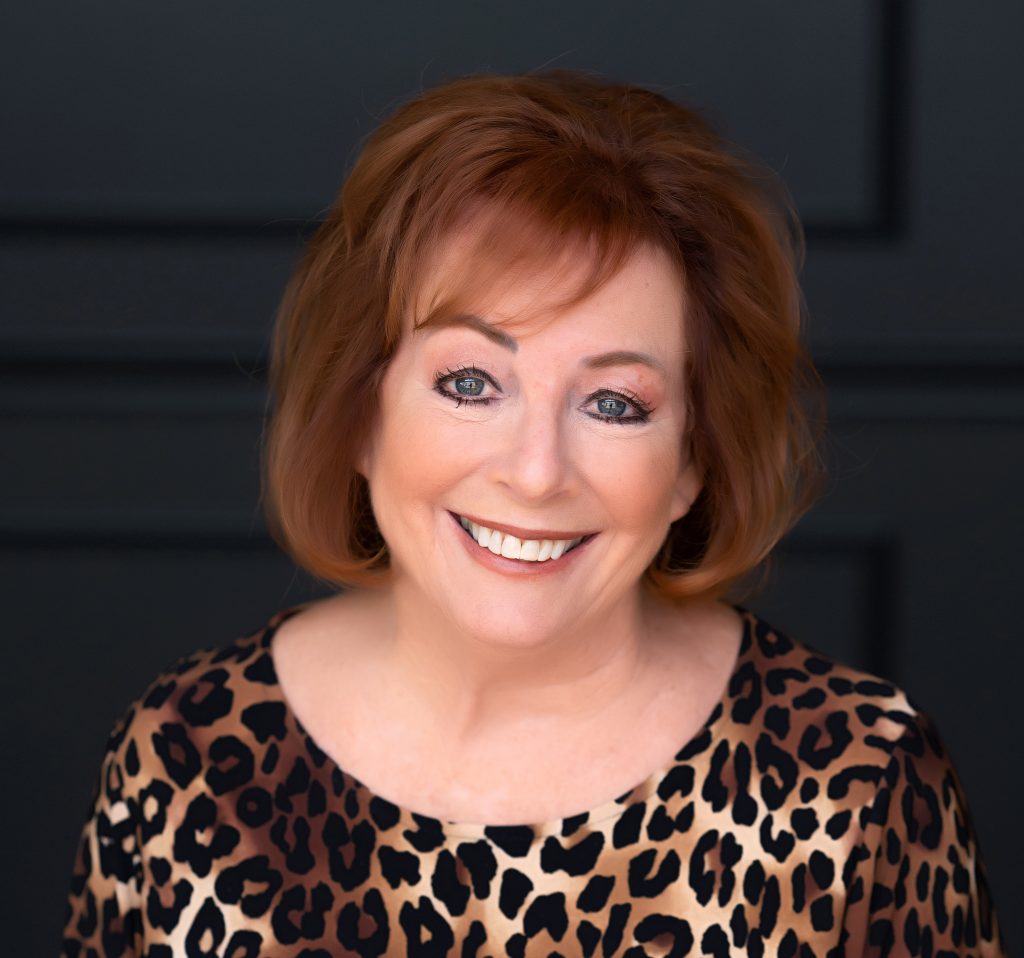
Author: A Little Faith Lift…Finding Joy Beyond Rejection
www.alittlefaithlift.com
AWSA (Advanced Writers & Speakers Assoc.)
“We write our sorrows in the marble, our mercies in the dust.” Pastor Greg Groeshel spoke those words, and he is right. For too many people (Christians included), thinking about what is wrong is so much easier than thinking about their blessings. A recent posting caused me to pause and question if any of these describe me. Read it slowly.
“Someone is taking their last breath in a hospital bed today, and you’re frustrated sitting in traffic.
Someone is spending their first night alone after years of love, and you’re annoyed your partner left dishes in the sink.
Someone is burying their baby they carried for nine months, and you’re upset your child spilled milk on the couch.
Someone is burying their mom who created them, and you’re annoyed your mom called you twice this morning.
Someone is wishing for just one more conversation with their dad, and you’re rolling your eyes at his advice.
Perspective is everything. Appreciate the little things because, one day, they’ll be the big things.”
Something is terribly wrong with God’s children. We are consumed with whatever goes against our wants/needs/desires. Scripture calls us to hope, yet we are terrible hopers. We expect the worst, so we won’t be disappointed. “Why is life hard? Why do others have it so much easier than I do? They sin more, yet they have more. Nothing has turned out like I expected, so I don’t expect anything different.”
The average person has 10,000 thoughts each day. That works out to be 3.5 million thoughts a year. If you were to categorize those as “+” or “-”, how many thoughts would be under each heading? Think of it this way: if someone gave you $10,000 this morning and said, “Spend it any way you like as long as you spend it all before you go to bed tonight.” Hopefully, you wouldn’t just pilfer it away on meaningless junk.
So, why do we do that with our whacky thoughts that aren’t even worth thinking? We need to focus on the abundant life God has called us to. We can engage in either self-pity, blame, stubbornness and bitterness, or we can follow the directive of Phil. 4:8. Finally, brothers, whatever is true, whatever is noble, whatever is right, whatever is pure, whatever is lovely, whatever is admirable—if anything is excellent or praiseworthy—think about such things.
How do we do that? We put our mercies in marble and our sorrows in the dust.

Raymond Leslie Robinson Obituary

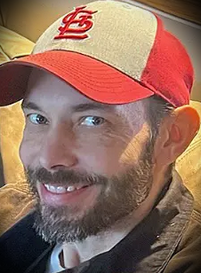
Raymond Leslie Robinson, age 44, a resident of Ft. Scott, Kansas, passed away Saturday, April 19, 2025, at the North Care Hospice House in Kansas City, Missouri. He was born October 7, 1980, in Redfield, Kansas, the son of Morris Earl Robinson and Darlene Harned Robinson. He was the youngest of the eleven Robinson children. Soon after his birth, the family moved to Sedgwickville, Missouri. They later made their home in Dexter, Kansas and then Neosho, Missouri. Raymond later settled in Ft. Scott where he is employed as a machinist for Extrustions. Raymond enjoyed fishing and spending time with his children. He loved watching football and was also a great fan of the St. Louis Cardinals.
Survivors include his two daughters, Shelby Robinson of, Missouri and Alexia Robinson, of Ft. Scott. Also surviving are his mother, Darlene Robinson of Springfield, Missouri; two brothers, Mark Robinson (Marianne) Thompsonville, Illinois and Isaac Robinson (Pia) of Tarlac City, Philippines and seven sisters, Sonia Gonske, of Montgomery, Texas, Twyla Young (Tim) of Garland, Kansas, Lesha Seaver of Liberty, Missouri, Suzanne Ruble (Tim) of Springfield, Missouri, Lela Robinson-Bradley (Steve) of Murrieta, California, Lynna Longaro (Joe) of Austin, Texas and Kimberly Feiner (Larry) of Glendale, Arizona, and a brother-in-law, Tyronn Nunnelly of St. Louis, Missouri. Raymond was preceded in death by his father, Morris Robinson and a sister, Myrna Robinson-Nunnelly.
Rev. Marty Dewitt will conduct funeral services at 10:30 A.M.
Friday, April 25th at the Cheney Witt Chapel.
Private burial will take place in the Robinson Family Cemetery near Redfield, Kansas.
Services are under the direction of the Cheney Witt Chapel, 201 S. Main, Ft. Scott, KS 66701. Words of remembrance may be submitted to the online guestbook at cheneywitt.com.
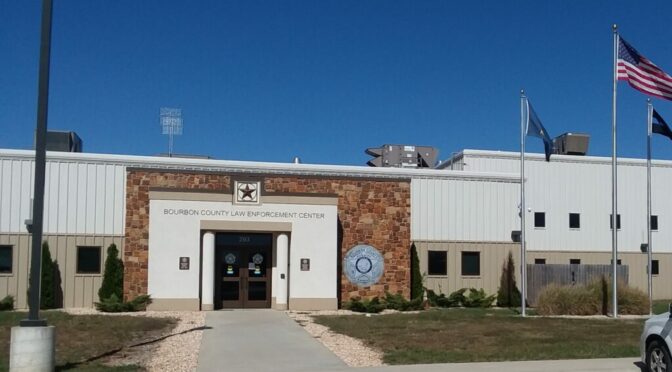
The Bourbon County Sheriff’s Office Daily Reports April 25
Early Childhood Legislation: Governor Kelly
Governor Kelly Signs Landmark
Bipartisan Early Childhood Legislation:
Here’s What They’re Saying
TOPEKA— Governor Laura Kelly signed Thursday House Bill 2045, a bipartisan compromise to expand access to child care services and consolidate existing early childhood programs into the Office of Early Childhood. The bill was crafted through negotiations with a bipartisan group of Kansas legislators from both the Kansas House of Representatives and the Kansas Senate and ultimately received widespread bipartisan support.
This landmark piece of legislation is the most consequential early childhood education and care legislation enacted in Kansas in 15 years. Governor Kelly signed the bill into law during a ceremony at the Kansas Children’s Discovery Center in Topeka.
Under this legislation, nearly 20 existing state programs serving young children and families will be consolidated into the Office of Early Childhood. The office will be responsible for the state’s early childhood system, serve communities and stakeholders by developing a statewide strategy for expanding access to child care, and administer services currently spread throughout various state agencies.
Here’s what they’re saying:
“Access to safe, high-quality childcare is essential for Kansas families and our workforce. This legislation provides a bipartisan solution that simplifies regulations, improves government efficiency, and removes unnecessary barriers that have limited childcare availability. By streamlining processes while upholding strict safety standards, we are creating a system that supports children, increases access, and ultimately makes childcare more affordable for families across the state.”
—Representative Laura Williams, Kansas House District 30
“This bipartisan child care bill removes the burdensome government red tape and provides additional child care slots to communities all across Kansas, both rural and urban. I’m proud that we have gotten this bill across the finish line and delivered for Kansas families.”
—Senator Tory Marie Blew, Kansas Senate District 33
“This bipartisan compromise will propel Kansas early childhood system forward and be transformative for children and families. By establishing the Office of Early Childhood and supporting our early childhood workforce, we will expand access to high-quality child care and provide our children the best possible start.”
—Senator Pat Pettey, Kansas Senate District 6
“For far too long, childcare in Kansas was fragmented, inefficient, and difficult for parents and providers to navigate. As Chairman of the House Commerce Committee, I’ve heard firsthand how the lack of affordable, accessible childcare has kept parents—especially mothers—out of the workforce. This bill revolutionizes the way we approach childcare by consolidating oversight into a single department and creating transparency in both regulation and funding. Most importantly, it empowers parents with more affordable options by allowing individuals to care for up to four children without bureaucratic red tape. This commonsense solution will open thousands of new childcare slots and help parents get back to work. It’s a win for Kansas families and our economy.”
—Representative Sean Tarwater, Kansas House District 27
“The Office of Early Childhood is a great example of what bipartisan collaboration can achieve. Governor Kelly has been a strong advocate for expanding childcare in Kansas, and I’m thankful to her team and lawmakers on both sides of the aisle who helped bring this vision to life. Making childcare more affordable and accessible is one of the most meaningful ways we can support Kansas families”
—Representative Brandon Woodard, House Democratic Leader
“The Kansas Chamber thanks the Legislature and the Governor for the passage of House Bill 2045, a comprehensive package reforming child care. The affordability and accessibility of child care facilities has continued to be a concern of the business community as business leader believe the lack of child care keeps Kansans out of the workforce. House Bill 2045 establishes the Office of Early Childhood to consolidate government positions and streamline child care services across the state, opening up the much needed access to child care for Kansas families and allowing them to reenter the workforce.”
—Alan Cobb, President and CEO, Kansas Chamber
“High-quality, affordable childcare is vital to Kansas families and to a strong economy. The new Office of Early Childhood streamlines access, reduces burdens, and reflects a bipartisan commitment to helping parents return to work while supporting healthy child development.”
—Joe Reardon, President and CEO, Greater KC Chamber of Commerce
“Access to high-quality child care is necessary for Kansas children and our economy to thrive. By unifying early childhood services under one roof, it will remove red tape and make it easier for families, providers and businesses to access critical early childhood services. We applaud the Governor and the Kansas Legislature for establishing the Office of Early Childhood and taking an important first step to improving the early childhood system in Kansas”
—David Jordan, United Methodist Health Ministries Fund
“Work aimed at expanding access to child care for families is worth all the time and effort invested in passing this legislation. The bipartisan product will be instrumental for making the process better for child care organizations and for those who interface with the system; and, ideally, it will result in more child care slots. The state needed desperately to move in this direction and that’s what this significant outcome reflects.”
—Joyce Glasscock, Executive Director, Kansas Alliance of Boys and Girls Clubs
“For far too many Kansans, access to affordable child care is the final hurdle on the path to achieving the American dream. The lack of child care options has become a major hinderance for economic growth in our region and across the state. House Bill 2045 will benefit job creators and help everyday Kansans by reducing bureaucracy and increasing options for families. We thank the Legislature and the Governor for coming together to address this pressing challenge.”
—John Rolfe, President and CEO, Wichita Chamber of Commerce
###
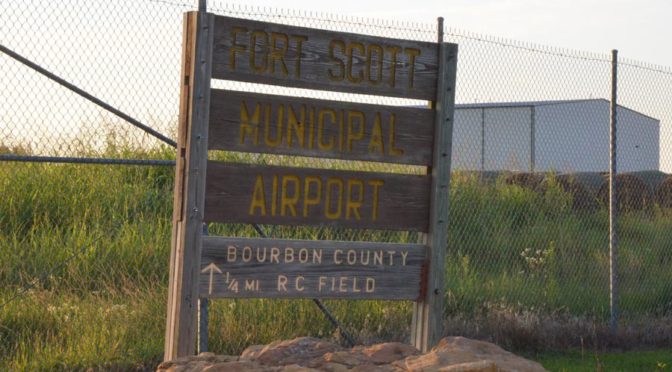
Fort Scott Municipal Airport Receives $684,000 To Replace Taxiway Edge Lighting
Governor Kelly Announces Over $14M for
47 Aviation Projects Across Kansas
TOPEKA – Governor Laura Kelly announced Thursday $14.5 million for 47 aviation projects across the state through the Kansas Airport Improvement Program (KAIP), which provides funding for planning, construction, and rehabilitation of public-use general aviation airports.
“The Kansas aerospace industry is an essential part of our state’s economy,” Governor Laura Kelly said. “Keeping our aviation infrastructure in optimal condition is a large part of that economic growth and job creation, allowing local businesses and communities to prosper.”
The Kansas Department of Transportation’s Division of Aviation received 81 applications seeking a combined total project value of more than $42 million for this round of KAIP grants. Projects were selected from across the state and focused on pavement preservation, safety, and air ambulance accessibility to remote communities.
“Combining state and local funds to provide vital improvements to general aviation airports has helped to create a statewide aviation network citizens can depend on,” said Secretary of Transportation Calvin Reed. “This offers more services, like air ambulance accessibility, that can help support transportation needs in all areas of Kansas.”
The KAIP receives $15 million annually through the bipartisan Eisenhower Legacy Transportation Program (IKE) and requires local matching funds of 10-50%, depending on the project. With local matching funds for these projects, the KAIP total project value this year is $22.9 million.
Approved state FY 2026 KAIP projects:
Allen County Airport, Iola
- $409,500 for design and construction of a taxilane project.
Anthony Municipal Airport, Anthony
- $153,000 for Jet A fuel system.
Atkinson Municipal Airport, Pittsburg
- $81,000 for a focused Airport Layout Plan update.
Atwood-Rawlins County City—County Airport, Atwood
- $270,000 for new Automated Weather Observation System (AWOS).
Chanute Martin Johnson Airport, Chanute
- $450,000 for design and reconstruction of south apron phased pavement project.
Cheyenne County Municipal Airport, Saint Francis
- $180,000 for runway pavement rehabilitation.
Clay Center Municipal Airport, Clay Center
- $468,000 to construct taxilanes and hangar approaches.
Clyde Cessna Field, Kingman
- $90,000 for fuel system upgrades.
Comanche County Airport
- $540,000 for runway and taxiway lights.
- $90,000 for fuel system improvements.
Cook Airfield, Rose Hill
- $34,650 for aircraft parking ramp and drainage.
- $22,680 for Taxiway A extension.
Dighton Airport, Dighton
- $274,500 for runway and taxiway pavement crack fill, seal coat, and markings.
Emporia Municipal Airport, Emporia
- $391,000 to rehabilitate the south apron.
- $208,000 to relocate and upgrade fuel system.
Fort Scott Municipal Airport, Fort Scott
- $684,000 to replace taxiway edge lighting.
Freeman Field, Junction City
- $189,000 for tip-down rotating beacon.
Garnett Municipal Airport, Garnett
- $20,000 help with local match for phased FAA runway reconstruction project.
Gove County Airport, Quinter
- $120,000 for a pilot lounge, restroom, hangar, and snow removal equipment storage.
Great Bend Municipal Airport, Great Bend
- $450,000 for design of runway 11/29 reconstruction.
- $146,000 for local match for FAA funded runway 17/35 rehabilitation.
Greensburg Municipal Airport, Greensburg
- $191,250 for design of a project to pave runway 18/36.
Independence Municipal Airport, Independence
- $756,000 for rehabilitating north asphalt apron pavement.
Jetmore Municipal Airport, Jetmore
- $800,000 for planning and design for runway 17/35 reconstruction project.
Johnson County Airport, Olathe
- $13,600 for pavement maintenance materials.
Kearny County Airport, Lakin
- $537,000 for design and construction of runway 14/32 lighting.
Lawrence Regional Airport, Lawrence
- $666,000 for design and construction of runway 1/19 pavement rehabilitation.
Lt. William M. Milliken Airport, Eureka
- $385,200 for design and construction of a runway light and PAPI rehab project.
Mankato Airport, Mankato
- $333,333 for design of a runway extension, rehab, and lighting project.
Marion Municipal Airport, Marion
- $138,330 to replace the fuel system.
Mark Hoard Memorial Airport, Leoti
- $373,860 help with local match for FAA funded hangar project.
McPherson Airport, McPherson
- $350,000 for design and construction for phased fuel system replacement.
Miami County Airport, Paola
- $765,000 to rehabilitate west taxilanes and hangar ramps.
Mid-America Regional Airport, Liberal
- $382,500 to replace runway 04/22 PAPI and REIL systems.
Ness City Municipal Airport, Ness City
- $25,215 for help with local match for FAA funded apron expansion project.
New Century Air Center, Olathe
- $800,000 for rehabilitation of the central portion of the west apron.
- $13,600 for pavement preservation materials.
Newton City-County Airport, Newton
- $647,361 for electrical upgrades to runway 8/26.
Oakley Municipal Airport, Oakley
- $180,000 for fuel system improvements.
Osborne Municipal Airport, Osborne
- $800,000 to rehabilitate runway 02/20 pavement.
Pratt Regional Airport, Pratt
- $77,490 to update ALP.
Scott City Municipal Airport, Scott City
- $27,360 to relocate wind cone and upgrade segmented circle.
Shalz Field, Colby
- $180,000 to construction taxiway extension.
Stanton County Municipal Airport, Johnson
- $270,000 to install electric vault and relocate airfield electrical controls and regulators.
Syracuse-Hamilton County Airport, Syracuse
- $27,000 for runway 13/31 pavement crack seal.
Tri-City Airport, Parsons
- $540,000 to replace fuel system.
Wellington Municipal Airport, Wellington
- $29,925 fuel system improvement.
###
The Bourbon County Sheriff’s Office Daily Reports April 24
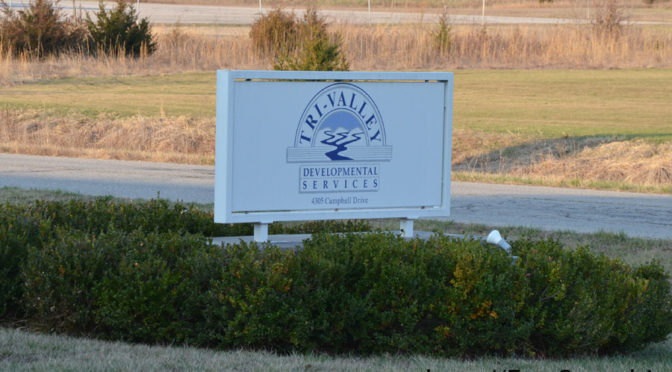
Tri-Valley to Celebrate 50th Anniversary
On May 1st, Tri-Valley Developmental Services, Inc celebrates its 50th Anniversary.
In 1975, a group of concerned citizens got together and decided that there was a need to serve our neighbors with intellectual and developmental disabilities. On May 1st of 1975, Tri-Valley came into existence under the name Tri-Valley Developmental Center. Our first service center was located in Piqua, KS.
In 50 years, Tri-Valley has grown from its small roots in Piqua, KS and now cover 8 counties in Southeast Kansas (Allen, Bourbon, Chautauqua, Elk, Greenwood, Neosho, Wilson, and Woodson).
The celebration will be at 1 pm at Central Park Pavilion located at 101 S. Forest in Chanute. Our annual awards ceremony will take place during the anniversary party as well. Robbie Bell will be the afternoon’s featured entertainment.
Please join us. For more information, contact Tricia Campbell at 620-431-7655.
Governor Kelly Directs Flags be Flown at Half-Staff in Honor of Pope Francis
TOPEKA – Governor Laura Kelly, in accordance with Executive Order #20-30, on Wednesday, directed flags on all state buildings, grounds, and facilities to be flown at half-staff immediately until sunset on the day of interment, April 26, in honor of Pope Francis.
“As one of the most influential leaders of our time, Pope Francis was a beacon of light. His wisdom inspired countless people to treat others with compassion and generosity,” Governor Laura Kelly said. “May his legacy of selflessness and humility be instilled in each of us and continue to live on.”
To receive email alerts when the governor orders flags to half-staff, please visit: https://www.governor.ks.gov/
SparkWheel Golf Tourney is May 3
|
|
|
|
|

|
|
|
|
|
|
|
|
|
|
|
|
|
|

|
|
|
|
|
|
|||||||||||||||
|