|
|

|
|
|
|
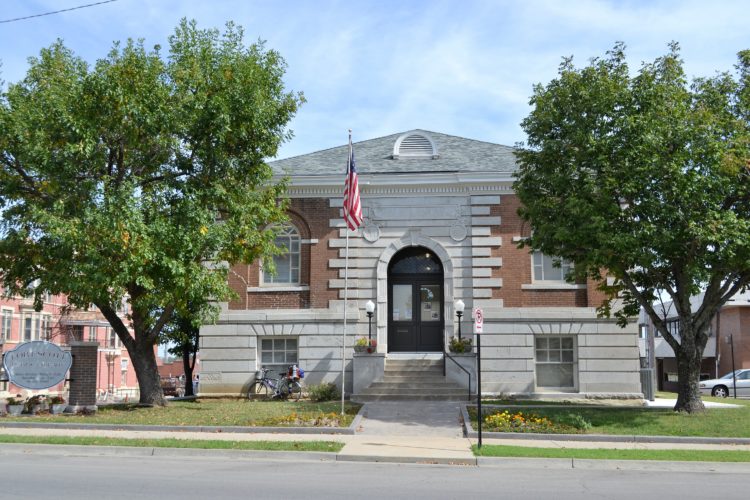
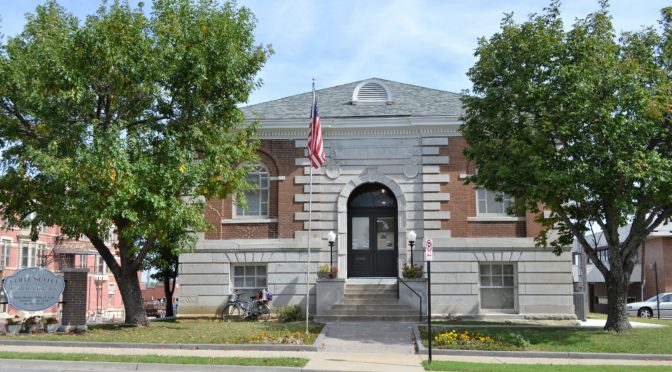
Fort Scott Public Library has eliminated fines on overdue items.
This does not mean that people should keep items out forever. When items are nine days late, library accounts are restricted so that no additional items are checked out until all items are returned.
When items are 30 days late, we will bill for the full cost of the item. After an item is charged to the patron’s account, we will not adjust charges if the item is returned later.
We will not be mailing multiple overdue notices anymore.
We will mail one notice when items are 23 days overdue; a week later we will mail an invoice.
We encourage our patrons to provide email addresses in order to receive emailed overdue notices, to set their library accounts to send them texts or emails when items are due, and to log in to their library accounts to check their account status.
We made this decision after comparing our income from fines for eight months to the amount we were spending on postage, supplies, and staff time. We spent more than twice as much money as we received.
After the library board approved the new policy in October, library staff removed existing fines from all accounts.
Charges for lost, damaged, or unreturned items remain.
Submitted by Lisa Walther
FSHS Thespians Announce Annual Children’s Christmas Play Auditions
The Fort Scott High School Thespians will hold auditions for “A 21st Century Christmas Carol” for children in 1st through 8th grades.
Auditions are from 6:30-8 p.m. on Nov. 13 or 14 in the high school auditorium. Performers only need to attend one of the sessions and no preparation is necessary, although children should come prepared with a list of any rehearsal conflicts. Rehearsals are generally Monday through Thursday from 6:30-8 p.m. Performances are at 7 p.m. on Dec. 14 and 15 and at 2 p.m. on Dec. 15. Auditions will consist of warm-up theatre games and cold readings from the script.
“A 21st Century Christmas Carol” is a new twist on a familiar tale. “Eleanor Scrooge, a greedy old spinster, spends her days barking orders at her gift shop employees. Though the mall will be closed, she still wants them to work on Christmas Day! Then she’s visited by the ghost of her old boss, Mr. Marley, and a parade of zany spirits who materialize from cheesy collectible figurines. … With great humor, contemporary references, and crazy characters, … audiences will fall in love with the classic story all over again,” according to Pioneer Drama Service. Previews of the script can be found on the Pioneer Drama Service website.
Performers who are cast in the play will have a $30 performance fee to assist with expenses. The show is directed by FSHS Thespians and Thespian Director Angie Bin. For more information, contact Bin at 620-719-9622 or abin@usd234.org.
|
|
|
|
|
|
|

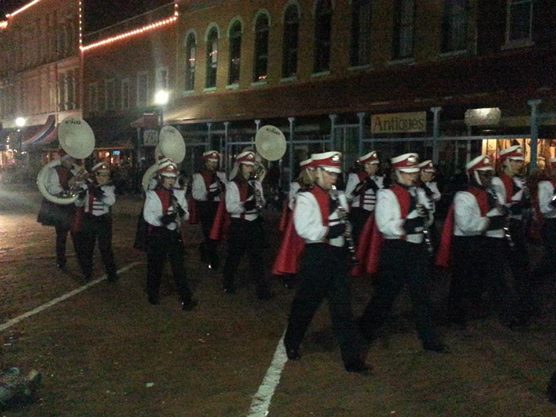
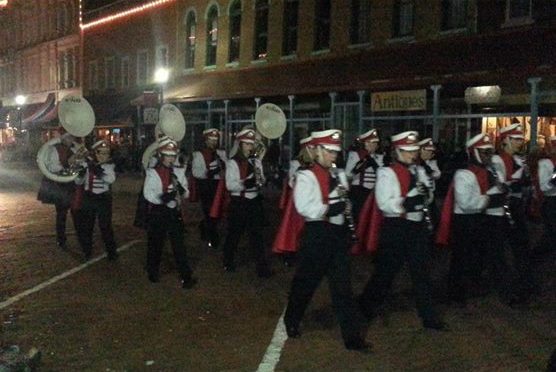
Christmas Parade & Tree Lighting is Tuesday, December 4, 2018, at 6 p.m.
The Fort Scott Area Chamber of Commerce announces that the annual holiday Christmas Parade and Tree Lighting will be held on Tuesday, December 4, 2018, in Downtown Fort Scott starting at 6 pm. The parade route will take place on Main Street starting at 3rd Street, proceeding to Skubitz Plaza, then exiting northwest towards National Ave.
The 2018 parade theme is “It’s a Cowboy Christmas!”, providing a fun and festive parade for everyone to get into the spirit.
The Chamber is calling all participants. There is no cost for businesses, schools and other organizations to register a float, golf cart, foot unit, band, horse unit, car or other entry into the parade. The parade entry form may be found on the Chamber website, www.fortscott.com, or may be picked up at the Chamber office at 231 E. Wall Street. Entry deadline is Monday, December 3rd at 1 pm.
Santa will be in Fort Scott for the parade, and Papa Don’s for a meet-and-greet. There will be drawings for prizes, photos with Santa, free hot chocolate in front of J & W Sports, the lighting of the Mayor’s Christmas tree and much more.
The Chamber encourages all to participate in the parade or attend as an onlooker to enjoy this magical night in Downtown Fort Scott.

I would like to thank the Lord that we as Americans still have the privilege and blessing to voice our thoughts and opinions at the ballot box and that we still have the ability to freely elect our government officials at all levels.