All posts by Loretta George

Results of Bourbon County Primary Election 2018: Republican (Unofficial)

Winners of the County Commission District 1 Republican:

Lynne Oharah-287, Matthew Crystal-174, Robert Query-87

County Treasurer Republican: Patricia Love- 1,359

County Attorney Republican: Jacqie Spradling-1,246

State Board of Education Republican: Jim Porter-1,235

House of Representatives 4th District Republican: Trevor Jacobs- 1,268

House of Representatives 2nd District Republican: Kenneth Collins-130

State Senator 13th District Republican: Richard Hilderbrand-850

Commissioner of Insurance Republican: Vicki Schmidt-756, Clark  Shultz-698

State Treasurer Republican: Jake LaTurner- 1,348

State Attorney General Republican: Derek Schmidt-1,377

Secretary of State Republican: Scott Schwab-516, Craig McCullah-266, Randy Duncan-258, Dennis Taylor-188, Keith Esau-178.

Governor Republican: Kris Kobach-803, Jeff Colyer-517, Ken Selzer-139,Jim Barnett-71, Patrick  Kucera-24, Tyler Ruzich-6, Joseph Tutera-6.

U.S. House of Representatives Republican: Caryn Tyson-785, Kevin Jones-310, Steve Watkins-217, Steve Fitzgerald-128, Dennis Pyle-82, Doug Mays-34, Vernon Fields-20


Pump Trails Ready To Try Out

Shane Walker, Fred Pather, Olivia Walker and Deven Coulter at the Gunn Park Pump Track Sunday morning.

Something new has been added to Fort Scott’s biggest park.

With no sign to designate the spot, it looks like piles of dirt on the south side of Park Avenue, just before entry to Gunn Park.

“It’s kind of evolving,” Fred Prather, one of the designers of the track said. “It needs bikes to pack it down.”

Prather, Shane Walker, and Frank Halsey started physical work on the new Gunn Park Trails Pump Track about four months ago.

“We’ve had the vision of a pump track since the land purchase,” Prather said. ” We wanted someplace to set up for the kids that was easy to access and spectator friendly. “

“The project was started last year, as a result of a grant from Timken (a local company), allowing for the purchase of the property,” said Frank Halsey.

Mid-Contenintal Restoration donated the dirt and the City of Fort Scott brought the dirt in.

Then the workers began piling into small hills with which to hone biking skills.

So, what is pump track racing?

 “Pump track translates from the rider pumping the bike with his arm and legs to maintain and even create momentum,” Prather said.

Olivia Walker rides on the pump track Sunday morning, Deven Coulter is in the background.

To create the local Gunn Park Pump Track, Prather did his homework.

” For research I rode every pump, BMX and slopestyle course I could find in a 4-hour driving distance….well, there really isn’t that many, so it seemed like a perfect addition to our trail system, Gunn Park Trails, to draw in more riders.”

” It is loosely styled for BMX riding which stands for bicycle motocross, so when finished it will be wide enough to run 2-3 riders at a time in a head- to- head race.”

“I grew up riding BMX and ride mountain bikes now and I am involved with Gunn Park Trails and other bike projects in town,” Walker said.

“It is open to ride,” Walker said, “but we still have finish work to get done.”

“We will do improvements and additions to only increase the fun,” Prather said. “Things like adding obstacles called ‘skinnies’ to open areas where you can try riding along something 4-10 inches wide for a length of 10 foot, etc.”

 ” We also plan to construct ‘drop zones’  of progressing heights, where you effectively ride off a ramp to flat ground,” Prather said.  “These are skills we commonly use on a mountain bike trail.  It will be a place where it’s nice and open and you can practice and perfect technique. This not only improves your riding ability faster, it is also safer.”

There is a beginner course on the far south side of the property.

Eventually, there will be a sign with safety rules and “possible billboards behind the hills,” Prather said. “And grass will be sown on the side of the hills.” He also envisions bleachers for spectators.

” I’ve been involved with Gunn Park Trails since the beginning,” Prather said.  “When you can get kids participating and excited about a project it’s a win, they tell their friends and family.”

“We started to feel a need for BMX style riding and to allow mountain bikers access to a pump track which is an activity becoming increasingly popular,” Shane Walker said.


U.S. House Race: Comments From the Forum

From left: Steve Watkins, Steve Fitzgerald, Doug Mays at the podium, Caryn Tyson and Kevin Jones. Five of eight candidates for the U.S. House of Representatives seat spoke at the Candidates Forum on July 31 at Fort Scott High School.

There are eight candidates for the U.S. House of Representatives vacancy to be filled because incumbent Lynn Jenkins is stepping down. Five came to Fort Scott for the Fort Scott Chamber of Commerce sponsored Candidate Forum at Fort Scott High School.

These are excerpts from remarks given during the 2018 Candidates Forum which was July 31.

Dennis Pyle did not attend but sent a representative to tell the audience he is a  fiscal conservative,  pro-life, pro 2nd Amendment Rights and one who fought against tax hikes and will continue Trump’s agenda.

Kevin Jones is running because of the lack of servant leaders. He served in the military 5.5 years as a Green Beret and will fight for jobs and curb the national debt.

Vernon Fields is an Army veteran, federal law enforcement retiree, a criminologist, and registered nurse. His values are the sanctity of life, limiting government and constitutional rights.

Steve Watkins is a political outsider, engineer, and builder,  who values religious freedom and family values. “If you believe we can do better, I will fight you.”

Doug Mays is a Southeast Kansas native and was Speaker of the  House in Kansas for four years.

Caryn Tyson is a grassroots conservative who owns and operates a ranch in Linn County and has worked at NASA. “We waste money on the government and it needs to stop.”

Steve Fitgerald is a retired military officer, spent years in the Kansas Senate, is pro-life, pro 2nd Amendment and a businessman for 11 years.

Question 1: The Affordable Health Care Act, what is the replacement?

Kevin Jones: The first thing people can do is begin to exercise. The issue is the cost of the act. Create a healthcare open market pool.

Vernon Fields:  Said he has affordable health care as a retired military officer. “I would look at opening that kind of pool up”.

Steve Watkins: A foundation of transparency and competition, with less regulation. His wife is a doctor, which is a heavily regulated market. There is a need to empower healthcare providers to treat it as a service, not a right.

Doug Mays:  When the government takes over something done by private business, “they always mess it up.”  The need is to allow competition on a nationwide basis.

Caryn Tyson: It’s hurting  businesses, “get government out of the room.” The government should not be involved between us and a doctor.  Regulation but options.

Steve Fitgerald: ” We need to end it, not play with it, get rid of it. We don’t need the federal government in insurance.” Health savings accounts should be allowed.

Questions 2: Are you for or against completion of the border wall, how would you fund it?

Vernon Fields: In the military, he saw the border. ” I know we have problems with it.” ” A 14-mile-stretch costs $14 million.”  He would look at other budgets to build the wall.

Steve Watkins: ” I was a combat engineer and build walls, they are not a lethal tool”.

Doug Mays:  The Mexican border wall is more than immigration, it’s about drugs. When the National Guard was at the border, the drugs coming across were less. The border needs to be secured.

Caryn Tyson:  Supports building the wall, and would allow individuals to submit donations to help fund it. Also an issue is cutting government waste, with which she had success at the state level. She is willing to work on legislation to fight for U.S. security.

Fitzgerald: The border wall is needed as part of the overall security.  “There is no reason why this country does not have walls for borders.”

Kevin Jones: Supports building a border wall, because it is a deterrent. “Congress just passed a $1,000 a month for renting cars for each Congressman”. “There are a lot of ways to pay for that wall.”

Question 3: Would you support the president’s use of tariffs as a means to force fairer world trade?

Stever Watkins: On tariffs, he would have to look at each proposal. “Our economy benefits from free trade. The government role is to stay out of the way.”

Doug Mays; Yes, use tariffs to trade more fairly.  “This president will be known as the great negotiator. We don’t need a trade war. Farmers and ranchers especially. No tariffs anywhere, it would be a free market.”

Caryn Tyson: Fair and free trade is needed. Trump demonstrated he backs up agriculture, but farmers want to sell products for a fair price that covers their cost.

Steve Fitzgerald: Yes, trade more fairly.  Trump is a tough negotiator. The EU is making noises like they are coming to the table.

Kevin Jones:  Pres. Trump has started to do the negotiating. “We don’t want to be taken advantage of.”

Vernon Fields: As long as tariffs continue and are able to support our farmers.

Closing remarks:

Doug Mays: Pro-life, 2nd Amendment supporter.  He knows Southeast Kansas .” I voted for highway bill tax, I hope people will forgive me of that.” Southeast Kansas has been the stepchild of this state. I’d like to see that changed.”

Caryn Tyson: She can stand up to Paul Davis, is a pro-life, 2nd amendment supporter. Her platform is limited government, traditional values, and economic development. Look at her record as representative.

Steve Fitzgerald: “I’d like to help the district with the infrastructure part-especially broadband.  We need someone who has proven credentials.”

Kevin Jones:  “911 changed us. We were going to a pastors retreat.” He then went on to serve in the military, then as a state representative. Jobs, debt and the lawful administration of justice are his focus.

Vernon Fields: Sanctity of life is important, and he elected not to work in hospitals that performed abortions.  His focus is on issues and needs. Choose wisely because that person will represent the state for the future.

Steve Watkins: Although not many endorsements, he stands the best chance of beating Paul Davis. Leadership was proven in his eight years of military service.

Governor Candidates Speak at Forum

Shirley Palmer answers questions about Josh Svaty prior to the candidate forum.

There are 12 candidates for governor of Kansas, four spoke at the 2018 Candidates Forum at Fort Scott High School July 31.

The following are excerpts from opening comments  that were given:

One spokesperson, Shirley Palmer, did so for Josh Svaty. When Palmer served as a representative,  she knew Svaty to be articulate, and “making a difference,” she said. He is a Kansas farmer, married with four children. Savty is able to unify Kansas. “Want to make a change…(and are ready) to move this state forward.”

Arden Andersen: He was a vo-ag teacher initially, is a doctor,  and flight doctor, and has served in the military.  “I am tired of a broken health care system, I have answers to solve that system…To make health care available to everyone from the least to the greatest.” Additionally “We need to get more money into the classroom for supplies and paraprofessionals.”

Lynn Rogers: He is running for lieutenant governor with Laura Kelly as governor. He is a senator,  worked for a farm credit business, married with three children and three grandchildren, was on the Wichita School Board for over 16 years. “Services… are not being performed…roads.. and schools are falling apart.” “We are ready to work for you right away.”

Patrick Kucera: He is an entrepreneurial evangelist. Married 28 years with six children.  He is a visionary leader, not a manager.

Ken Selzer: He attended K-State, married 38 years, CPA, business man, Conservative, pro-life, pro-2nd Amendment,  and is the current state insurance commissioner. While in office he reduced the size of the office,  reduced costs to the state, and improved customer service.

Question 1: The Supreme Court has said legislative funding for education is deficient. How would you propose it be financed?

Andersen:  Diversity is needed in the state, other sources, perhaps tourism, getting the economy going. Medical marijuana helps with the opioid crises, he said, as a doctor. There isn’t one thing that will solve all problems. Health care and the prison system need to be overhauled. These are ideas to get more revenue.

Rogers: Legislature did that this year. “We did that through overturning the unfair Brownback tax experiment.” “We had 400,000  people who weren’t paying taxes. We have made it a fairness issue… We balanced the budget this year. As a state, we have begged borrow and stolen from every fund.”

Kucera:  He said entrepreneurs create revenue and an evangelist creates a revival and he is creating a revival of revenue. Wants to redefine what revenue is: not taxation. “I’m the agricultural hemp guy in this race. We are an agricultural economy. I believe that revival of revenue is coming from industrial hemp.”

Selzer: Lean in on costs. Operate more effectively. Make Kansas grow. “We have to think more broadly. That will solve some of our funding problems.”

Question 2: What would you do to improve rural Kansas hospitals?

Rogers: Expand Medicaid, it would cover $1.2 million and create thousands of jobs.  Another idea: Ark  City pays a 1.5 percent sales tax to fund their hospital.

Kucera: “Agricultural, industrial hemp. A plant that can be grown, create jobs, make property tax grow up. That is the answer.”

Selzer: “A natural selection of hospitals…. sometimes yields a better result.” “Some rural hospitals will affiliate with larger hospitals.” “We need to be careful what we do with Medicaid Expansion., it’s incredibly expensive.”

Anderson: Some insurances cost $1,000 to $2,000 per month and with deductibles $5,000-10,000, he said. “you essentially don’t have insurance”. The medical system has to be overhauled and suggested looking at the Australian model.

Question 3: Would you lower the property tax?

Kucera: The state must make more and spend less. The more money you have in your tax, the more the economy will grow. The government should be more entrepreneurial.

Seltzer: Absolutely, we will take a business approach…increase the economy.

Anderson: Pproperty tax is not fair to seniors and lower social economic level.

Rogers: Many weren’t paying taxes, the tax burden was pushed on cities and counties. A county’s biggest expenses are law enforcement and mental health, those costs have been pushed from state to local level and are unfair.

Closing remarks:

Seltzer: He is a successful business man and has a government background. He has improved costs and productivity as the current insurance commissioner. “I have released my tax returns, you need to lead by example.” He has a farm and is connected to rural Kansas.

Anderson:” It’s important to understand there are a number of things we need to overhaul. Health care is the no.1 issue nationwide. It’s important to turn this thing around in three ways: 1) De-privatize, 2) go after drug costs,3) go after radiology and laboratory costs.

Twenty-percent of children have developmental delay in our classrooms, caused by mercury, aluminum, pesticides and industrial chemicals.” We won’t be able to train them…. and who will take care of them when their parents no longer can.”

Rogers: “We will be out in state visiting on a regular basis… Laura Kelley has fought back. Kansas deserves better service. We want to get to work for you as a no-nonsense problem solver.”

Candidate forum attendees were greeted by candidates in the hall of Fort Scott High School.

Kucera:  A change of direction in the state is needed.  Hemp can be converted into 50,000 products. Those will create jobs and farmers will have hope again. He is a visionary leader.


Liquor By The Drink: On The November Ballot in Bourbon County

Barbara and Bryan Ritter chat before Bryan spoke at the 2018 Candidate’s Forum July 31, about changing the liquor by the drink law in Bourbon County.

Bryan Ritter, the brewer of Boiler Room Brewhaus Microbrewery, who along with wife, Barbara, run the establishment, lobbied for a change in local law, so they won’t have to have 30 percent of their profit in food sales at the microbrewery.

The question will be put to the public on November 6 in Bourbon County.

This map shows the current counties that allow liquor by the drink in Kansas. Bourbon County is one of the medium-pink shaded counties on this map that require 30 percent of business sales must be from food. The map was provided by the Ritters to FortScott.Biz.

These are the comments Ritter made at the forum:

“As a business owner and a citizen of Bourbon County I’m here today to ask for your support and a yes vote in November,” he said. “By voting yes, you are voting in support of new business and new visitors to our great city and county.”

” My wife and I own and operate the new microbrewery in town, let me quickly tell you about two of our customers.  Jim, who has been traveling to our area for many years, has always stayed in Nevada, once he heard that there was a microbrewery in Fort Scott he now stays at the Sleep Inn.”

“Another customer drove over a 100 miles just to visit our microbrewery,” Ritter told the candidate forum audience. “He suggested that for us to comply with the dated law we should sell a hot dog with every beer. ”

“Over 30% of the counties in Kansas have already done away with this dated law and with your support so will Bourbon County.”

” Let’s change the narrative from ‘here’s your hot dog that comes with a beer’ to ‘here’s your beer would you like a hotdog’?   We make great craft beer and we don’t want to make food,  your yes vote will help support us,  Fort Scott and Bourbon County.”

Treasurer, Senate District 13 and Commissioner of Insurance Comments At Candidates Forum July 31

The candidates for  State Treasurer, Senate District 13 and Commissioner of Insurance were among the 25 candidates to speak at the July 31 Candidate Forum at Fort Scott High School.

Following are excerpts from their responses to questions submitted to the Fort Scott Chamber of Commerce and read to the candidates by the moderator, Tim McKenney.

Marci Francisco, a candidate for state treasurer, said she received a warm welcome from Fort Scott when she completed the Bike Across Kansas this summer.

Marci Francisco speaks about the state treasurer position she is vying for.

Francisco is a 4th generation Kansan,  had a career at KU,  was on the  Lawrence City Commission in 1979, mayor of Lawrence from ’81-’83, has non-profit involvement,  serves as a tax partner for a small business, State Senator from 2004-2018 serving on the ways and means and assessment and tax committee.

“The state treasurer has the responsibility for overseeing the receipts and expenditures of the state. We should ask for those reports to be placed on the website and ….provide search tools for those reports.”

She said the recent governors have spent more than the state took in. She wants to promote financial literacy and also help return unclaimed property.


Commissioner of Insurance: Two candidates answered questions at the forum.

Although not present, candidate Clark Shultz sent a spokesperson to say to the forum that Schultz is pro-life, pro 2nd Amendment and has Insurance experience, served in the  House and Senate and is currently the state assistant insurance commissioner.

Candidate Vickie Schmidt is married, has two sons and two grandsons, has been a pharmacist for 40 years, and is a Kansas Senator representing Shawnee County and Wabaunsee county. “I know first hand what our rising health care costs have done to our families and our seniors.

Nathaniel McLaughlin said he came to Kansas in 1983…The Kansas State emblem caught his attention..a picture with a man with hands on the plow. His background is hard work, faith in God and respect for neighbor.

Vickie Schmidt answers a question from the moderator, while Nathaniel McLaughlin listens.

The moderator asked the candidates to tell what the position does, with the following responses:

Schmidt: The Insurance Commissioner enforces the regulations that insurance companies are required to abide by and should be an advocate for citizens. She has a track record of fighting for taxpayers, she stated. She said she has the support of Bob Dole.

McLaughlin: Regulate, advocate and educate is the mission statement of the insurance commissioner.  McLaughlin has a business background with Marriott. He has a concern with the way Medicare is spent and said he would promote for private insurance.

Two candidates are in the Kansas Senate District 13 primary, Richard Hilderbrand and Bryan Hoffman.

Following is excerpts from their opening remarks at the forum:

Richard Hilderbrand has been the District 13 Senator for two years. There needs to be a fiscally accountable representative, and he believes he has been.

Bryan Hoffman said he was raised on a farm, is a carpenter,  is a rancher with100 head of cattle and has never been in politics.

Question 1: Funding the educational system?

Hoffman: Adequately fund the education system but hold them accountable.  We have been dismantled by the Brownback administration.

Hilderbrand:  The biggest cuts were pre-Brownback. There was a 13.5- percent cut in k-12 education by the governor at the time. We have to make sure the funding is going into the classroom. We have to improve our economy.

Question 2: Anything that can be done to lower property taxes?

Hilderbrand: The legislature must stop passing unfunded mandates to schools, cities, and counties, which puts the burden farther down the road.

Hoffman: We have given away 2.5 billion dollars that the citizens… have paid in federal taxes. We can use that to fund these things and still lower our property taxes. Better-paying jobs are needed in Kansas.

Question 2: Are you in support of funding abortions?

Hoffman: No

Hilderbrand: Absolutely not.

Closing remarks:

Hildebrand: The right to vote shouldn’t be taken for granted.  I do appreciate your vote. Look at previous voting records.

Hoffman: I will fight hard for Southeast Kansas, if I have a question about teachers, I’m going to call a teacher, etc.

Kansas Secretary of State Candidates Speak July 31 On Issues

Craig McCullah answers questions while Keith Esau and Dennis Taylor listen.

The following are comments from the Kansas Secretary of State candidates at the forum held July 31 at Fort Scott High School.

Opening remarks:

Keith Esau: He has been a State Representative for six years from Olathe. He has a carerr of developing and designing comupter software. He believes  the position requires technology expertise and he would bring that.

Dennis Taylor: He is a businessman, was a county commissioner, ran the state dept. of labor and state dept. of administration, and ” nobody else in this race has those credentials.”

Craig Mccullah: Has been the deputy secretary of state.” we’ve saved the agency $400,000 a year.”  He made it “easier to start operating and growing your business in Kansas.”

Question 1: What is the extent of voter fraud in Kansas and what can be done about it?

Esau: Voter fraud is less frequent in Kansas.  Voter ID stopped much of voter fraud. There is prosecution now to deter voter fraud.

Taylor: No one really knows, because nobody checks.  We need to audit eligibility.

McCullah: He went through the 2016 Kansas Law Enforcement Training Center to become the first voter fraud investigator in the history of the secretary of state’s office, and found that there is some malicious double-voting.  Voter education is key.

Question 3: What can be done to streamline business filings in the state?

Taylor: Work on each agency doing ” its own thing.” More cooperation between agencies, less infighting.

McCullah:  He built a system form finder to simplify.  If elected he is going to streamline it further to where one only has to fill out a name once and pay all fees in one spot.

Esau:  He will make forms easier to use and share info between agencies. This is where his expertise lies. He wants to improve interface on the web.

Question 3: What is the most important function of the Secretary of State?

Craig:  Leadership to make it easier, and get out front of the problem before it happens.

Esau: Keep accurate records and make them accessible. He got a bill through to audit electronic ballot machines with a paper trail.

Taylor: Management and he has 30 years of management experience in private business and county and state government.

Closing remarks:

Esau: He is a software engineer, has been in the state legislature where he sponsored election bills for fair elections. A technology professional, he knows how to work with government and citizens.

Taylor: There is a need to audit elections, and back it up with paper ballots, and to verify systems security.

Mccullah:  He will  protect the electoral process. He sees the opportunity to make the state the best to do business in. He knows the strengths and weaknesses of the job and loves the agency.

Local Woman In Story Of San Antonio’s Stolen Shark

Jamie Shank is surrounded by media after arriving back to the San Antonio Aquarium Saturday from getting the shark, “Helen” from the thief’s home. The next step was to acclimate the shark into a quarantine pool. Submitted photo.

2008 Uniontown High School graduate Jamie Shank was in the national news this week.

As the assistant husbandry director at the San Antonio Aquarium Shank was responsible for getting a shark back after it was put into a  baby stroller and stolen from the aquarium last Saturday.

“I wasn’t on duty when the shark was stolen but was involved in getting the shark back,” Shank told FortScott.Biz. “I went with the police to bring the shark back.”

“She is still in quarantine for observation to make sure she is eating right,” Shank said. “She was stored with other fish in  (the suspect’s) garage.”

The shark, Helen.

Click below to see the whole story:

https://www.cnn.com/2018/07/31/us/shark-stolen-san-antonio-aquarium-trnd/index.html

Shank, whose parents, Mark and Lisa, still live near Redfield, said she wanted to be a marine biologist since she was nine years old and continued her education to do so.

After many opportunities, she ended up at San Antonio Aquarium two and a half years ago.

“I love my job,” Shank said. “I love what I am doing.”


Grants To Local Non-Profits Available

The Fort Scott Area Community Foundation is making available grants to local non-profit groups.
 
Please see below for 2018 FSACF Grant Cycle
information and the FSACF Newsletter.
 
FSACF Grant applications are now being accepted
through August 28, 2018.
 
What is the Fort Scott Area Community Foundation?
Click here for Frequently Asked Questions.
 
2018 FSACF Grant Cycle Now Open
The Fort Scott Area Community Foundation is thrilled to announce that the amount of grants available for the upcoming 2018/2019 cycle totals $32,000, exceeding last year’s total by $2,000 and $11,000 more than the previous year. Thanks to the generosity of all who contributed to the FSACF general fund, the interest accrued will allow the grant committee more opportunities to benefit the 501c3 applicants who meet the qualifications.
Monies granted to the 18 beneficiaries from last year’s cycle were used for a variety of causes, including helping to purchase medals for Special Olympics’ Bourbon County participants, providing benefits to cancer patients, assisting the Beacon to meet family needs, funding classes for CASA volunteers and purchasing lights for the local pickle ball courts. A full listing of the 2017 grantees may be found here.

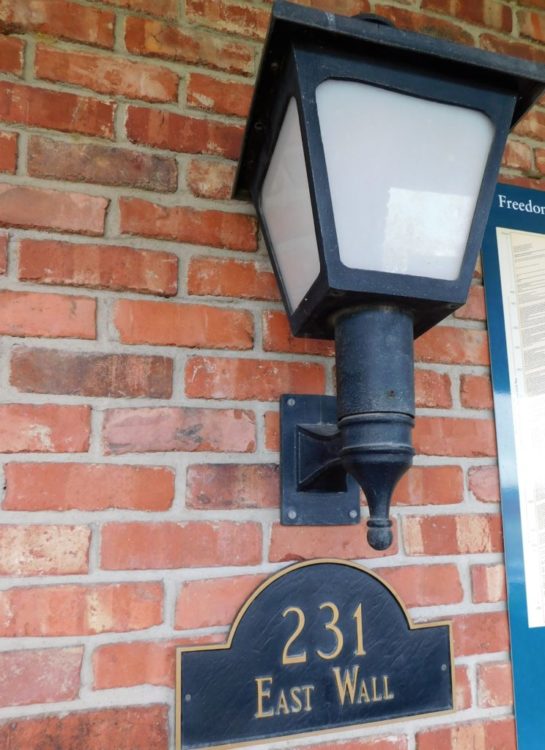
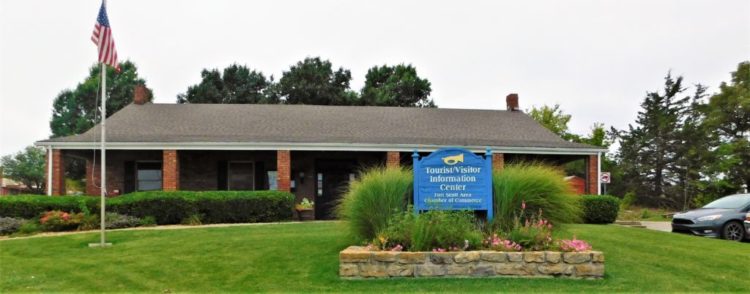
The FSACF 2018 Grant Applications was released on Wednesday, August 1, and is now available on the FSACF website, www.fsacf.com, or may be picked up in person at the Chamber of Commerce, 231 E. Wall St. Nonprofits such as churches, governmental entities, or organizations with a 501c3 status are encouraged to apply.

Applications are due by Tuesday, August 28. Acceptance and declination letters will be mailed on Tuesday, October 16. Grants will be awarded at the Foundation’s Chamber Coffee held in the Landmark Bank lobby at Third and Main at 8 A.M. on Thursday, November 1.

You may click here for the 2018 Grant Application.

You may click here for the FSACF website and to learn more about YOUR Community Foundation.
FSACF Welcomes new board members: 
Craig Campbell, Sheryl Bloomfield,
Travis Shelton, and Janet Braun.
Departing board members:
Blake Hudson, Lindsay Madison, Dr. Randy Nichols, Dave Martin, and Steve Buerge served their terms with much dedication to our community.
Ask any current or former FSACF board members about the “Good Works” of this foundation,
there’s much to share.
2018-19 Board of Directors
 
Stephanie Witt, Chair
Barbara Albright, Vice-Chair
Melissa Wise, Treasurer
Sheryl Bloomfield
Janet Braun
Craig Campbell
Mike Emerson
Frank Halsey
Dick Hedges
Patty LaRoche
Gregg Motley
Beth Nuss
Bob Marshall
Gary Palmer
Dr. Larry Seals
Travis Shelton
Otie Thomas