Drought Emergency, Warnings and Watches for Kansas Counties

Governor Declares Drought Emergency, Warnings and Watches for Kansas Counties

The Governor’s Drought Team examines conditions; and recommends updates to the Governor


Today, Governor Kelly approved updated drought declarations for Kansas counties with Executive Order #22-03. This drought declaration places all 105 Kansas counties either in watch, warning or emergency status.

“The majority of the state of Kansas has experienced drought or abnormally dry conditions for the past several months,” said Governor Kelly. “Unfortunately, these conditions are forecast to persist or get worse, so I strongly encourage Kansans to be mindful of drought conditions and work to minimize the threat of fires across the state.”

The drought declaration placed 19 counties into an emergency status, 61 counties in a warning status and 25 into a watch status. This action was recommended by Connie Owen, Director of the Kansas Water Office and Chair of the Governor’s Drought Response Team. Kansas has continued to experience drier than normal conditions all across the state. Most areas have a departure from normal precipitation of more than three inches over the last six months.

“We have watched drought conditions continue to get worse since this past fall or longer in some areas, causing concern with groundwater supplies, reservoirs, stream flow, crop production, elevated wildfire risk and more,” said Owen. “The Governor’s Drought Response Team will continue to monitor the situation and make recommendations to the Governor as necessary, as future outlooks call for drought conditions to persist as we enter spring.”

Through an interagency agreement between the Kansas Water Office, Kansas Department of Wildlife and Parks and Kansas Division of Emergency Management, counties in emergency stage are eligible for emergency use of water from certain state fishing lakes. These counties also become eligible for water in some Federal reservoirs.


Individuals and communities need to contact the Kansas Water Office for a water supply request prior to any withdrawals from lakes. These requests will in turn be referred to the appropriate office to obtain necessary permits to withdraw requested water.


This Executive Order shall remain in effect for those counties so identified until rescinded by Executive Order or superseded by a subsequent Executive Order revising the drought stage status of the affected counties.

Effective immediately, Executive Order #22-03:


  • Declares a Drought Emergency, Warning or Drought Watch for the counties as identified below;
  • Authorizes and direct all agencies under the jurisdiction of the Governor to implement the appropriate watch, warning or emergency level-drought response actions assigned in the Operations Plan of the Governor’s Drought Response Team.


The Governor’s Drought Response Team will continue to watch the situation closely and work to minimize the effects drought has on Kansans.

For more detailed information about current conditions, see the Kansas Climate Summary and Drought Report on the Kansas Water Office website at kwo.ks.gov.

County Drought Stage Declarations:

Drought Emergency: Barber, Chautauqua, Clark, Comanche, Cowley, Finney, Grant, Gray, Hamilton, Harper, Haskell, Kearny, Meade, Montgomery, Morton, Seward, Stanton, Stevens, Sumner


Drought Warning: Barton, Butler, Cheyenne, Clay, Cloud, Decatur, Dickinson, Edwards, Elk, Ellis, Ellsworth, Ford, Geary, Gove, Graham, Greeley, Harvey, Hodgeman, Jewell, Kingman, Kiowa, Labette, Lane, Lincoln, Logan, Marion, Marshall, McPherson, Mitchell, Morris, Nemaha, Neosho, Ness, Norton, Osborne, Ottawa, Pawnee, Phillips, Pottawatomie, Pratt, Rawlins, Reno, Republic, Rice, Riley, Rooks, Rush, Russell, Saline, Scott, Sedgwick, Sheridan, Sherman, Smith, Stafford, Thomas, Trego, Wallace, Washington, Wichita, Wilson


Drought Watch: Allen, Anderson, Atchison, Bourbon, Brown, Chase, Cherokee, Coffey, Crawford, Doniphan, Douglas, Franklin, Greenwood, Jackson, Jefferson, Johnson, Leavenworth, Linn, Lyon, Miami, Osage, Shawnee, Wabaunsee, Woodson, Wyandotte


# # #


Evergy’s Transmission Delivery Charge increase takes effect April 1


TOPEKA – Beginning April 1, Evergy Kansas Central residential customers will pay an average of $0.36 more per month to have electricity delivered to their homes. That amounts to $4.32 per year, based on an average monthly usage of 900 kWh.  Kansas law allows electric utilities regulated by the Kansas Corporation Commission (KCC) to recover costs associated with the transmission of electric power through a separate transmission delivery charge (TDC) on customer bills, without approval from the KCC.

The Commission acknowledged the effective date of the increase at its meeting this morning. Generally the KCC has jurisdiction over Evergy’s retail rates and terms of service. However, a regulated electric utility is statutorily authorized to adjust its Transmission Delivery Charge due to changes in cost under K.S.A. 66-1237(c). As such, the Commission has no discretion and must accept Evergy’s proposed change on a subject to refund basis within 30 business days of the application. In accordance with the statutory requirement, these transmission delivery charges are conclusively presumed prudent as filed. If irregularities are later found, the Commission can order changes, including refunds.

Evergy’s application requested $310 million in TDC revenues, an increase of $20.4 million from the prior TDC. That increases the transmission-related portion of a residential customer’s bill from $0.018810 per kWh to $0.019214 per kWh.

Today’s order is available at: https://estar.kcc.ks.gov/estar/ViewFile.aspx/20220317103416.pdf?Id=77a74b46-e762-47e7-b938-7c0c7b8c2f19

A recording of today’s Business Meeting featuring comments by Commissioners on this order, is available on the KCC YouTube channel.


###

USDA Updates Eligibility for Spot Market Hog Pandemic Program

WASHINGTON, March 17, 2022— The U.S. Department of Agriculture (USDA) has clarified the definition of a spot market sale and hog eligibility under the Spot Market Hog Pandemic Program (SMHPP), which assists producers who sold hogs through a spot market sale from April 16, 2020, through Sept. 1, 2020. Hog producers will also now be required to submit documentation to support information provided on their SMHPP application. USDA’s Farm Service Agency (FSA) will accept applications through April 29, 2022, which is an extension of the April 15, 2022, deadline previously set for the program.

USDA is offering the SMHPP in response to a reduction in packer production due to the COVID-19 pandemic, which resulted in fewer negotiated hogs being procured and subsequent lower market prices. The program is part of USDA’s broader Pandemic Assistance for Producers initiative and addresses gaps in previous assistance for hog producers.


Since opening signup for the Spot Market Hog Pandemic Program, we have heard from stakeholders and interested parties who have expressed concern and confusion about eligibility criteria, particularly as they related to the definition of a spot market sale and the definition of an eligible hog,” said FSA Administrator Zach Ducheneaux. “We have clarified the intent and scope of this program to target assistance to hog producers who were hard-hit by the pandemic but have not been included in other forms of assistance. In updating the SMHPP, we are working to provide new, broader, and more equitable opportunities for farmers, ranchers and producers.”


SMHPP Program Updates

When the pandemic disrupted normal marketing channels, including access to packers, producers sold their hogs through cash sales to local processors or butchers, direct sales to individuals and third-party intermediaries, including sale barns or brokers. The use of third-party intermediaries was the only available marketing alternative for many producers and are now included in SMHPP. The only direct to packer sales that are eligible for SMHPP are those through a negotiated sale. Hogs sold through a contract that includes a premium above the spot-market price or other formula such as the wholesale cut-out price remain ineligible. Hogs must be suitable and intended for slaughter to be eligible. Immature swine (pigs) are ineligible.

FSA will now require documentation to support the accuracy of information provided on the FSA-940 Spot Market Hog Pandemic Program application, including the number of hogs reported on the application that were sold through a spot market sale and how the price was determined for the sale.

SMHPP payments will be calculated by multiplying the number of head of eligible hogs, not to exceed 10,000 head, by the payment rate of $54 per head. To ensure SMHPP funding availability is disbursed equitably to all eligible producers, FSA will now issue payments after the application period ends. If calculated payments exceed the amount of available funding, payments will be factored.  


Applying for Assistance 


Eligible hog producers can apply for SMHPP by April 29, 2022, by completing the FSA-940, Spot Market Hog Pandemic Program application, along with required supporting documentation. Producers can visit farmers.gov/smhpp for examples of supporting documentation, information on applicant eligibility and more information on how to apply. 


Applications can be submitted to the FSA office at any USDA Service Center nationwide by mail, fax, hand delivery or via electronic means. To find their local FSA office, producers should visit farmers.gov/service-locator. Hog producers can also call 877-508-8364 to speak directly with a USDA employee ready to offer assistance. 


USDA touches the lives of all Americans each day in so many positive ways. Under the Biden-Harris Administration, USDA is transforming America’s food system with a greater focus on more resilient local and regional food production, fairer markets for all producers, ensuring access to safe, healthy and nutritious food in all communities, building new markets and streams of income for farmers and producers using climate smart food and forestry practices, making historic investments in infrastructure and clean energy capabilities in rural America, and committing to equity across the Department by removing systemic barriers and building a workforce more representative of America. To learn more, visit usda.gov.

#

USDA is an equal opportunity provider, employer, and lender.

Walk Kansas Kickoff Event Set for March 26

Join the Southwind Extension District for our Walk Kansas 2022 kickoff event! Walk Kansas is a team-based health initiative program that will inspire you to lead a healthier life by being more active. To celebrate the start of this year’s program, a fun 5K run and 3K or 1K walk is being held at Neosho County Community College on March 26th at 9 AM. The $25 adult registration fee includes event entry, a t-shirt, and the registration fee for Walk Kansas! Youth can attend the event for only $15, since their Walk Kansas registration is free. Early registration guarantees t-shirt size availability. We are so excited to kick off Walk Kansas with our friends in the Wildcat Extension District, who are cohosting this event! To register, visit www.bit.ly/Wildcatpay or call 620-331-2690. (Please note when you register that if you have already registered and paid for Walk Kansas and would like to participate in the kickoff event, the cost is just $15 for you.) So, tighten up those laces! We hope to see you there. Contact Clara Wicoff, Nutrition, Food and Health Agent, with questions at 620-365-2242 or [email protected].

Pete Allen Resigns from the Fort Scott City Commission, City Begins Search To Fill the Vacancy

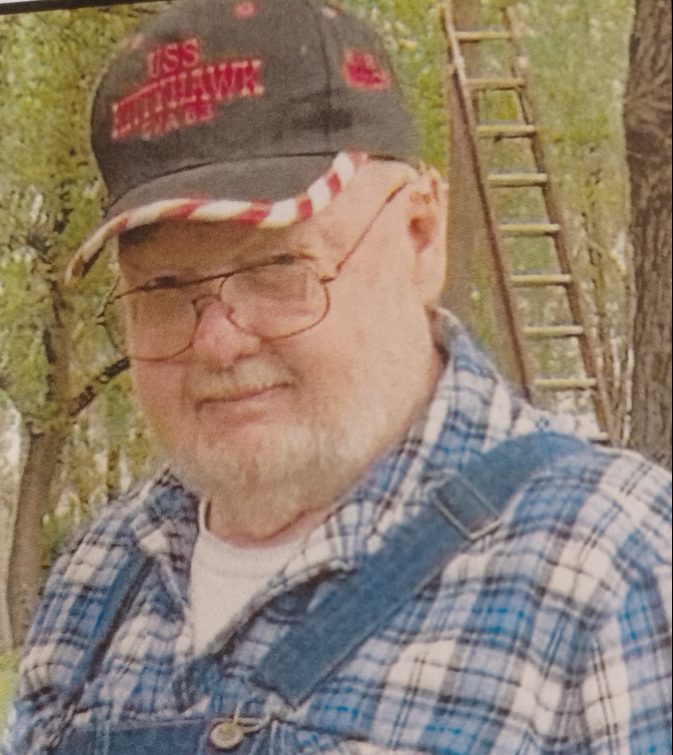
Pete Allen. Taken from his Facebook page.
Fort Scott City Commissioner Pete Allen resigned at the March 15 city meeting.
On March 16, during a special meeting at city hall, the rest of the commissioners voted to accept his resignation, except for Mayor Kevin Allen.
In an interview with fortscott.biz,  Allen said “I’m done. Mission accomplished. I am 82 years old and I have other things I want to do.”
“I feel like I’ve given it my all…I worked tirelessly seven days a week since I was elected,” he said.
Allen took office in January 2020 and because he was the leader in the amount of votes he received, he won a four-year term, he said. His term ends in January 2024.
“We’ve accomplished a lot,” he said. “I’m not taking credit for all the things we got done, it takes at least three people on the commission. I was part of a team.”
At the regular city meeting on March 15, Allen said he “wasn’t happy with the reception I got….they didn’t want to work with me on a policy on how we use our funds.”
Allen listed all of the commission’s accomplishments on his Facebook page:
“I feel during the past 2 ¼ years we have made tremendous strides toward the movement of the improvement of our infrastructure.
We have hired an engineering firm and just think, we have more than doubled the funding for our streets as well as our sewers.
We have stopped the transferring of funds from our sewer utilities, and we now have sanitary sewer projects and a storm sewer project either under contract or awaiting contracts.
We also have three water line extension/replacements in the design stage with applications for grants being applied for.
We have undertaken the puzzle of the KDOT Connecting Link Agreement and stopped the proposed mill and overlay on Highway 54 (Wall Street) that was to be done fully at the city taxpayer’s expense under the previous administration. We are in the process of applying for a grant from KDOT that will fund that program at a 90/10 split, thereby saving the taxpayer’s nearly $160,000.
We have replaced a $200,000 per year out-of-town city attorney with a $48,000 local attorney, thereby saving the taxpayer’s another $152,000.
We have placed our insurance coverage through a local agency, keeping those funds in town.
A few short years ago we had to borrow $600,000 (each year over 4 years) to fund our street department and the budget this year is nearly $2 million, including the paying back of some of those funds we borrowed ($194,000). And these funds have come with no additional taxes.
We have done this and more, and we have not cut any “quality of life” funding. In fact, we have increased our parks budget by around $62,000. Our golf course is well on the way to becoming self-funded.
We have raised nearly $500,000 through the sale of lake lots (thanks to Mayor Allen’s expertise and guidance). Those funds are dedicated to improvements at the lake. More lots are scheduled to be sold soon with fund usage to be determined.
When I became a commissioner our street department consisted of two workers. Through the efforts of our newly hired human resources director, we now have three crews of three workers each, all being funded within the budget for 2022.
For our sewers, we have funded a new cleaning/camera machine so we can clean/camera/rate our aged sewers with our crews. We have also funded the inspection/rating of all our sewer manholes and our engineers are working toward providing a sanitary sewer master plan.
Our engineers have studied and made recommendations for alterations/replacements of our main pumping station (Davis) that overflows into Buck Run regularly with each major rain event. with cost estimates of $1.5 million to $2.0 million. The commission has authorized rate increases designed to fund these programs. Maybe you have noticed your water bill has gone up.”
Community involvement in city projects has also increased in the last few years, he said.
“Look at the 200 volunteers for parks cleanup under the leadership of Seth Needam, the 200 volunteers for the downtown spring cleanup led by Bailey Lions, and the 40 volunteers to repair cracks and resurface the Woodland Hills Tennis Courts (along with donations from others for purchasing materials).
Certainly, there are more improvements/changes I would like to achieve, but I feel I am leaving the commission, and the city, in a much better condition than when I started, and that I can be proud of! Again, thank you for allowing me to represent you in this endeavor.”
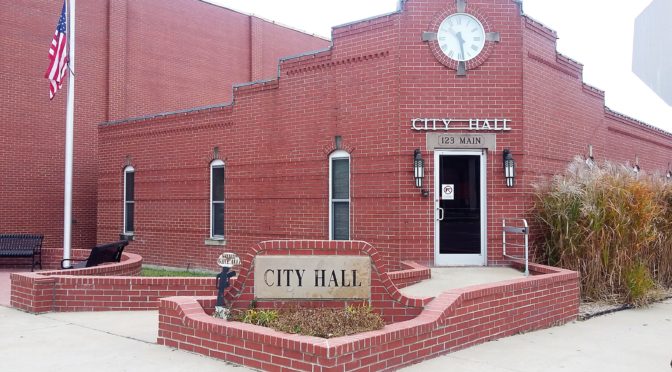
Fort Scott City Hall.
Those Interested May Apply For the Vacancy
People interested in applying to fill the position vacated by Commissioner Pete Allen are asked to submit a letter of interest to: City Clerk, Diane Clay at 123 S. Main, Fort Scott, Kansas 66701 or by email at [email protected] according to a press release from the city.
These letters of interest must be received by the clerk by noon on Monday, March 28th, 2022.
The individuals must live inside Fort Scott city limits.
Once the appointment has been made, it will become effective at the April 5th, 2022 City Commission meeting and the term will expire in December of 2024.

Obituary of Melisa Wunderly

Melisa Wunderly, age 47, a resident of rural Fulton, Kansas, passed away Saturday, March 5, 2022, at the University of Kansas Medical Center in Kansas City, Kansas. She was born September 28, 1974, in Ft. Scott, the daughter of Randy Reasoner and Penelope Sue Combs Reasoner. Melisa married Hugh Wunderly on February 14, 1995, at Miami, Oklahoma. Melisa and Hugh had just celebrated their 27th wedding anniversary. They enjoyed many adventures throughout their lives together. Melisa enjoyed cruising around in the old pickup, whether it was to go out to dinner, feed the cattle or check on the crops. She also enjoyed her dogs which she thought of like her own children.

Melisa adored her grandchildren, Eastonn “Easty” and Jaycee who both loved coming to see their “E” and make crafts with play-doh and glitter. She also enjoyed afternoons with Joseph and his family. Melisa can be remembered for her collection of Kenny Chesney albums and the happiness his music brought her.

She is survived by her husband, Hugh, of the home; her son, Joseph Wunderly (Allyson) of Ft. Scott and her daughter, Amber Johnson (Tanner) of Franklin, Kansas; and two grandchildren, Eastonn and Jaycee Johnson. Also surviving are her parents, Randy and Sue Reasoner of Ft. Scott.

There was cremation. A celebration of life service will be held Saturday, March 19th from 12 to 3 P.M. at the Hammond Community Center. Memorials are suggested to the Melisa Wunderly Memorial Fund and may be left in care of the Cheney Witt Chapel, 201 S. Main, P.O. Box 347, Ft. Scott, KS 66701. Words of remembrance may be submitted to the online guestbook at cheneywitt.com.

NEWS RELEASE – CITY COMMISSION VACANCY

NEWS RELEASE – CITY COMMISSION VACANCY

Effective March 16th, 2022, Harold “Pete” Allen has resigned his position as City Commissioner on the Fort Scott City Commission. Persons interested in applying to fill the position vacated by Commissioner Pete Allen are asked to submit a letter of interest to: City Clerk, Diane Clay at 123 S. Main, Fort Scott, Kansas 66701 or by email at [email protected]. Letters of interest must be received by the City Clerk by 12:00 p.m. on Monday, March 28th, 2022. Only individuals who reside in the city limits of Fort Scott are eligible to apply. Once the appointment has been made, it will become effective at the April 5th, 2022 City Commission meeting and the term will expire in December of 2024.

Any additional information or questions may be obtained by contacting Diane Clay, City Clerk at 620-223-0550.

Kansas Senators Respond to Zelenskyy’s Address to Congress

Kansas Senators Respond to Zelenskyy’s Address to Congress

Senators will Travel to Poland and Germany This Weekend

(Washington, D.C., March 16, 2022) – U.S. Senators Roger Marshall, M.D. and Jerry Moran issued the following statements after Ukrainian President Volodymyr Zelenskyy’s address to Congress this morning. Additionally, Senators Marshall and Moran will be traveling to Poland and Germany this weekend to gain more insight on needed security support for Ukraine and NATO readiness.

“The courage and bravery of the Ukrainian people have inspired all of us. President Zelenskyy challenged our nation that if you want to be a leader of the world you have to be the leader of peace. But, you can’t obtain peace if you are leading from behind – we need President Biden and Europe to step up and lead,” said Senator Marshall. “We have the ability to show more compassion and to get more humanitarian aid. But, there is so much more that we could do short of American boots on the ground and American pilots in the air. We can arm Ukrainians and get them MiG-29s and A-10s. But, our sanctions have to be real – right now our President is just shouting in the wind. Specifically, President Biden’s sanctions on Russian energy don’t go into effect until June 24th – once again our President is late to act.”

“President Zelenskyy’s address to Congress was a powerful and moving reminder that the United States must continue to take action to aid Ukraine in its fight against Russia’s unprovoked attack, assist refugees fleeing Ukraine, support our NATO allies and make certain Vladimir Putin pays for his aggression,” said Senator Moran. “The United States has the capability to provide further resources to Ukrainians through defensive military equipment, food aid and medical supplies. We must demonstrate through our actions that we stand with Ukraine and our European allies in the fight for democracy.”


Background:

Senators Marshall and Moran joined Senator Lindsey Graham (SC) in introducing a resolution calling for Vladimir Putin and members of his regime to be held accountable for the numerous acts of war crimes, aggression, and human rights abuses conducted under his watch. The resolution passed unanimously in the Senate yesterday.

###

How to Save Money at the Gas Pump

Union Station at Uniontown has gas today at $3.79, the same price as Fort Scott gas stations.
Drivers are getting a lesson in how events around the nation and the world can have an impact on what they pay at the gas pump. Today’s  U.S. national average cost per gallon is $4.30, in Fort Scott, it is $3.79 according to American Automobile Association (AAA) https://cluballiance.aaa.com/public-affairs/fuel-price-finder
According to the AAA fuel price finder above, in the Fort Scott gas station locations of 5 Corners, Pete’s and Casey’s all have gas today for $3.79 as well as Union Station in Uniontown.

Those who would like to save money at the pump have some vehicle driving tips to help them reach that goal.

A call to AAA, Topeka, resulted in the following tips from Shawn Martin, AAA Retail Sales Associate with additional tips from Consumer Reports:

Drive the speed limit.         “Your driving habits can play a significant role in fuel economy, according to a Consumer Reports story https://www.consumerreports.org/fuel-economy-efficiency/10-tips-to-get-the-most-out-of-a-tank-of-gas-a2642110189/Consumer Reports measured gas mileage while driving at a steady 55, 65, and 75 mph in a Nissan Altima and Toyota RAV4. They found that reducing speed from 65 mph to 55 mph improved fuel economy by 6 mpg in the Altima and 8 mpg in the RAV4. The penalty of cruising at 75 mph, rather than 65 mph, was almost 7 mpg in the Altima and 6 mpg in the RAV4. Higher speeds exact a toll on fuel consumption. Another way to look at it: Speeding up from 55 to 75 mph is like moving from a compact car to a large SUV. Beyond fuel concerns, speeding is, of course, a safety risk.

No sudden acceleration.        “Avoid hard acceleration and braking whenever possible. In our tests, frequent bursts of acceleration and braking reduced an older Toyota Camry’s mileage by 2 to 3 mpg. Once up to speed, maintain a steady pace, according to the web article. “The harder you accelerate, the more fuel you use. Unnecessary braking wastes the fuel you used to get up to speed. Drive smoothly and anticipate the movement of traffic. Smooth acceleration, cornering, and braking also extend the life of the engine, transmission, brakes, and tires.”

 Download an app that tells of the best prices for gas near your location.
Apps and websites such as https://www.gasbuddy.com/home  or check out the AAA gas prices page online or use the AAA Mobile app if a member.
Additional fuel economy tips from Consumer Reports:
 Keep at least a half-tank of fuel during cold winter months, and when there is a risk of shortages, say, due to a lack of gasoline delivery drivers to meet travel demands, or when a major storm is imminent. This tip also goes for holiday road trips, when roads can be congested and slow-moving. Having plenty of gas onboard can ease stress and give you more flexibility with when and where you fill up, according to Consumer Reports.
If you can minimize or combine errands or other activities, you will preserve the gas that you purchased and reduce overall consumption for the region, helping in some small way to reduce the gas scarcity. 
Pay attention to aerodynamics. Remove roof racks when they are not being used. At highway speeds, more than 50 percent of engine power goes to overcoming aerodynamic drag.

Check your tire pressure. Tires lose about 1 psi a month. Having tires with lower pressure than what is recommended on the doorjamb sticker can affect performance, tire longevity, and fuel economy. 

Using air conditioning does consume gas. In mild weather, if you can get by without it, even if you open the windows, it will give incremental savings. But once it gets hot, having AC on to cool the cabin and lower humidity is a wise investment in your comfort and ability to stay alert while driving.

According to Consumer Reports, if in the market for a more fuel-efficient car, HERE are Consumer Reports vehicles with the best MPG.

  • 2022 Honda Insight
  • 2022 Toyota Prius
  • 2022 Hyundai Ioniq
  • 2022 Hyundai Elantra
  • 2022 Toyota Corolla
  • 2022 Honda Accord
  • 2022 Toyota Camry
  • 2022 Hyundai Sonata
  • 2022 Kia Niro
  • 2022 Toyota Avalon”


Bourbon County Local News