County Commission Plans to Amend Solar Agreements, Seeks Way to Fund Longevity Pay for County Employees

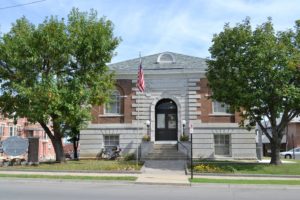
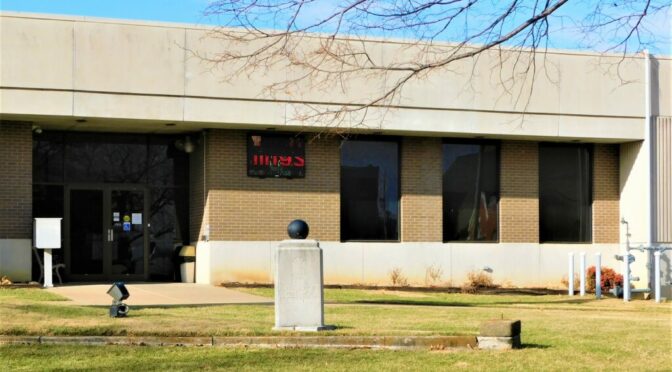
The north wing, east side of the Bourbon County Courthouse.

Bourbon County Commission Chambers, 210 S National Ave.
Monday, December 01, 2025, 5:30 PM

Consent Agenda
Approval of 11.21.25 Accounts Payable (sent 11.21.25) $93,276.25

Approval of 11.26.25 Accounts Payable (sent 11.26.25) & Payroll (sent 11.25.25) $327,304.73

Commissioner Mika Milburn brought up a dispute with the cost of a new firewall for the sheriff’s department. Commissioner Samuel Tran said it was “mission creep,” that the commission hadn’t approved. Sheriff Bill Martin addressed the commission, saying that the quotes for new phones and a firewall were approved in the Sept. 25, 2025 meeting, to be paid for from the jail sales tax.

Commissioner David Beerbower moved to table the issue for a week to iron out the disputes as to when the approval was given.

There was also a dispute about which fund should pay for the mapping services needed to redistrict Bourbon County to 5 districts.

Beerbower said it needed to be paid for regardless of where it comes from.  Milburn said she wants to be sure the commissioners’ fund doesn’t get spent without the commission’s direct order. They decided to pay for it from the general government fund.

The remainder of the consent agenda was approved.

Emerson and Co. regarding longevity, insurance

Emerson, County Clerk Susan Walker, and Dr. Cohen addressed the commission.

Emerson addressed the need for the commission’s approval of a quote for COBRA administration, FSA, and HSA. The commission so voted.

Emerson also said that they need to address when the new insurance deduction amounts should be collected from the employees. Until now the process has been to collect them the month prior to their due date in order to have the funds on hand to pay at the beginning of the following month. However, with the new employee navigator integration, funds will not be collected in advance, and the start date of the deductions will be the first payroll in January. Manual deduction entries will need to be added in December, 2025. Emmerson recommended making the change.

Blue Cross Blue Shield requires the county to pay a month in advance, per County Clerk Susan Walker. She said that if they don’t do the deductions in the previous month, the county may not be able to pay for their premiums.  She said the county had already planned to manually enter everything by the cutoff date of Dec. 3.  She said this problem will come about each December.

She said that employee navigator doesn’t allow for automated employer contributions, so they have to be manually entered.

The clerk also said that they would have to change benefits availability to 30 days after first hire date for county employees. Tran and Cohen both said that is standard industry policy. Tran said he had no problem with that.

Emerson recommended finding out what the cash flow amount shortage would be. The clerk told the commission that the amount needed is approximately $8,800.

Milburn moved to follow Emerson’s recommendation. Tran seconded with a discussion.

Handbook — Dr. Cohen

Cohen brought his current copy of the handbook. He asked for the commissioners’ individual input, then plans to take it to the elected officials and department heads, receive their input and comments, and make changes, then bring a final document to the commission for approval by the first of the year.

Cohen also brought a recommendation to the commission to have them fund an administrative assistant position for the commission. That assistant would cover matters related to personnel, records, benefits, and more.

“It’s become abundantly clear that you need a person that’s accountable to you and you only,” he said. He also said that the funding for that position would come from existing funds currently allocated elsewhere.

Milburn said that up until 2025, the commission had that person in the position of county clerk.

Tran does not oppose the position but has concerns about how they would pay for the person.

Beerbower said funding is the number one issue as well. Cohen said he thought they could find the money and that the commission should approve the decision to fill the position contingent upon finding the funding.

The motion was passed to move forward with recruiting for the position, pending funding.

Tran said they should look at the inmate housing fund to pay insurance for employees and for the commission’s administrative assistant.

Beerbower said he was not willing to do that.

Longevity pay — Dr. Cohen

Cohen addressed bridging, which is when an employee leaves and then returns. He recommended not giving them longevity pay, per his recommendation. He said that if the bridged time is shorter, continuing longevity pay may be a good idea, so long as they return to their original position. He recommended that as a consequence for employees who leave and want to come back.

Beerbower, Milburn, and Tran agreed with Cohen. They agreed that if an employee leaves and is paid out, they cannot come back at the same level they left.

Victory Foronberry, from county corrections, asked about a problem with longevity pay. Tran and Beerbower spoke to her. One of the problems was that a funding stream they voted to use to cover it was contested.

Longevity pay approved by previous commission was put into each department’s budget, but most departments didnt have it in their budgets for this last paycheck.

Tran said they did what they thought was best at the time, but within 72 hours of the commission’s decision, the revenue source was contested.

Davis asked the commission to leave the longevity as is and pay it to the employees. He said that their decision to add a new position, although it is pending the ability to find funding for it, was a terrible decision and makes the entire commission look like they put county employees second.

Sheriff Bill Martin said he doesn’t know who would contest using the inmate housing revenue to pay the employees their longevity.

Another audience member asked the commission to use the inmate housing fund to pay employees what they were promised.

Janet Harper, who works in the appraiser’s office, said that the money sent out on that stub, which was not paid by the county, was her grandchildren’s Christmas.

Tran moved to pull the inmate housing fund and put it into the general fund. Milburn gave a second with discussion.

Sheriff Bill Martin said he came to the commission offering them a 60/40 split a couple of months ago, and they wouldn’t take it. Asking to take all of it is an insult to the sheriff’s office. He said they should only take out what it costs to meet longevity pay requirements.

Clerk Susan Walker said that her projections show that a lot of the inmate housing money will be needed for the sheriff’s budget amendment, and the commission should speak with his financial advisor before moving the money.

“Everytime we try to do something, we’re getting our legs chopped off,” said Tran.

Tran then amended the motion to pull $200,000 from the inmate housing fund. Motion carried with Beerbower voting against.

Tran proposed that they take $55,100 from the general fund to pay for the longevity pay.

Beerbower moved to leave 2025 longevity as it has been and make the changes in 2026.

“We didn’t create this mess. We’re trying to fix this mess,” said Tran.

The motion to pay longevity through the end of 2025 carried, Milburn opposing.

Sheriff Martin said that his 2025 budget was created by two other individuals without input from him. The outgoing commissioners at the time told him his budget was “screwed.”

He asked why Tran made the comment about him choosing to sue the commission. Tran replied that he knew Martin had been “done dirty,” in the past and he wanted to help him. However, Martin’s continuous referral to the requirement that the county give his department what it needs to function seemed like a threat of suing the commission.

Tran said that as an executor for the county, he will take care of the county, and give the Sheriff’s department what it needs, but maybe not what it wants.

Sheriff Martin said the conversation should have happened in his office one-on-one. He told Tran that they (the commission) are confusing everyone with the numbers game. He said he appreciated Tran’s honesty.

Tran and Martin each accused the other of not reaching out to communicate about their issues outside of an open meeting.

Lines of Communication – Susan Walker, county clerk

Walker told the commissioners she needs direction from them about how they intend to communicate with her.

“I’m having trouble getting responses, and it’s very difficult for me to do my job,” she said. “It is very hard for me to do my job as clerk if I cannot get a hold of you,” she said.

Walker said she can’t set up meetings if she can’t get a hold of anyone. She asked for clarification about expectations.

“For the most part, I think that communication works well, especially by the email,” said Beerbower.

Solar Litigation

Beerbower said that the commission has been in litigation with solar developers over agreements signed with the 2024 commission. They are working to find a solution outside of court via mediation.

Next week, the commission will be voting on resolutions to change the moratorium that will exempt these two companies from moving forward with their projects. They will also vote to amend the development agreement, including setbacks for battery systems and emergency training.

There have also been some settlements on pilot money that include settlements totaling about $320,000 per year paid to the county for the next ten years.

Counsel will send to the clerk the needed information for the resolutions, which will be voted on in the December 8th meeting.

Jackie Demott with the appraiser’s office spoke to the commission. She said that while folks have issues with solar, bringing businesses into Bourbon County will help solve the county’s funding issues.

“Maybe you need to start thinking about, not just what is best for each individual, but what is best for the county. What’s going to bring this revenue in?” she said. She suggested they form a committee to bring businesses into the county.

Planning Commission — Bob Johnson

County attorney Bob Johnson attended the new Planning Commission meeting before Thanksgiving. They discussed the procedure going forward, as well as hiring a part-time individual who has helped neighboring counties with their planning commissions.

District 3 Vacancy — Bob Johnson

The Kansas Secretary of State’s legal team has said the commission can either have the replacement for the District 3 come from the old district, or from the newly created District 3, which is preferable and makes more common sense, but either option passes statutory guidance.

The commission passed a resolution for the correct political party to appoint a commissioner for the new district 3 when current district 3 commissioner, Mika Milburn, becomes the commissioner for district 5 in January 2026. That commissioner will hold office until January 2027 with the person elected in November of 2026 is seated on the commission.

Seeing Risk Clearly: Navigating Danger, Poverty, and Perception

Presented by the Kansas Department for Children and Families and University of Kansas Center for Public Partnerships and Research

Thursday, Dec. 11, 2025 | 10:00 a.m. to 2:30 p.m.

You’re invited…

At our previous community gatherings, many of you shared that we need to keep digging into how we see and respond to families’ circumstances. Whether you joined us before or are coming for the first time, this is your chance to be part of that ongoing conversation.

DCF and the KU Center for Public Partnerships and Research are continuing their partnership to bring you Seeing Risk Clearly: Navigating Danger, Poverty, and Perception—a session designed to explore real-life scenarios, challenge assumptions, and strengthen how we respond to families in our communities.

Through interactive activities and discussion, we’ll look at:

  • What safety really means—and how to distinguish between risk, danger, and safety concerns.
  • How poverty differs from neglect, and why that distinction is important.
  • How perceptions influence decisions in child welfare and community response.
  • Ways to strengthen compassionate, consistent approaches to supporting families.

Your perspective matters. We hope you’ll join us in creating solutions that reflect the needs, strengths, and realities of the communities we serve.

Lunch will be provided, please RSVP using the button below.

Button: RSVP Here


Map of Fort Scott Nazarene church.Location

Fort Scott Nazarene Church

1728 Horton

Fort Scott, KS 66701

Thank You!

We hope you’ll take this opportunity to learn more about ongoing efforts to help build support for children and families in Kansas. Thank you for being a part of these important conversations!

Thank you to our partners:


Kansas Department for Children and Families logo    Family Strong Logo


The University of Kansas Center for Public Partnerships and Research logo  


Kansas DCF FB LogoKansas DCF X logo Kansas DCF Instagram Logo Kansas DCF LinkedIn Logo

Match Week 2025; A Rousing Success!


The Community Foundation of Southeast Kansas (CFSEK) and its affiliates in Columbus, Fort Scott, and Girard achieved record-breaking results during Match Week 2025, raising over $1,066,000 in combined donations for charitable funds benefiting Southeast Kansas!

Match Week took place November 10-14, 2025. Thanks to a generous matching challenge from the Patterson Family Foundation, additional matching funds were available for each foundation to amplify community contributions.

CFSEK brought in an outstanding $437,227 in community donations to support 48 local organizations. Columbus donors stepped up in a big way, with over 100 contributors giving $145,992, while Fort Scott supporters raised $67,452 for 13 different organizations. Girard donors kept the momentum going with $72,423 raised for 10 participating funds. And the excitement doesn’t stop there—the Patterson Family Foundation’s matching challenge is adding another $339,875, amplifying the impact for nonprofits throughout our region.

“We were blown away by the generosity of our community,” said CFSEK Executive Director Devin Gorman. “Expanding from Match Day to Match Week significantly increased support for local nonprofits in our area, and we are so pleased to help them grow their endowments while also providing immediate matching funds. We want to extend our sincere gratitude to all of the donors for their incredible generosity and steadfast support of their communities.”

Next year’s Match Week will take place November 9-13, 2026.

Visit SEKMatchWeek.org to see a full list of participating funds and updates about next year’s Match Week!


To view Fort Scott’s donations

https://www.fortscottgives.org/


Libraries with Heart Initiative Expands Access to Blood Pressure Monitoring Across Southeast Kansas

Fort Scott Public Library

Libraries with Heart Initiative Expands Access to Blood Pressure Monitoring Across Southeast Kansas

Nearly half of all Americans have high blood pressure, a leading risk factor for heart attack and stroke.  In a collaborative effort to improve community health, five local libraries have launched the Libraries with Heart initiative, a program designed to increase access to blood pressure monitoring and education.

This initiative is made possible through a General Funds Basic Human Needs grant from the Community Foundation of Southeast Kansas, in partnership with K-State Extension – Southwind Extension Education Foundation, the American Heart Association, and participating libraries.

Libraries with Heart empowers individuals to take control of their health by providing tools and resources to monitor and manage blood pressure effectively.

Program Highlights:

  • Validated Blood Pressure Monitors for Check Out:  Patrons can borrow monitors through the Library of Things catalog.
  • Educational Materials: Staff and community members are equipped with easy-to-understand resources on how to use the monitors, understanding blood pressure, and how to take steps toward better heart health.
  • Healthcare Connections: Resources of local healthcare providers for further support and follow-up care.

“This initiative is a great example of how libraries truly serve as hubs for community wellness,” said Tara Solomon-Smith, Healthy Heart Ambassador and Extension Agent with K-State Extension. “By making blood pressure monitoring more accessible, we’re helping individuals take proactive steps toward healthier lives.”

The Libraries with Heart initiative reflects a shared commitment to public health, education, and community empowerment. Each participating library brings its own unique approach, while maintaining core elements that ensure consistency and impact across the region.

For more information about the program or to find a participating library near you, contact Tara Solomon-Smith at [email protected] or 620-244-3826.

Embrace Winter this Season by Tara Solomon-Smith

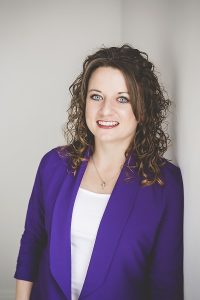
Tara Soloman-Smith, Family and Wellness Agent, Sunflower District of Kansas State University’s Extension Office. Submitted photo.

Embrace Winter this Season

Do you find yourself ready for bed as soon as supper is over this time of year? You’re not alone—many of us feel that way after the time change. But winter doesn’t have to be something we dread. With a few simple strategies, we can make the most of the season and enjoy it!

Brighten Your Days with Light Therapy

Light therapy can help combat the winter blues by mimicking natural sunlight. Light boxes or lamps produce bright white light that signals your brain, much like daylight does. When choosing a light box, Harvard Health Publishing recommends:

  • Look for 10,000 lux exposure. (Lux measures light intensity; a sunny day is about 50,000 lux.)
  • Position it correctly. Keep the box in front of you or slightly to the side, about a foot away. Don’t stare directly at the light—read, meditate, or watch TV instead.
  • Use it consistently. Aim for about 30 minutes of exposure daily. You can break this into shorter sessions.

Lifestyle Tips for a Positive Winter

Oklahoma State University Extension suggests creating a plan to boost your mood long-term:

  • Bundle up and spend 15–30 minutes outdoors for sunlight and exercise.
  • Maintain a healthy routine of sleep, movement, and nutritious meals.
  • Take medications as prescribed if managing depression.
  • Limit alcohol, as it can worsen symptoms.
  • Stay connected—make plans and follow through.
  • Practice self-care and kindness toward yourself and others.

Find the Bright Side of Winter

Psychologist and author Kari Leibowitz encourages focusing on what you enjoy about winter. Make a list of things you look forward to—like lighting candles. Leibowitz notes that when you light candles with the intention of celebrating the darkness, it can transform your experience and give winter a new meaning.

Wishing you a wonderful season filled with new ways to embrace winter! For more information, please contact Tara Solomon-Smith at [email protected] or 620-244-3826.

# # #

Kansas State University Agricultural Experiment Station and Cooperative Extension Service

Bourbon County CASA Christmas Celebration Is December 12th

Sending on behalf of Chamber Member

Bourbon County CASA

“Change a Child’s Story”

This year’s Bourbon County CASA Christmas Celebration will be held on

Friday, December 12th

7-9pm

📍The Kingfisher Inn, 742 S. National Ave.

Fort Scott, KS

Heavy hors d’oeuvres & full bar provided.

RSVP by December 5th to:

[email protected]

or

Call 620-215-2769

Donations payable to:

Bourbon County CASA

PO Box 146

Fort Scott, KS 66701

Bourbon County CASA has been providing screened, trained community volunteers to advocate for abused and neglected children in the court room setting here in Bourbon County for 35 years.

To find out how you can make a difference in a child’s life, email christa@bourboncountycasa.com

Click the invite below for a printable .pdf copy.

Click HERE to visit the

Bourbon County CASA

Facebook Page!

Thank you to our Chamber Champion members shown below…
Fort Scott Area Chamber of Commerce

231 E. Wall St., Fort Scott, KS 66701

620-223-3566

fortscott.com

Facebook  X  Instagram
Fort Scott Area Chamber of Commerce | 231 E. Wall Street | Fort Scott, KS 66701 US
Unsubscribe | Update Profile | Constant Contact Data Not

System upgrade to take some court systems offline this weekend

TOPEKA—Some court systems will be offline this weekend while the Office of Judicial Administration upgrades the Kansas eCourt case management system.


The Kansas eCourt case management system stores case information, data, and documents for district courts statewide. During the upgrade, the case management system will not communicate with other systems that operate under the Kansas eCourt umbrella, so they will be offline.


Between 6 p.m. CT Friday, December 5, and 8 a.m. CT Monday, December 8, the following services will be offline:

  • Kansas Courts eFiling​, or eFlex, which accepts electronically filed documents in district court and appellate cases.
  • KSCourts Central Payment Center, which accepts online payments in traffic, criminal, and fish and game cases.
  • Kansas Protection Order Portal, which accepts electronically filed documents seeking orders of protection from abuse, stalking, sexual assault, or human trafficking.
  • CaseSearch, which allows searching district court case information and documents. It replaces the Kansas District Court Public Access Portal beginning this week. The Kansas Appellate Courts Public Access Portal is unaffected by the upgrade work.
  • Online hearing calendar, which displays public hearing information for all district courts statewide.
  • Kansas Civil Filings, which gives access to new civil case filings before they are reviewed and accepted by the district court clerk.

Kansas Judicial Branch

Office of Judicial Administration

301 SW 10th Avenue

Topeka, KS 66612-1507

785-296-2256

kscourts.gov


flickr    twitter    linkedin    facebook    instagram

KS November Total Tax Collections Below the Estimate

November Total Tax Collections at $687.0 Million; 0.3% Below Estimate


TOPEKA
– The State of Kansas ends November 2025 with total tax collections at $687.0 million. That is $1.9 million, or 0.3%, below the estimate. Total tax collections were up 1.7% from November 2024.

“November’s tax collections were nearly on target overall. While individual income tax collections were up, corporate income tax collections were again below estimates and significantly below November 2024 levels,” Governor Laura Kelly said. “As I develop my next budget proposal I am not considering just Fiscal Year 2027, I am also looking on to the out-years to keep our state on solid financial footing.”

Individual income tax collections were $368.5 million. That is $7.9 million, or 2.2% above the estimate. Individual income tax collections were up 9.9% from November 2024. Corporate income tax collections were $18.7 million. That is $968,253, or 4.9% below the estimate, and down 23.5% from November 2024.

Combined retail sales and compensating use tax receipts were $276.2 million, which is $9.0 million, or 3.1% below the estimate, and down 3.9% from November 2024.

Click here to view the November 2025 revenue numbers.

###

From the Bleachers by Dr. Jack Welch

Honor the Contract or Change the System?

In college athletics, few debates stir up as much passion as whether administrators should honor the full length of a coach’s contract. Every hire is a gamble. Some coaches arrive with little proven success at the level they’re stepping into. Others come with résumés full of championships, rebuilds, and turnarounds. Yet in every case, everyone, the administration made the choice. They believed the coach was the right person for the job, or they never would have signed their name on the contract.

A contract, after all, is not a suggestion. It’s a roadmap. When a coach is hired on a three-, five-, or seven-year deal, that length isn’t arbitrary. It represents the time needed to recruit players, build a system, implement a culture, and create the foundation for long-term success. No coach worth their whistle expects instant magic. They build a plan aligned with the years they were promised, or did they? Maybe the administration expected immediate results. Maybe the administration realizes they made a big mistake.

In today’s impatient sports world, many coaches never get the chance to finish what they started. A season and a half in, maybe two years at most, administrators decide that the win-loss record isn’t good enough, the crowd size isn’t big enough, or the social media noise is too loud. So, the coach is dismissed, sometimes with one, two, or even three years left on the contract. If both sides truly agreed on the plan from the start, shouldn’t the coach be allowed to execute it? Unless the coach is failing according to the agreed upon plan.

Legally, the structure is clear. Coaching contracts often include clauses allowing institutions to terminate the agreement without cause, if they pay the agreed-upon buyout. Contracts also outline “for-cause” conditions, major misconduct, violations, or ethical breaches, which allow a school to sever ties without further obligation. Most dismissals fall under the former, not the latter. Consequently, the college writes the check, honors the buyout, and moves on. Reassignment is another option.

Honoring the dollars isn’t the same as honoring the contract. Paying someone to go away may satisfy the legal requirement, but it doesn’t satisfy the ethical one. It raises a bigger question: If a school hires a coach based on a vision that supposedly takes years to fulfill, why abandon the vision before the time is up? Or did they have an agreement to produce immediate results?

Some argue that administrators must react quickly when things go poorly. Others say you can’t preach commitment, stability, and trust to student-athletes while modeling the opposite at the administrative level.

Colleges have every right to make a change if they believe it’s needed. They also have a responsibility to ensure they’ve done their part: reviewing the plan thoroughly on the front end, providing the promised time and resources, and allowing the coach a real chance to succeed. Otherwise, we don’t just fail the coach, we fail the process.

Thought for the Week, “Commitment loses its meaning the moment convenience replaces conviction.” Jack Welch

Funeral Notice for Marlean J. Roberts

Marlean J. Roberts, age 66, a resident of Ft. Scott, Kansas passed away October 12, 2025. Her husband, Weldon B. Roberts preceded her in death on May 9, 2020. A memorial service for both Marlean and Weldon Roberts were held at 10:00 A.M. Friday, November 28th at the Cheney Witt Chapel. Burial will follow in the U. S. National Cemetery. Arrangements are under the direction of the Cheney Witt Chapel, 201 S. Main, Ft. Scott, Kansas.

Applications for 2026 Boys State of Kansas Session Open


December 1, 2025 — The American Legion Boys State of Kansas is accepting applications for its 2026 session. The event is set to be held Sunday, May 31, through Saturday, June 6, at Kansas State University in Manhattan. This will be the program’s 34th consecutive session at KSU and 88th overall.

Traditionally, Kansas Boys State has been for individuals who will complete their junior year of high school in the spring just prior to the start of each session. However, the ALBSK program will again expand the pool of applicants for this year’s session to also include those who will complete their sophomore year of high school this spring.


The American Legion Boys State of Kansas program provides a relevant, interactive, problem-solving experience in leadership and teamwork that develops self-identity, promotes mutual respect and instills civic responsibility to inculcate a sense of individual obligation to community, state and nation. Boys State is a “learning by doing” political exercise that simulates elections, political parties and government at the state, county and local levels, providing opportunities to lead under pressure, showcasing character and working effectively within a team. It’s also an opportunity to gain pride and respect for government, and the price paid by members of the military to preserve democracy.

The cost to attend the Boys State of Kansas program is $375; however, in many instances, sponsors pay the majority of the fees, with the delegate or his family paying $50. Those wishing to attend the 2026 session should visit ksbstate.org to apply. The deadline to apply for the 2026 program is Thursday, April 30; applications are accepted after that date, but on a space-available basis. In addition, those who register by Saturday, Jan. 31, will receive a KBS sweatshirt or polo. Furthermore, delegates who are returning for a second year have the opportunity to attend the 2026 session for just $50 total, provided they get at least three people from their school (or another school) to attend.

Kansas Boys State attendees are eligible to receive a three-hour course credit (Introduction to Political Science [POLSC 110-C]) through Kansas State University at a 72% discount, as well as earn merit badges to attain the Eagle Scout rank through Boy Scouts of America. Additionally, attendees can apply to win a Samsung American Legion Scholarship. The American Legion Department of Kansas finalist is guaranteed a $1,250 scholarship, with the opportunity to receive up to $10,000 as a national scholar.


Potential sponsors, such as American Legion posts, civic organizations, businesses, clubs and interested individuals should visit ksbstate.org/sponsor. Questions? Contact the ALBSK at [email protected] or (785) 550-6492.  For complete information about the American Legion Boys State of Kansas program, visit ksbstate.org.


For information about the 2026 American Legion Auxiliary Sunflower Girls State, which will be held Sunday, May 31, through Friday, June 5, at the University of Kansas in Lawrence, visit ksgirlsstate.org.

— #KSBoysState —


The American Legion Boys State of Kansas is an interactive simulation that teaches high school seniors-to-be the value of democracy and civic duty. Participants form mock governments and campaign for positions at the city, county and state levels. After the elections, participants find out firsthand the difficult decisions made daily by those in government through a series of challenging simulations. Delegates, nominated to attend by their high school counselors and other influential people in their lives, are sponsored by American Legion posts and various civic organizations from across the state. All delegates demonstrate outstanding leadership qualities in student government, athletics and/or other activities.

The Boys State program was founded by Legionnaires Hayes Kennedy and Harold Card in Illinois in 1935, and was first held in Kansas two years later in Wichita. The Kansas program moved to the University of Kansas in Lawrence in 1963 and remained there until 1991. The following year, it moved to its current location at Kansas State University in Manhattan. For more information about the American Legion Boys State of Kansas, visit ksbstate.org.

Bourbon County Local News