Category Archives: Kansas

KS 2025 Agriculture Commodity Safety Net Programs  Enrollment Is Down, Deadline April 15

Agricultural Producers Have Until April 15 to Enroll in USDA’s Key Commodity Safety Net Programs for the 2025 Crop Year 

Kansas Enrollment Currently At 70% of Expected


Manhattan KS, March 27, 2025 – Agricultural producers who have not yet enrolled in the Agriculture Risk Coverage (ARC) or Price Loss Coverage (PLC) programs for the 2025 crop year have until April 15, 2025, to revise elections and sign contracts. Both safety net programs, delivered by USDA’s Farm Service Agency (FSA), provide vital income support to eligible farmers who experience substantial declines in crop prices or revenues for the 2025 crop year. In Kansas, producers have completed 72,222 contracts to date, representing 70% of the more than 104,500 expected contracts.


“Agriculture Risk Coverage or Price Loss Coverage programs provide excellent risk protection, for market declines, at no cost to the producer,” said Joshua Ridder, deputy state executive director for FSA in Kansas.  “If you haven’t made your program election or signed a contract, please contact your local FSA county office as soon as possible to set an appointment so you don’t miss the April 15 deadline.”


Producers can elect coverage and enroll in ARC-County or PLC, which provide crop-by-crop protection, or ARC-Individual, which protects the entire farm. Although election changes for 2025 are optional, producers must enroll, with a signed contract, each year. If a producer has a multi-year contract on the farm, the contract will continue for 2025 unless an election change is made.


If producers do not submit their election revision by the April 15, 2025, deadline, the election remains the same as their 2024 election for eligible commodities on the farm. Also, producers who do not complete enrollment and sign their contract by the deadline will not be enrolled in ARC or PLC for the 2025 year and will not receive a payment if one is triggered. Farm owners can only enroll in these programs if they have a share interest in the commodity.


Producers are eligible to enroll farms with base acres for the following commodities:  barley, canola, large and small chickpeas, corn, crambe, flaxseed, grain sorghum, lentils, mustard seed, oats, peanuts, dry peas, rapeseed, long grain rice, medium and short grain rice, safflower seed, seed cotton, sesame, soybeans, sunflower seed and wheat.


Web-Based Decision Tools    

Many universities, including Kansas State University’s  AgManager.info , offer web-based decision tools to help producers make informed, educated decisions using crop data specific to their respective farming operations. Producers are encouraged to use the tool of their choice to support their ARC and PLC elections.
Crop Insurance Considerations

Producers are reminded that enrolling in ARC or PLC programs can impact eligibility for some crop insurance products offered by USDA’s Risk Management Agency (RMA). Producers who elect and enroll in PLC also have the option of purchasing Supplemental Coverage Option (SCO) through their Approved Insurance Provider, but producers of covered commodities who elect ARC are ineligible for SCO on their planted acres.


Unlike SCO, RMA’s Enhanced Coverage Option (ECO) is unaffected by participating in ARC for the same crop, on the same acres. Producers may elect ECO regardless of their farm program election.


Upland cotton farmers who enroll seed cotton base acres in ARC or PLC are ineligible for the stacked income protection plan, or STAX, on their planted cotton acres.


Optimizing FSA Office Visits

Agricultural producers visiting FSA to complete ARC/PLC elections and enrollment are encouraged to also conduct other FSA program business during their scheduled appointment including completing farm loan applications and applying for the recently announced Emergency Commodity Assistance Program (ECAP). 


Sign up for ECAP began on March 19, 2025. ECAP, authorized by the American Relief Act, 2025, provides up to $10 billion to agricultural producers for the 2024 crop year. Administered by FSA, ECAP will help agricultural producers mitigate the impacts of increased input costs and falling commodity prices. Congress gave USDA 90 days to implement the program, and that deadline was met. Producers of eligible commodities must submit ECAP applications to their local FSA county office  by Aug. 15, 2025. Only one application is required for all ECAP eligible commodities nationwide. ECAP applications can be submitted to FSA in-person, electronically using Box and One-Span, by fax or by applying online at fsa.usda.gov/ecap  utilizing a secure login.gov account. For more information, please visit the ECAP website or review the ECAP Fact Sheet.


More details are forthcoming on more than $20 billion to be made available through the American Relief Act, 2025, for producers who suffered losses from natural disasters in 2023 and 2024 including $2 billion set aside for livestock producers and other funds that will be administered through block grants with states.


More Information

To learn more about FSA programs, producers can contact their local USDA Service Center. Producers can also prepare maps for acreage reporting as well as manage farm loans and view other farm records data and customer information by logging into their farmers.gov account. If you don’t have an account, sign up today.

FSA helps America’s farmers, ranchers and forest landowners invest in, improve, protect and expand their agricultural operations through the delivery of agricultural programs for all Americans. FSA implements agricultural policy, administers credit and loan programs, and manages conservation, commodity, disaster recovery and marketing programs through a national network of state and county offices and locally elected county committees. For more information, visit fsa.usda.gov.

###


USDA is an equal opportunity provider, employer and lender.


Protect Your Genetic Data Amid 23andMe Bankruptcy

Consumer Advisory for Kansans

TOPEKA – (March 27, 2025) – Attorney General Kris Kobach today issued a consumer alert warning Kansas resident of the recent bankruptcy filing by 23andMe, a direct-to-consumer genetic testing and information company. 23andMe filed for Chapter 11 bankruptcy on March 23. The company said in a press release, “There are no changes to the way the Company stores, manages, or protects customer data.” However, the bankruptcy raises the risk that 23andMe may attempt to sell Kansans’ genetic data and other private information as part of the bankruptcy proceedings.

“Protecting Kansans’ personal information and genetic data is of the utmost importance to our office. Because of the company’s current financial situation, we encourage Kansans to consider requesting deletion of their genetic data held by 23andMe,” Assistant Attorney General Sarah Dietz said.

Kansas residents should be aware of their rights and the protections afforded to their genetic data under the Kansas Consumer Protection Act (KCPA) and the Wayne Owen Act.

Since this data is incredibly personal and sensitive, it’s important to understand your rights under Kansas’s privacy laws, including how to delete your genetic data from 23andMe.

How to Take Action and Protect Your Genetic Data
If you wish to rescind access to your genetic information and request the destruction of your test sample, follow these steps:

How to delete genetic data from 23andMe

  1. Sign in to your 23andMe account at www.23andme.com.
  2. Navigate to your profile’s “Settings” section.
  3. Scroll down to the “23andMe Data” section at the bottom of the page.
  4. Click “View” next to the “23andMe Data” heading.
  5. If you would like to keep a copy of your genetic data, download your data before continuing.
  6. Locate the delete data option.
  7. Select “Permanently Delete Data”.
  8. Check your email for a confirmation link and follow it to complete the deletion process.

How to destroy your 23andMe Test Sample 
If you previously chose to allow 23andMe to store your saliva sample and DNA but would now like to opt-out, you can update your settings by going to “Preferences” on your account page.

To Revoke Permission for Your Genetic Data to be Used for Research:
If you previously consented to 23andMe and third-party researchers to use your genetic data and sample for research, you may withdraw consent from the account settings page under “Research and Product Consents.”

Please visit the Office of the Kansas Attorney General’s website for more information on your rights under the KCPA and the Wayne Owen Act, guidance in managing your data, or to file a complaint.

###

U.S. 69 Overlay Project in Bourbon and Linn Counties: March 31 to December


Monday, March 31, the Kansas Department of Transportation plans to begin resurfacing work on U.S. 69 in Bourbon and Linn counties. An overlay will be placed on the northbound lanes of U.S. 69, starting at the south U.S. 54 junction in Fort Scott and continuing north for 25.6 miles to K-52 near Pleasanton.


Traffic will be carried through the work zone with alternating lane closures and intermittent ramp closures. Weather permitting, the road work should be finished by mid-December. Pearson Construction, of Wichita, is the primary contractor on the $17.6 million resurfacing work.


Check KDOT’s updated traveler information website, www.Kandrive.gov, for more highway conditions and construction details. Persons with questions may contact Construction Manager Warren Ebberts at (620) 901-6549 or Public Information Officer Priscilla Petersen at (620) 902-6433.


###

Fort Scott Native Lori Bolton Fleming In Line For KS Court of Appeals Judge

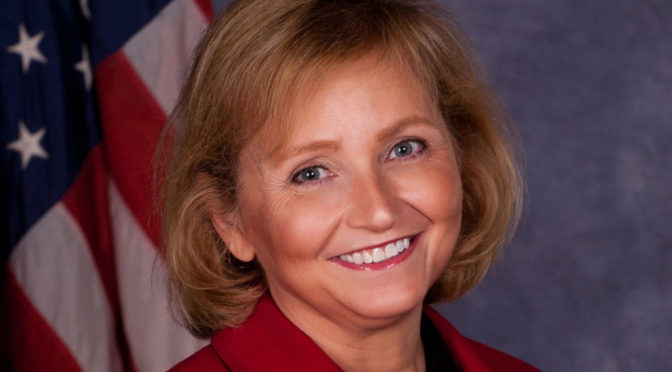
Lori Bolton Fleming. Taken from the kscourts.gov website.


Governor Laura Kelly announced on March 4 the appointment of Judge Lori Bolton Fleming to fill the vacancy created by the retirement of Judge Henry Green on the Kansas Court of Appeals, according to a press release from the governor.

That is the second of four steps in the process of filling the vacancy.

The next step was for the Senate Judicial to pick her for that role and the final step is for approval from the Kansas Senate, sometime in the next few weeks, Fleming said in an interview.

Fleming is a Fort Scott High School graduate and also taught there for a year, she said.

She was inspired to attend law school by some of her students who were in the foster care system.

“They were involved in the juvenile justice system, and I hoped to advocate, be a good voice for kids,” she said.

Bolton Fleming lives in Pittsburg, Kansas, and is the Chief Judge for the 11th Judicial District, which includes Cherokee, Labette, and Crawford counties. 

“I am confident Judge Bolton Fleming will be an exceptional addition to the Kansas Court of Appeals,” Governor Laura Kelly said in the press release. “Her extensive legal career, commitment to public service, and strong reputation will make her an excellent Court of Appeals Judge.”  

Fleming’s Background

Governor Sam Brownback appointed Bolton Fleming as a district court judge in 2012. As a district court judge, she handles a wide variety of cases including felony criminal, child in need of care, Chapter 60 civil, and domestic cases. She has conducted jury trials for high-level criminal and civil cases as well as bench trials and has frequently been invited to sit with the Kansas Court of Appeals and the Kansas Supreme Court to hear and assist in deciding cases. In total, she has rendered opinions in 38 cases as an assigned appellate judge.  

Bolton Fleming was appointed as chief judge by the Kansas Supreme Court in 2021. In this role, she oversees the operations of the 11th Judicial District, which covers five courthouses in southeast Kansas.  As chief judge, she is responsible for the creation of the 11th Judicial District’s first recovery court and serves as the administrator of the program.

“It is my honor to be selected by Governor Kelly to serve on the Kansas Court of Appeals,” said Fleming. “I intend to work hard every day to be the best possible appellate judge for all Kansans.” 

She has spent her entire legal career in southeast Kansas and would be one of the few rural voices on the Kansas Court of Appeals. The majority of the justices come from Wichita, Topeka or Kansas City.

“I feel it’s important to have rural representation on the Court of Appeals,” she said.

Prior to her judicial appointment, Bolton Fleming served as an assistant county attorney in Crawford County before specializing in legal research and writing for Spigarelli Law Firm. She then practiced with Wilbert and Towner law firm, working on criminal, civil, juvenile, business, adoption, and probate cases.    

Bolton Fleming is active in her local community through many volunteer efforts, including partnering with Pittsburg State University to create a pre-law internship program to help address the rural attorney shortage. She has also served on several Kansas Supreme Court committees, including the Rural Justice Initiative, the Pretrial Justice Task Force, the Kansas Digital Evidence Advisory Group, the COVID Jury Trial Advisory Group, and the Cybersecurity Committee.  

Prior to joining the legal profession, Bolton Fleming served as an elementary music and English teacher at Fort Scott High School and Leavenworth Public Schools.  

Bolton Fleming graduated from the Washburn University School of Law in 2001, where she served as the editor-in-chief of the Washburn Law Journal. She earned a bachelor’s degree in music education from Pittsburg State University in 1996.   

Cold Weather Rule and the LIEAP application period end soon

TOPEKA – The Kansas Corporation Commission (KCC) wants to remind utility customers that there are two important dates coming up that they should be aware of.  First, the Cold Weather Rule ends on Monday, March 31. The Cold Weather Rule protects residential customers, served by KCC regulated utilities, from disconnection when temperatures are forecast to drop below 35 degrees.

In addition, Monday is the deadline to apply for the Low Income Energy Assistance Program, known as LIEAP. Applications for the federally funded program must be received by the Kansas Department of Children and Families by 5 p.m. on Monday.  Information about the program is available at https://www.dcf.ks.gov/services/ees/Pages/EnergyAssistance.aspx

When the Cold Weather Rule is in effect, regulated utilities are required to offer a 12-month payment plan upon request, even if a previous payment plan has been broken. When that protection ends on Monday, failure to make arrangements or failure to adhere to an already established payment plan could result in disconnection. Reconnection after March 31 may require past due balances be paid in full, depending on the utility’s policy. That is why it is important to call now – while regulated utilities are still required to offer the Cold Weather Rule 12-month payment plan.

The KCC urges all customers facing financial difficulties to act now to stay connected. To find out more about utility assistance programs in your area, please contact your utility or the KCC Consumer Protection Office at 800-662-0027 or 785-271-3140. Utility assistance program information is also posted on the KCC’s website.

It is important to note that the KCC does not regulate co-ops or municipal utilities, although many of those utilities also offer a cold weather payment plan. For a complete list of utilities regulated by the KCC visit: http://kcc.ks.gov/about-us/jurisdiction

###

KS Dairy Producers Reminded to Obtain 2025 Dairy Margin Coverage by March 31   


Manhattan, Kansas March 25, 2025 – The U.S. Department of Agriculture (USDA) is encouraging dairy producers to enroll in Dairy Margin Coverage (DMC), an important safety net program that helps offset milk and feed price differences. This year’s DMC signup began Jan. 29 and the deadline to enroll is March 31, 2025.

“We encourage producers to join the 67 dairy operations in Kansas that have already signed up for this important safety net program in advance of the deadline,” said USDA Farm Service Agency (FSA) Deputy State Executive Director Joshua Ridder “At $0.15 per hundredweight for $9.50 coverage, risk protection through Dairy Margin Coverage is a cost-effective tool to manage risk and provide security for your operations.”

The American Relief Act, 2025 extended provisions of the Agricultural Improvement Act of 2018 (2018 Farm Bill) authorizing DMC for coverage year 2025.

DMC provides dairy operations with risk management coverage that pays producers when the difference (the margin) between the national price of milk and the average cost of feed falls below a certain level selected by the program participants.

DMC offers different levels of coverage minus a $100 administrative fee. The administrative fee is waived for dairy producers who are considered limited resource, beginning, socially disadvantaged or a military veteran.

DMC payments are calculated using updated feed and premium hay costs, making the program more reflective of actual dairy producer expenses.  These updated feed calculations use 100% premium alfalfa hay.

For more information on DMC, visit the or contact your local USDA Service Center.


###


USDA is an equal opportunity provider, employer and lender.


Legislative Update by State Senator Caryn Tyson

Note: Bourbon County is represented by Kansas Senator Tim Shallenberger and Representative Rich James. They have not responded to requests for a weekly newsletter. In the interest of providing legislative information, Senator Tyson provides a weekly newsletter. U.S. Rep. Derek Schmidt has recently started providing information at the federal level.

Caryn Tyson

March 21, 2025


It was a difficult week in the legislature.  Over 80 bills were worked on the Senate floor.  It was intense and made for a long week.  There were too many bills to discuss in this update.  All the legislation is posted at www.KSLegislature.gov.


Property Taxes are a concern for most Kansans.  The Senate Tax Committee held hearings on the House position of limiting taxable valuation increases in House Concurrent Resolution (HCR) 5011 and repealing part of the Truth in Taxation, Revenue Neutral notices, in House Bill (HB) 2396.  The Committee didn’t support the House averaging over several years to limit tax values and instead supported the 3% tax value limit passed in Senate Concurrent Resolution (SCR) 1603, 28 to 12 on February 5th.  So, the Committee voted to put the same language in 1603 into 5011.  The Senate then passed 5011 on a bipartisan vote of 30 to 10.  I voted Yes.


The Tax Committee also rejected repealing Revenue Neutral notices, but did move forward on a protest petition that would block local governments from increasing their property tax revenues (i.e. taxes).  The Senate lowered the threshold to 3% or an inflation index, whichever is lower, plus new construction and voted on bonds.  If the local government unit increases property taxes greater than that amount, voters could block the increase by signing a protest petition.  Some of the logistics still need to be worked out, but it is being considered.  One thing that most of us can agree on is that the current system is taxing people out of their homes and needs attention.


Slowing State Government Growth by passing SB 259, automatic income tax reductions would be set in place based on taxes collected the previous year.  For years Kansas taxpayers have been paying more, growing the beast that is big government.  SB 259 would trigger a personal income tax cut for the next year when taxes collected are greater than inflation until the personal income tax bracket is 4.5%.  Once 4.5% is reached, the trigger would be used to decrease corporate and privilege taxes until comparable reductions are reached.  The bill passed 30 to 10.  I voted Yes.


Illegals Voting in Kansas elections would be exposed if HB 2020 becomes law.  It would require the Department of Revenue to notify the Secretary of State of any noncitizens drivers licenses issued.  The Secretary would then be required to investigate any names on the noncitizen list with voter registrations and direct county clerks to remove the registered voter from the voter rolls.  The bill passed 32 to 8.  I voted Yes.


Special Elections that often increase taxes will only be held in April, August, or November if HB 2022 becomes law with the Senate changes.  A recent election in Sedgewick County cost taxpayers $136,000.  If it would have been on the August or November ballot, there wouldn’t have been an extra expense.  I voted yes.  It passed 24 to 16.


Artificial Intelligence generated visual sexual images of children will be a sex crime if HB 2183 becomes law.  It passed the Senate unanimously.


Prayers for those who have lost loved ones.  It was a difficult week in the Kansas Senate, as a few senators lost loved ones.  It is one of the hardest things we face in life.  For all who have lost a loved one, their life was a gift from God and may their memory continue to bless you.


It is an honor and a privilege to serve as your 12th District State Senator.

Caryn


K-52 resurfacing project will begin soon in Linn County


The week of March 31, the Kansas Department of Transportation plans to begin a resurfacing project on K-52 in Linn County. The 14-mile project area includes two highway sections: from K-31 northeast to the U.S. 69 south junction, and from the U.S. 69 north junction east to the Kansas-Missouri state line.


Project activity includes a mill and overlay. Flaggers and a pilot car with guide one-lane traffic through the work zone during weekday daylight hours; expect delays of 15 minutes or less. Weather permitting, the work should be completed by June.


KDOT awarded Bettis Asphalt & Construction Inc., of Topeka, the $3.2 million construction contract. Persons with questions may contact Ian Stringham, (785) 433-6116, or Priscilla Petersen, (620) 902-6433.

KDOT urges drivers to slow down and obey the posted signs in all work zones. For information on this project and other construction activity on state highways in Kansas, visit www.kandrive.gov or call 5-1-1.


Construction Careers Highlighted at Kansas Virtual Job Fair

KANSASWORKS Highlighting Construction Careers at Upcoming Virtual Job Fair

TOPEKA – Lieutenant Governor and Secretary of Commerce David Toland today encouraged jobseekers and employers interested in construction careers to take advantage of an upcoming virtual job fair. Hosted by KANSASWORKS, the sector-specific fair will be from 8:00 a.m. to 5:00 p.m. Wednesday, April 9.

“As we continue on our strong trajectory of economic growth, there has been a corresponding increase in new building construction across the state,” Lieutenant Governor and Secretary of Commerce David Toland said. “Many employers are eager to hire hardworking Kansans ready to fill the many open construction roles – and at the same time help build a new and better Kansas.”

The virtual job fair allows anyone searching for a new position to fill out applications, chat live, and interview virtually with participating employers.

The virtual job fair portal features helpful information such as a jobseeker training video, a list of participating employers, and channels for attendees to register and log in. Jobseekers are encouraged to dress professionally, as employers may request to engage in a video interview.

Candidates can participate through any digital device. Any individual with a disability may request accommodation by contacting their nearest workforce center at (877) 509-6757 prior to the event.

Registration is required to participate in virtual job fairs, regardless of previous participation. To register, click here.

About the Kansas Department of Commerce:

As the state’s lead economic development agency, the Kansas Department of Commerce strives to empower individuals, businesses and communities to achieve prosperity in Kansas. Commerce accomplishes its mission by developing relationships with corporations, site location consultants and stakeholders in Kansas, the nation and world. Our strong partnerships allow us to help create an environment for existing Kansas businesses to grow and foster an innovative, competitive landscape for new businesses. Through Commerce’s project successes, Kansas was awarded Area Development Magazine’s prestigious Gold Shovel award in 2021, 2022, 2023 and 2024, and was awarded the 2021 and 2022 Governor’s Cup by Site Selection Magazine.

About the KANSASWORKS:

KANSASWORKS links businesses, job candidates and educational institutions to ensure that employers can find skilled workers. Services are provided to employers and job candidates through the state’s 27 workforce centers, online or virtual services KANSASWORKS is completely free for all Kansans to use. Learn more at KANSASWORKS.com. State employment opportunities can be found at jobs.ks.gov.

###

Kansas Supreme Court announces new portal to search appellate cases

TOPEKA—Beginning today, people can search appellate cases using a public access portal that not only gives case information but also public case documents.


The Kansas Appellate Courts Public Access Portal is part of the Kansas eCourt project to centralize case information on a single web-based platform, transforming the way courts serve the people of Kansas. The multiyear project introduced a new case management system in district and appellate courts, making it possible to search statewide court case information online.


“We are thrilled to announce this much-anticipated milestone for the Kansas court system,” said Chief Justice Marla Luckert. “For the first time in the history of our courts, public case information and case documents in both district and appellate courts can be searched online without cost.”


Using the portal to search cases


Before searching cases on the Kansas Appellate Courts Public Access Portal, a person must register as a portal user. A link to the registration form is in the top right corner of the portal home page.


All registered users must abide by the Kansas Courts Public Access Portal User Agreement.


If a person is registered to use the Kansas District Court Public Access Portal, they do not need to register to use the Kansas Appellate Courts Public Access Portal. Their registration transfers to the appellate portal and their username and password are the same.


Case information and case documents


People who use the portal to search appellate cases will get information that includes party names and a register of events. It can also include case documents.


Only case documents filed after March 13, 2025, will be available on the portal. To access a public case document filed prior to March 13, 2025, a user would need to request it from the clerk of the appellate courts.


More information about the portal and what it offers is on the kscourts.gov webpage Search Appellate Court Records.


Some case information, documents not available


Sealed cases and sealed records are not public, and some cases are exempt from disclosure under the Kansas Open Records Act (K.S.A. 45-221). Other records may be exempt by judicial rule, order, or caselaw.


Cases and records not available through the public access portal are identified in Supreme Court Kansas eCourt Rules (20–25).


Supreme Court Rule 22: Access to Public Electronic District Court and Appellate Case Records


Updated Supreme Court Rule 22


Administrative Order 2025-RL-027 signed and filed Friday, March 21, adopted modifications to Supreme Court Rule 22 that take effect today, March 24. Modifications to Supreme Court Rule 22 make more case types searchable through the district court and appellate courts public access portals.


Under updates to Rule 22, certain case types in the domestic, juvenile offender, and probate case categories become available on the public access portals effective today, March 24, 2025.


Searching these case types will give registered users access to case events but not case documents. To access public case documents, a user must visit a courthouse or the Kansas Judicial Center to use a computer terminal to search these case types.


Kansas eCourt case management system


Beginning in 2019, district courts were brought onto a centralized case management system following a statewide rollout plan. The last district court moved to the new system in November 2024.


The appellate courts began operating on the appellate version of the same case management system in June 2024. Additional time was needed to prepare to offer case information and documents online through a public access portal.

Kansas Judicial Branch

Office of Judicial Administration

301 SW 10th Avenue

Topeka, KS 66612-1507

785-296-2256

kscourts.gov

Governor Kelly Vetoes Restrictive Voting Legislation


TOPEKA
– Governor Laura Kelly on Monday vetoed Senate Bill 4.

The following veto message is from Governor Kelly regarding her veto of Senate Bill 4:

“The three-day grace period for mail ballots was a bipartisan solution approved by the Legislature in 2017 to address delays in processing of mail by the United States Postal Service, particularly in rural areas. The goal was to ensure that all Kansans had their votes counted, no matter where they lived.

“Not only will removing the three-day grace period for mail ballots disenfranchise thousands of Kansas voters, but it also shows a lack of understanding of our elections in Kansas. Implementing this will create confusion among county election officials, who will have to update policies and procedures on handling of mail ballots in a higher turnout election year.

“This bill is an attack on rural Kansans who want to participate in the electoral process guaranteed by our Constitution. I will not sign legislation that deprives Kansans from having their vote counted.

“Therefore, under Article 2, Section 14(a) of the Constitution, I hereby veto Senate Bill 4.”

Move-Over Protections for all Highway Drivers Bill


Governor Kelly Signs Bipartisan Bill Expanding Move-Over Protections for all Highway Drivers


TOPEKA
– Governor Laura Kelly signed on Monday  Senate Bill 8, which requires drivers to move over when passing stationary vehicles displaying hazard warning lights.

“Thanks to this commonsense bill, all drivers will now be required to move over or slow down if there is a vehicle on the side of the road with flashing lights,” Governor Laura Kelly said. “This bill will improve safety and will make it easier to educate the driving public.”

Senate Bill 8 works to protect both drivers of disabled vehicles displaying hazard warning signal lights and other drivers on the road. The bill requires drivers on the road to proceed with caution and change lanes away from the disabled vehicle if it is possible and safe to do so.

“Eighty-two crashes occurred from 2018-2023 with someone in a vehicle while on the side of the road,” said State Representative for the 125th District Shannon Francis. “This bill will improve driver behavior by creating consistency with other move-over bills for law enforcement, first responders, and utility vehicles, among others.”

Historically, move-over protections had been limited to emergency personnel. Over time, these protections included road service vehicles, utility, and tow trucks. This year, move-over protections will apply to all highway vehicles.

“Senate Bill 8 is a commonsense safety measure that will enhance protections for all travelers on Kansas roadways,” said Senator for District 7 Ethan Corson  “With its enactment, we’re taking meaningful steps to look out for drivers and passengers.”

In addition to Senate Bill 8, Governor Kelly also signed the following bipartisan bills:

Senate Bill 2: Validates the election results for the bond issuance question submitted by the board of education of USD 200, Greeley County, at a special election held on May 21, 2024.

Senate Bill 7: Increases the statutory limits on bonds issued by a township based on township population and purpose of the bond issuance, increasing townships’ ability to access resources for infrastructure and facility improvements.

Senate Bill 88: Ensures the state long-term care ombudsman and regional ombudsman receive memory care training to better serve Kansans with dementia and other memory illnesses.

Senate Bill 175: Modernizes the definition of athletic trainer and provides an exemption for trainers licensed in other states or countries to practice in Kansas.

House Bill 2261: Resolves ambiguity surrounding the classification of Kansas Highway Patrol majors.

###