Category Archives: Government

Applications for New Commodities Accepted Beginning July 13

Additional Commodities Eligible for Coronavirus Food Assistance Program

Applications for New Commodities Accepted Beginning July 13

WASHINGTON, July 9, 2020 – Today, U.S. Secretary of Agriculture Sonny Perdue announced an initial list of additional commodities that have been added to the Coronavirus Food Assistance Program (CFAP), and that the U.S. Department of Agriculture (USDA) made other adjustments to the program based on comments received from agricultural producers and organizations and review of market data. Producers will be able to submit applications that include these commodities on Monday, July 13, 2020.  USDA’s Farm Service Agency (FSA) is accepting through Aug. 28, 2020, applications for CFAP, which helps offset price declines and additional marketing costs because of the coronavirus pandemic. USDA expects additional eligible commodities to be announced in the coming weeks.


“During this time of national crisis, President Trump and USDA have stood with our farmers, ranchers, and all citizens to make sure they are taken care of,” said Secretary Perdue. “When we announced this program earlier this year, we asked for public input and received a good response. After reviewing the comments received and analyzing our USDA Market News data, we are adding new commodities, as well as making updates to the program for existing eligible commodities. This is an example of government working for the people – we asked for input and we updated the program based on the comments we received.”

USDA collected comments and supporting data for consideration of additional commodities through June 22, 2020.

Changes to CFAP include:

  • Adding the following commodities: alfalfa sprouts, anise, arugula, basil, bean sprouts, beets, blackberries, Brussels sprouts, celeriac (celery root), chives, cilantro, coconuts, collard greens, dandelion greens, greens (others not listed separately), guava, kale greens, lettuce – including Boston, green leaf, Lolla Rossa, oak leaf green, oak leaf red and red leaf – marjoram, mint, mustard, okra, oregano, parsnips, passion fruit, peas (green), pineapple, pistachios, radicchio, rosemary, sage, savory, sorrel, fresh sugarcane, Swiss chard, thyme and turnip top greens.
  • Expanding for seven currently eligible commodities – apples, blueberries, garlic, potatoes, raspberries, tangerines and taro – CARES Act funding for sales losses because USDA found these commodities had a 5 percent or greater price decline between mid-January and mid-April as a result of the COVID-19 pandemic. Originally, these commodities were only eligible for marketing adjustments.
  • Determining that peaches and rhubarb no longer qualify for payment under the CARES Act sales loss category.
  • Correcting payment rates for apples, artichokes, asparagus, blueberries, cantaloupes, cucumbers, garlic, kiwifruit, mushrooms, papaya, peaches, potatoes, raspberries, rhubarb, tangerines and taro.

Additional details can be found in the Federal Register in the Notice of Funding Availability (NOFA) and Final Rule Correction and at www.farmers.gov/cfap.

Producers have several options for applying to the CFAP program:

  1. Using an online portal, accessible at farmers.gov/cfap, allows producers with secure USDA login credentials—known as eAuthentication—to certify eligible commodities online, digitally sign applications and submit directly to the local USDA Service Center.  New commodities will be available in the system on July 13, 2020.
  2. Completing the application form using our CFAP Application Generator and Payment Calculator found at farmers.gov/cfap. This Excel workbook allows customers to input information specific to their operation to determine estimated payments and populate the application form, which can be printed, then signed and submitted to their local USDA Service Center.  An updated version with the new commodities will be available on the website on July 13, 2020.
  3. Downloading the AD-3114 application form from farmers.gov/cfap and manually completing the form to submit to the local USDA Service Center by mail, electronically or by hand delivery to an office drop box. In some limited cases, the office may be open for in-person business by appointment. Visit farmers.gov/coronavirus/service-center-status to check the status of your local office.


USDA Service Centers can also work with producers to complete and securely transmit digitally signed applications through two commercially available tools: Box and OneSpan. Producers who are interested in digitally signing their applications should notify their local service centers when calling to discuss the CFAP application process. You can learn more about these solutions at farmers.gov/mydocs.


Getting Help from FSA

New customers seeking one-on-one support with the CFAP application process can call 877-508-8364 to speak directly with a USDA employee ready to offer general assistance. This is a recommended first step before a producer engages the team at the FSA county office at their local USDA Service Center.


All other eligibility forms, such as those related to adjusted gross income and payment information, can be downloaded from farmers.gov/cfap. For existing FSA customers, these documents are likely already on file.


All USDA Service Centers are open for business, including some that are open to visitors to conduct business in person by appointment only. All Service Center visitors wishing to conduct business with FSA, Natural Resources Conservation Service or any other Service Center agency should call ahead and schedule an appointment. Service Centers that are open for appointments will pre-screen visitors based on health concerns or recent travel, and visitors must adhere to social distancing guidelines. Visitors may also be required to wear a face covering during their appointment. Field work will continue with appropriate social distancing. Our program delivery staff will be in the office, and they will be working with our producers in office, by phone and using online tools. More information can be found at farmers.gov/coronavirus.  


#

USDA is an equal opportunity provider, employer, and lender.

Payments For Dairy Producers

May Margin Triggers Dairy Margin Coverage Program Payment

Income-over-feed margin for May triggers third payment for 2020


WASHINGTON, July 7, 2020 – The U.S. Department of Agriculture’s Farm Service Agency (FSA) today announced that the May 2020 income over feed cost margin was $5.37 per hundredweight (cwt.), triggering the third payment of 2020 for dairy producers who purchased the appropriate level of coverage under the Dairy Margin Coverage (DMC) program.

“This payment comes at a critical time for many dairy producers,” said FSA Administrator Richard Fordyce. “DMC has proved to be a worthwhile risk management tool, providing dairy producers with much- needed financial support when markets are most volatile.”

To date, FSA has issued more than $176 million in program benefits to dairy producers who purchased DMC coverage for 2020. 

Authorized by the 2018 Farm Bill, DMC is a voluntary risk management program that offers protection to dairy producers when the difference between the all-milk price and the average feed price (the margin) falls below a certain dollar amount selected by the producer. Over 13,000 operations enrolled in the program for the 2020 calendar year.

Although DMC enrollment for 2020 coverage has closed, signup for 2021 coverage will begin October 13 and will run through December 11, 2020.

All USDA Service Centers are open for business, including some that are open to visitors to conduct business in person by appointment only. All Service Center visitors wishing to conduct business with the FSA, Natural Resources Conservation Service, or any other Service Center agency should call ahead and schedule an appointment. Service Centers that are open for appointments will pre-screen visitors based on health concerns or recent travel and visitors must adhere to social distancing guidelines. Visitors may also be required to wear a face covering during their appointment. Field work will continue with appropriate social distancing. Our program delivery staff will be in the office, and they will be working with our producers in office, by phone, and using online tools. More information can be found at farmers.gov/coronavirus.  

For more information, visit farmers.gov DMC webpage or contact your local USDA Service Center. To locate your local FSA office, visit farmers.gov/service-center-locator.


#

USDA is an equal opportunity provider, employer and lender.

Housing For COVID 19 Cases

Update on Non-Congregate Housing for COVID-19 Response

Facilities also used for Kansans who work in congregate settings


The Kansas Department for Children and Families continues to operate non-congregate housing facilities across the state to host individuals currently working in, exposed to, or living in congregate settings, COVID-19 positive, exposed or high-risk individuals. DCF is currently managing sites in Dodge City, Emporia, Gardner, Leavenworth, Liberal, and Manhattan. The agency previously managed sites in Garden City and Junction City. Those facilities have since been closed.


Shelters are established to prevent the spread of the virus and maintain operations within critical and essential businesses or services. A request for non-congregate sheltering may be made to the state by a county emergency manager. In addition, the local or state health officer may make a recommendation for a non-congregate shelter if an identified need exists. The Kansas Division of Emergency Management in cooperation with counties, the Kansas Department of Health and Environment and Department for Children and Families contracts with local hotels to establish the sites. Contracts to date have been for entire hotel facilities with no other guests present.


Not all residents are in the facility due to illness. Some may live in congregate settings, or work in congregate settings or at essential locations and be concerned about returning home due to exposure risk for COVID-19.


Examples include:


  • Individuals unable to quarantine at home due to a high-risk person at home
  • Individuals who work in a congregate setting
  • Immunocompromised individuals
  • Adults over 65 years of age
  • Comorbidities
  • Chronic lung disease
  • Moderate to severe asthma
  • Serious heart conditions
  • Cancer treatments
  • Unable to financially cover independent quarantine
  • Or other health issues


Individuals are not required to stay in the facility, however if they leave, the county health officer is notified.


The Department for Children and Families manages the day-to-day operations of each site. Responsibilities include making sure residents receive meals and laundry service, as well as ensuring the facility is cleaned daily and receives a deep cleaning before returning the hotel to normal operations.


The first non-congregate sites were opened in April and sites were added as counties asked for support. Each site will remain open if there is a continued need in the community. Additional sites also may be opened as counties address the continued spread of COVID-19.


Due to HIPAA laws, the exact locations of each site are not made public to protect the privacy of Kansas residents. There is currently a total of 43 people staying in non-congregate housing.

New FS City Engineer: Nate Stansberry

Nate Stansberry, 32, is the Fort Scott City Engineer
as of June 29, 2020.
Stansberry received a  Bachelor of Science in Engineering, Civil Emphasis, from Marshall University, Huntington, WV.
He worked two years in the Springfield, MO Public Works Stormwater Division as an engineer in training; five years in the Rutland, VT Department of Public Works as an associate and assistant city engineer; two and one-half years with the Asian Development Bank in the Republic of the Marshall Islands as a Technical Advisor—Water and Sewer Operations Engineer for the Majuro Water and Sewer Company.
The following is from an interview with Stansberry.
Why did you pursue a degree in civil engineering?
“I’ve always enjoyed construction and water-related activities and felt civil engineering was a natural fit,” Stansberry said. “I credit my time working under Errin Kemper at the City of Springfield for helping me see the vision of being a municipal engineer and Dr. John Bailey in an interview with the City of Pittsburg, KS on a position I didn’t get, for showing me how fulfilling being a city engineer in a smaller, full-service city could be. I also credit Alan Shelvey and Pete Kelley in Rutland, Vermont, for their mentorship and example and tutelage of what it means to be a public servant and how we can make an impact each day on the well being of those around us. Each day I get to go work and try to make where I live a little bit better with co-workers striving to do the same. Professionally—I haven’t found anything more fulfilling, yet.”
What are your duties for the City of Fort Scott?
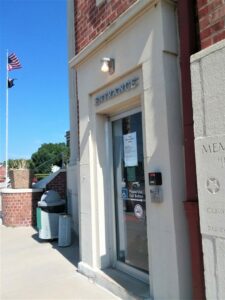
“Fort Scott has not had a city engineer in thirty-plus years so I’m not walking into an established role. On a day to day basis, I’m looking to support our public works divisions in their day-to-day activities and short and long-term capital replacement planning. I’m also looking to provide support and design services to other city groups as time allows. I also see record keeping as an important part of my job and will look to prepare a repository of city works for future reference and hopefully the engineer that comes after me. Most of all, I’m here to serve the public and maintain an open-door policy and can be found at the Code’s Department in Memorial Hall from 8 am-5 pm.”
Stansberry and his wife, Victoria, who is a native of Rolla, KS,  have been married 10 years.
“She last taught Spanish as a school teacher but has stayed home with our daughter since her birth,” Stansberry said.  “Our daughter, aptly named Kansas, will be three this upcoming August.”
The Fort Scott Codes Enforcement Office is located in the lower level of Memorial Hall on East Third Street and National Avenue. Stansberry’s office is located here.

Bourbon County Health Department Gives Recommendations


SEK Multi–County Health Departments 

Allen, Anderson, Bourbon, and Woodson Counties 

Coronavirus (COVID–19) Update 

July 8, 2020

The Bourbon County Order of the Local Health Officer goes through the end of the day today and then will end.

The Governor and Kansas Department of Health and Environment have strongly suggested that Kansans follow the Ad Astra plan and remain in Phase 3 for the time being.

With Bourbon County‘s amount of increase in positive COVID-19 cases recently, I as the Bourbon County Local Health Officer, also strongly suggest that Bourbon County follow the Ad Astra plan and remain in Phase 3, as well as follow the Governor’s Executive Order 20-52 to require masks or other face coverings in public. I strongly suggest this as well for my other counties, Allen, Anderson and Woodson.

Submitted by:

Rebecca Jan Bowen

Rebecca Johnson BSN, RN

Allen, Anderson, Bourbon, Woodson County Local Health Officer

Bourbon County Has Another COVID 19 Case

“Allen, Anderson, and Bourbon Counties all have a new positive COVID-19 case this afternoon,” said Rebecca Johnson, health officer for Bourbon County. “These Public Health Departments are diligently working to complete the investigations.

Please stay home if sick, wear a mask in public, practice social distancing and good hygiene.”


Submitted by:

Rebecca Johnson, SEK Multi-County Health Departments Administrator

*411 N. Washington

Iola, KS 66749

*524 S. Lowman

Ft. Scott, KS 66701

(620)223-4464 work

(620)223-1686 fax

becky@sekmchd.com

COVID 19 in Bourbon County: 8 More Cases

SEK Multi-County Health Departments

Bourbon County

Coronavirus (COVID-19) Update

July 8, 2020

From late yesterday evening until this morning, Bourbon County has 8 more positive COVID-19 cases. 2 individuals are contacts of previously listed positive cases. 6 individuals are from out of state and out of county that are currently staying in Bourbon County. The individuals are in isolation. Because of the number of new cases, the investigations are still being conducted and this is all the information that can be released at this time.

Please STAY HOME IF SICK (ie: feeling sick, awaiting COVID-19 test results or instruction from the county health department, if you tested positive for COVID-19, if you were in contact with a positive case, if you were notified to isolate or quarantine), wear a mask when applicable (Bourbon County is following the Governor’s order for mask wearing), practice social distancing, practice good hygiene and avoid touching your face!

Bourbon County

Current Positive Cases 16
Presumptive Cases 1-listed on KDHE website, tested negative
Positive Out of State/County-staying in Bourbon 6
Current Recovered Cases 29-includes presumptive case
Total Positives Since Testing 47
Deaths 1

Recovered cases are based on dates of onset of symptoms, not on day testing results are received.

Family Stability Grants Awarded

Kelly Administration Awards TANF Youth and Family Stability Grants

Grants will support children and help move families out of poverty


TOPEKA – Kansas families will now have greater access to family support programs that provide stability during these uncertain times. Today, Governor Laura Kelly and Department for Children and Families Secretary Laura Howard awarded Temporary Assistance for Needy Families (TANF) Youth and Family Stability Grants to eight agencies from across the state.

“COVID-19 has created a lot of new burdens for vulnerable communities across Kansas,” Governor Laura Kelly said. “I’m pleased to announce these grants that will immediately provide a boost in critical services like childcare, education, and mental health services for Kansas families and kids who need them more than ever.”

TANF is a federally funded program designed to help needy families support their children in the short-term and move out of poverty in the long-term. The Youth and Family Stability Grants provide federal TANF funds to programs that aim to reduce poverty by providing primary prevention and early intervention services to prevent youth from engaging in high-risk behaviors and to help families achieve and maintain stability.

DCF awarded Youth and Family Stability Grants to:

  • Communities in Schools for in and out-of-school programming that includes case management services for at risk school age youth and their families to help students graduate from high school and connect their families with needed resources.

  • Youthrive for case management services and programming for former foster youth aging out of the Independent Living program in Johnson, Wyandotte, Douglas, and Shawnee counties.

  • IRC Kansas Family Connections and Resiliency Program for case management services and prevention intervention programming to address trauma, help families achieve and maintain stability, and reduce risk factors for at risk youth and their families in Sedgwick county.

  • Lawrence-Douglas County Public Health for case management services and programming targeting healthy relationships, self-sufficiency, and family stability for at risk youth and families in Douglas county.

  • Connections to Success for case management services and programming targeting healthy relationships, self-sufficiency and family stability for at risk youth and families in the Kansas City area.

  • Mental Health Association of South-Central Kansas for case management services and mental health programming targeting healthy relationships, self-sufficiency and family stability for at risk youth and families in Sedgwick county and the surrounding area.

  • Mirror, Inc. for case management services and programming targeting healthy relationships, self-sufficiency and family stability for at risk youth and families in Shawnee county and the surrounding area.

  • Urban Scholastic Center for programming for at risk school age youth in Wyandotte county including financial literacy education, entrepreneurial and furthering education opportunities, educational supports, and case management related services.

“DCF is excited to work with both new partners and familiar faces to provide these vital services to Kansans,” DCF Secretary Laura Howard said. “Programs that provide support and stability will now be available to children and families across the state when they need them most.”

DCF received a total of 23 proposals. A review team composed of DCF program and budget staff members considered all applications and assigned scores based on the strength of the proposals.

The grant term awarded is July 1, 2020 to June 30, 2022.


Foster Care Report Card Implemented

Governor Laura Kelly signs Executive Order Implementing Foster Care Report Card

Another Step Toward Improving Foster Care System


TOPEKA – Governor Laura Kelly today signed Executive Order #20-53 establishing an annual education report card for students in foster care. The report card will track educational outcomes and collect data to give state leaders, education providers, and stakeholders a picture of where the state needs to improve when it comes to educating foster care kids in Kansas.


“This executive order is another step my administration is taking to improve outcomes for vulnerable children in the foster care system,” Governor Laura Kelly said. “Education is key to a strong future workforce in Kansas. This report will help us track educational outcomes of all Kansas students in foster care – which will in turn help Kansas’ vulnerable families and make our public education system more accountable. I will continue to preserve the foster care programs that are already in place during this unprecedented pandemic. We will grow these foundational services and continue to fight on behalf of all Kansas children.”


The foster care report card will track the following:


A:           The graduation rate of students in foster care at the end of each academic year;


B:           The number and percentage of students in foster care who were promoted to the next grade level;


C:           The number and percentage of students in foster care who were suspended during the school year, and the average number of days each student spent in suspension;


D:           The number and percentage of students in foster care who were expelled during the school year;


E:           State standardized assessment scores for students in foster care, including the number and percentage of students meeting academic standards as determined by the state board of education;


F:           The number and percentage of students in foster care enrolled in any preschool-aged at-risk program, Kansas preschool pilot program or early childhood special education program under section 619 of part B of the individuals with disabilities act;


G:           The number and percentage of students in foster care who participated in the mental health intervention team pilot program or a similar mental health program;


H:           The total number of students in foster care enrolled in a school district or accredited nonpublic school and the disaggregated number and percentage of students in foster care enrolled in school districts and accredited nonpublic schools; and


I:             De-identified disaggregated race and ethnicity data for each data set required in (A) through (H); and


J:            Any additional data elements that both the Kansas State Department of Education and the Kansas Department for Children and Families deem appropriate for inclusion.


The executive order directs the Department for Children and Families to work with the Kansas Department of Education to accumulate the data. The report card will be published annually and presented to the House and Senate Educations committees by the Kansas Department for Children and Families by January 15 of each year.


“I commend Governor Kelly for her continued leadership and commitment to building a strong foster care system in Kansas,” Secretary of Children and Families Laura Howard said. “I have long supported the idea of a foster care report card because I believe that a child’s success in education is a predictor for their success in life. The Department for Children and Families has already engaged with the Department of Education to begin gathering data. I look forward to seeing where the data leads us so we can identify ways in which both agencies can support foster youth in meaningful ways that ensure their wellbeing.”


The foster care report card was a provision in House Bill 2510 during the 2020 Legislative session that was vetoed by Governor Kelly due to the fiscal crisis the state faces.


Please find the executive order here.


Tourism Advisory Board Meets July 9

The Tourism Advisory Board will meet on Thursday, July 9th, 2020 at 4:00 p.m. in the City Commission Meeting Room at City Hall, 123 S. Main.

Please call the City Clerk at 620-223-0550 or email Diane Clay at dclay@fscity.org to sign up to speak.

The meetings are limited to 45 total in number due to the COVID-19 pandemic, however the room will only hold 14 due to the 6’ social distancing rules. Patrons will be let in one at a time at their scheduled time to ensure the public health orders are followed.

The Tourism meeting will be available on the City’s YouTube channel.

Governor Recommends Staying in Phase 3 To Reopen

Governor Laura Kelly Recommends Kansas Continues to Use Phase 3 of “Ad Astra” Plan


TOPEKA — Governor Laura Kelly today announced that her administration, and officials with the Kansas Department of Health and Environment, recommend that most local communities again do not move into Phase Out of “Ad Astra: A Plan to Reopen Kansas” at this time, and instead stay in Phase 3.


“Nearly 3,500 new cases of COVID-19 have been reported in Kansas over the past two weeks – which is the steepest rate of new case development since the pandemic began,” said Governor Kelly. “After careful consideration, Secretary Norman’s team at KDHE and members of my administration have decided we still do not feel most communities are ready to move into the final phase of the ‘Ad Astra’ plan at this time.”


The emergency disaster declaration issued by the Governor on May 26 transfers reopening decisions back to local officials, which means counties continuing with Phase 3 of the plan is only a recommendation. However, the State continues to monitor health metrics daily, and remains committed to supporting local communities in a safe, gradual transition.


“If we’re going to keep our loved ones healthy and keep Kansas open for business, every Kansan must step up, wear a mask, socially distance, and practice good hygiene,” said Governor Kelly. “I will continue do everything in my power to save lives and keep our economy open, and I strongly encourage other elected leaders in our state to do the same.”


Key Phase 3 highlights for communities:


  • Mass gatherings of more than 45 individuals are not recommended;


  • All education, activities, venues and establishments may operate and are recommended to follow all public health guidelines;


  • On-site staffing has no recommended restrictions;


As always, Kansans should continue to adhere to hygiene and social distancing protocols, including:


  • Washing hands frequently, while avoiding contact with one’s face;


  • Remaining home when sick or running a fever;


  • Following isolation and quarantine orders issued by state or local health officers;


  • Wearing a cloth face mask when in public;


“Ad Astra: A Plan to Reopen Kansas,” is available in full at covid.ks.gov, in addition to industry-specific guidance for Kansas businesses.