Category Archives: Government

Kansas Lakes Blue-Green Algae Advisories

Public Health Advisories for Kansas Lakes Due to Blue-Green Algae

TOPEKA – The Kansas Department of Health and Environment (KDHE) and the Kansas Department of Wildlife and Parks (KDWP) has issued several public health advisories for Kansas lakes due to blue-green algae.


Active Advisories


Warning

Gathering Pond at Milford, Geary County

Milford Lake Zone C, Geary County

Harvey County East Lake, Harvey County

Altamont City Lake “Idle Hour” Main Lake, Labette County

Big Hill Lake, Labette County

Parsons Lake, Labette County (new)

Marion County Lake, Marion County (upgraded 7/22)

Melvern Outlet Pond, Osage County (upgraded 7/22)

Webster Reservoir, Rooks County

Jerry Ivey Pond, Saline County

Hargis Lake, Sumner County (new)

Big Eleven Lake, Wyandotte County


Watch

Brown State Fishing Lake, Brown County

Mission Lake Horton, Brown County

Milford Lake Zones A and B, Geary County

South Lake, Johnson County

Altamont City Lake “Idle Hour” North Lake, Labette County

Marion Reservoir, Marion County (downgraded 7/22)

Overbook City Lake, Osage County

Agra City Lake, Phillips County

Atwood Township Lake, Rawlins County


Advisories Lifted 7/22/21

Herington Reservoir (New City Lake), Dickinson County

Herington City Lake (Old Lake), Dickinson County

Geary State Fishing Lake, Geary County

Horsethief Reservoir, Hodgeman County

Linn Valley Lake, Linn County

River Pond below Tuttle Reservoir, Riley County


When a warning is issued, KDHE recommends the following precautions be taken:

  • Lake water is not safe to drink for pets or livestock.
  • Lake water, regardless of blue-green algae status, should never be consumed by humans.
  • Water contact should be avoided.
  • Fish may be eaten if they are rinsed with clean water and only the fillet portion is consumed, while all other parts are discarded.
  • Do not allow pets to eat dried algae.
  • If lake water contacts skin, wash with clean water as soon as possible.
  • Avoid areas of visible algae accumulation.


A watch means that blue-green algae have been detected and a harmful algal bloom is present or likely to develop. People are encouraged to avoid areas of algae accumulation and keep pets and livestock away from the water.


During the watch status, KDHE recommends the following precautions be taken:

  • Signage will be posted at all public access locations.
  • Water may be unsafe for humans/animals.
  • Avoid areas of algae accumulation and do not let people/pets eat dried algae or drink contaminated water.
  • Swimming, wading, skiing and jet skiing are discouraged near visible blooms.
  • Boating and fishing are safe. However, inhalation of the spray may affect some individuals. Avoid

direct contact with water, and wash with clean water after any contact.

  • Clean fish well with potable water and eat fillet portion only.


KDHE investigates publicly-accessible bodies of water for blue-green algae when the agency receives reports of potential algae blooms in Kansas lakes. Based on credible field observation and sampling results, KDHE reports on potentially harmful conditions.


Signs of a possible bloom include if there is scum, a paint-like surface or the water is bright green, avoid contact and keep pets away. These are indications that a harmful bloom may be present. Pet owners should be aware that animals that swim in or drink water affected by a harmful algal bloom or eat dried algae along the shore may become seriously ill or die.


For information on blue-green algae and reporting potential harmful algal blooms, please visit www.kdheks.gov/algae-illness/index.htm.Public

Heirs Property Relending Program: Resolving Ownership/Succession Issues

Biden Administration to Invest $67 Million to Help Heirs Resolve Land Ownership and Succession Issues 


MANHATTAN, KANSAS, July 29, 2021– The U.S. Department of Agriculture (USDA) is providing $67 million in competitive loans through the new Heirs’ Property Relending Program (HPRP), which aims to help agricultural producers and landowners resolve heirs’ land ownership and succession issues. Intermediary lenders — cooperatives, credit unions, and nonprofit organizations – can apply for loans up to $5 million at 1% interest once the Farm Service Agency (FSA) opens the two-month signup window in late August. 
 

After FSA selects lenders, heirs can apply directly to those lenders for loans and assistance. Heirs’ property issues have long been a barrier for many producers and landowners to access USDA programs and services, and this relending program provides access to capital to help producers find a resolution to these issues.  

“While those affected are in all geographic and cultural areas, many Black farmers and other groups who have experienced historic discrimination have inherited heirs’ property,” said Charles Pettijohn Acting State Executive Director for FSA in Kansas. “USDA is committed to revising policies to be more equitable and examining barriers faced by heirs’ property owners is part of that effort. This helps ensure that we protect the legacy of these family farms for generations to come.”


The Heirs’ Property Relending Program is another example of how USDA is working to rebuild trust with America’s farmers and ranchers. HPRP is a loan and will need to be repaid as directed by the 2018 Farm Bill.


The program’s benefits go far beyond its participants. It will also keep farmland in farming, protect family farm legacies and support economic viability.


Eligible Lenders 

To be eligible, intermediary lenders must be certified as a community development financial institution and have experience and capability in making and servicing agricultural and commercial loans that are similar in nature.


If applications exceed the amount of available funds, those applicants with at least 10 years or more of experience with socially disadvantaged farmers that are located in states that have adopted a statute consisting of enactment or adoption of the Uniform Partition of Heirs Property Act (UPHPA) will receive first preference. A list of these states is available at farmers.gov/heirs/relending. A secondary preference tier is established for those that have applications from ultimate recipients already in process, or that have a history of successfully relending previous HPRP funds.  When multiple applicants are in the same tier, or there are no applicants in tier 1 or 2, applications will be funded in order of the date the application was received.


Selected intermediary lenders will determine the rates, terms, and payment structure for loans to heirs. Interest rates will be the lowest rate sufficient for intermediaries to cover cost of operating and sustaining the loan. 


Additional information for lenders, including how to apply for funding, can be found in the HPRP final rule (PDF, 387 KB). A webinar will be held Tuesday, August 3, 2021 regarding applying for funding. Interested re-lenders should register through the FSA Outreach and Education webpage.


Relending to Heirs 

Heirs may use the loans to resolve title issues by financing the purchase or consolidation of property interests and financing costs associated with a succession plan. This may also include costs and fees associated with buying out fractional interests of other heirs in jointly-owned property to clear the title, as well as closing costs, appraisals, title searches, surveys, preparing documents, mediation, and legal services.   


Heirs may not use loans for any land improvement, development purpose, acquisition or repair of buildings, acquisition of personal property, payment of operating costs, payment of finders’ fees, or similar costs. 


Intermediary lenders will make loans to heirs who: 

·       Are individuals or legal entities with authority to incur the debt and to resolve ownership and succession of a farm owned by multiple owners; 

·       Are a family member or heir-at-law related by blood or marriage to the previous owner of the property;  

·       Agree to complete a succession plan. 


More information on how heirs can borrow from lenders under HPRP will be available in the coming months.


More Information 

Heirs’ property is a legal term that refers to family land inherited without a will or legal documentation of ownership. It has historically been challenging for heirs to benefit from USDA programs because of the belief that they cannot get a farm number without proof of ownership or control of land. However, FSA provides alternative options that allow an heir to obtain a farm number. In states that have adopted the UPHPA, producers may provide specific documents to receive a farm number. To learn more about heirs property, HPRP, or UPHPA, visit farmers.gov/heirs/relending.


USDA touches the lives of all Americans each day in so many positive ways. In the Biden-Harris Administration, USDA is transforming America’s food system with a greater focus on more resilient local and regional food production, fairer markets for all producers, ensuring access to safe, healthy and nutritious food in all communities, building new markets and streams of income for farmers and producers using climate smart food and forestry practices, making historic investments in infrastructure and clean energy capabilities in rural America, and committing to equity across the Department by removing systemic barriers and building a workforce more representative of America. To learn more, visit www.usda.gov. 


#

USDA is an equal opportunity provider, employer and lender.

KDHE amends travel quarantine list


TOPEKA – The Kansas Department of Health and Environment (KDHE) has amended its travel quarantine list to include the countries of the Botswana, Cuba, Gibraltar, Isle of Man and Martinique. The countries of Argentina, Colombia, Kuwait, Mongolia, Namibia, Seychelles and Tunisia have been removed. These changes are effective today, July 29.

  • Traveled on or after July 29 to Botswana, Cuba, Gibraltar, Isle of Man or Martinique.
  • Traveled on or after July 15 to British Virgin Islands, Cyprus, Fiji, Jersey or The United Kingdom.
  • Traveled between July 15 and July 29 to Tunisia.
  • Traveled between July 1 – July 29 to Namibia.
  • Traveled between June 17 – July 29 to Kuwait or Mongolia.
  • Traveled between June 3 – July 29 to
  • Traveled between May 6 – July 29 to Seychelles.
  • Traveled between April 22 – July 29 to Argentina.
  • Attendance at any out-of-state mass gatherings of 500 or more where individuals do not socially distance (6 feet) and wear a mask.
  • Been on a cruise ship or river cruise on or after March 15, 2020.

The travel quarantine period is seven days with a negative test result or 10 days without testing, with release from quarantine on Day 8 and Day 11, respectively. Further information on quarantine periods can be found on KDHE’s website.

For those traveling internationally, the Centers for Disease Control and Prevention (CDC) is requiring testing within three days of flights into the U.S. For further information on this and other requirements, visit their website.

For those who are fully vaccinated (meaning it has been greater than two weeks since they completed their vaccinations) they are not required to quarantine regarding travel if they meet all of the following criteria:

  • Are fully vaccinated (i.e., ≥2 weeks following receipt of the second dose in a 2- dose series, or ≥2 weeks following receipt of one dose of a single-dose vaccine).
  • Have remained asymptomatic since the travel.

Persons who do not meet the above criteria should continue to follow current quarantine guidance for travel.

Additionally, people with previous COVID-19 disease are not required to quarantine following travel if they meet all of the following criteria:

  • Have evidence of a previous infection supported by a positive PCR or antigen test
  • Are within 6 months following infection. If an investigation was done documenting the date that symptoms resolved, or the date isolation measures were discontinued for asymptomatic patients, then the 6-month period can start from that end date. If those dates are not available, then the period will start from the date of the positive laboratory test. A serology or antibody test may not be substituted for a laboratory report of a viral diagnostic test.
  • Have remained asymptomatic since the travel

Persons who do not meet all three of the above criteria should continue to follow current quarantine guidance for travel.

The travel quarantine list is determined using a formula to evaluate new cases over a two-week period, then adjusted for population size to provide a case rate per 100,000 population. This provides a number that can then be compared to the rate in Kansas. Locations with significantly higher rates — approximately 3x higher — are added to the list.

For more information on COVID-19, please visit the KDHE website at www.kdhe.ks.gov/coronavirus.


Rental, utility assistance available when eviction moratorium expires

Statewide program granting Kansas tenants, landlords $3 million per week
TOPEKA, Kan.— Kansas Housing Resources Corporation (KHRC), the state’s housing finance agency, has provided $21,670,326.79 in emergency rental and utility assistance to 4,054 Kansas households experiencing financial hardship as a result of the COVID pandemic. The funds, made available through the Kansas Emergency Rental Assistance (KERA)program, were allocated to the state through the federal Coronavirus Response and Relief Supplemental Appropriations Act of 2021.
The Centers for Disease Control and Prevention (CDC) previously issued a temporary nationwide halt in residential evictions to prevent the further spread of COVID-19. That moratorium is set to expire on July 31, 2021. Kansans who may be facing eviction due to financial hardship incurred as a result of the COVID pandemic are encouraged to apply for KERA assistance.
“It’s so gratifying to know our team is getting these funds out the door and into our communities where they are so desperately needed,” said Ryan Vincent, KHRC’s Executive Director. “We recognize that the need is vast, and we look forward to providing this crucial assistance to Kansas tenants, landlords, and service providers as the program continues.”
KERA funds helped Gary Evert and his wife Sheryl, a couple in their 70s, remain in their Olathe home. “To anyone else out there who has applied for KERA I would say, ‘Don’t get discouraged. We’re all nervous, but when a customer service representative can calm you down and give you a sense of hope, it’s quite comforting,’” Evert said.
The KERA program previously served Kansans across the state except Wichita residents, who were served by the city’s rental assistance program. Recognizing the importance of serving tenants and landlords in our state’s most populous city, Wichita residents are now eligible to apply for the KERA program, though duplication of benefits is prohibited.
To be eligible to receive KERA assistance, tenants must rent their homes and must have experienced a documented financial hardship as a result of the COVID-19 pandemic. Examples of hardship may include qualifying for unemployment benefits, experiencing a reduction of household income, or incurring significant costs due to the pandemic. Additionally, the tenant’s household’s income may not exceed 80 percent of the area median income.
Nyrica Hall of Topeka was facing eviction when she applied for KERA assistance. Her request resulted in funding for rental and utility assistance, as well as a $600 lump sum payment to cover internet service. “When the customer service manager called me back to say my application had been approved, I cried,” Hall said.
KERA applicants must provide the following documentation:
  • Past-due utility bill or overdue rent or eviction notice from April 2020 to the present
  • Signed lease identifying the residential unit and the rental payment amount
  • 2020 Federal Income Tax Return as filed with the IRS (if tenant hasn’t filed 2020 federal income taxes, their W-2 wage statement and all IRS 1099 forms are acceptable)
  • Proof of identification, including a current state-issued photo ID, court filing notice, or mail from a federal, state, county, or city agency displaying the rental unit address
Approved KERA applicants are eligible to receive a maximum of 12 months of rental and utility assistance, in addition to reasonable fees and security deposits. Qualified applicants are also eligible to receive a lump sum of $600 in credit to their internet providers to cover past-due or future internet costs, at a rate of $50 per month for 12 months. Tenants may apply for three months of prospective assistance at a time. Program guidelines require tenants and landlords to apply jointly, with payments made directly to the landlord or service provider.
The KERA program builds on KHRC’s success administering the Kansas Eviction Prevention Program, a statewide rental assistance initiative funded by the federal CARES Act in 2020. In the roughly 60 days that program was in statewide operation, KHRC processed 10,138 applications for more than $25.8 million in requested funding, ultimately serving 27,200 Kansans with $17,007,614 in rental assistance.
To learn more, to locate a community partner to assist with the application process, and to apply, visit kshousingcorp.org/emergency-rental-assistance.
###
Kansas Housing Resources Corporation (KHRC) is a self-supporting, nonprofit, public corporation committed to helping Kansans access the safe, affordable housing they need and the dignity they deserve. KHRC serves as the state’s housing finance agency (HFA), administering essential housing and community programs to serve Kansans.
Questions? Contact us at esharp@kshousingcorp.org.

City Invites Bids For Alley Modification Between First and Wall Streets

INVITATION TO BID
CITY OF FORT SCOTT, KANSAS
BLOCK 89 ALLEY MODIFICATIONS

Project 21-02

You are invited to bid on a contract for alley modifications of Block 89 located between 1st street on the south and wall street on the north in Fort Scott, Kansas.

Work shall consist of stripping and removal of undesirable materials from the route, proof rolling and compaction of the subgrade to acceptable standards as discussed in the technical specifications, grading of subgrade to the lines and grades shown on the plans, and construction of concrete paving and curbing as shown on the plans.

Along with alley construction, adjustment of manholes along the paved route, installation of an underground storm drain along 1st street, with inlet and outlet construction, and street and sidewalk construction along 1st street with ADA accessibility ramps.

The City of Fort Scott, Kansas will receive bids until 2:00 PM on August 12, 2021, at the Office of the City Clerk.

The scope of work may be examined at:
Fort Scott City Hall Agricultural Engineering Associates
Office of the City Clerk OR Frank Young (frank@agengineering.com)
123 S. Main Street (620) 756-1000
Fort Scott, KS 66701

Copies of the proposed work may be obtained electronically by sending an email to: sbancroft@fscity.org

General Liability, Workers Compensation, and Automobile Liability will be required for this job as well as a performance bond.
The owner reserves the right to reject any or all bids.
CITY OF FORT SCOTT, KANSAS
Susan E. Bancroft, Acting City Clerk

CDC’s Updated Mask Guidance

Governor Laura Kelly’s Statement Addressing the Updated CDC Guidance

TOPEKA – The following can be attributed to Governor Laura Kelly regarding the CDC’s updated mask guidance: 

“While we are still reviewing the new guidance and what it means for Kansas, this administration has consistently followed the recommendations from the experts at the CDC – and we don’t intend to stop. Right now Kansas is at a crossroads. The new Delta variant has caused COVID-19 to surge in our communities and some of our hospitals are moving towards capacity. The bad news is that parts of our state fall into the “hot spot” category for new cases, the good news is we have a vaccine to protect us from the virus that is safe, effective against severe illness, hospitalization and death, and free. I strongly urge every Kansan who isn’t vaccinated to get one right away. That is the best way to stop the spread of COVID in our state. For those who are vaccinated, I ask that you speak with your friends, neighbors, and loved ones who are unvaccinated and encourage them to get vaccinated to protect themselves and our state.”

County Accepts Bids on The Kress Building

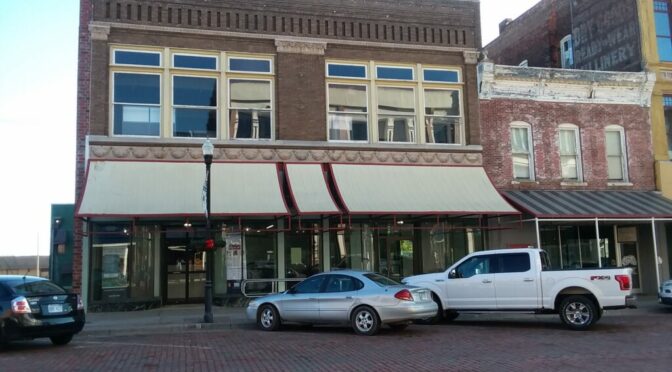
The Star Emporium Downtown General Store, 17 S. Main, January 2021.

A remodeled downtown building is being sold on August 10 to the highest bidder.

“The Bourbon County Commission took the (Kress) building over… Tuesday, July 13, and on July 19, during a special meeting, the county approved to publicize the sale of the Kress building at 17 S. Main, through a sealed bidding process,” Commissioner Lynne Oharah said.
“At this time BAJA Investments is still the owner of the building,” said Bourbon County Economic Director Rob Harrington. “However they are working with the county at this time to find a new owner of the building.”
“It (the bidding process for the building)) will appear in the paper (The Fort Scott Tribune) three consecutive weeks with the bids being opened on August 10,” Oharah said. “Two scenarios are being advertised. The bids can be for the property and contents or bids can be for the property only.”
Those interested in the property at 17 S. Main should send sealed bids addressed to the Bourbon County Clerk, 210 S National, Fort Scott, KS, 66701 clearly marking the envelope, Oharah said.
The building housed the Star Emporium Downtown General Store from January to May 2021, which was owned by BAJA Investments.
BAJA Investments was granted funds from the Strengthening People and Revitalizing Kansas program for $450,000 for the project. SPARK grants were a part of the monies given to Kansas from the federal government to help with the ongoing effects of COVID-19, according to a prior interview.
To view prior stories on the business: Star Emporium Downtown General Store to Open Next Week
The Star Emporium Downtown General Store, 17 S. Main.

KCC Investigates High Gas Prices During February 2021

KCC approves AG’s request to join winter weather gas cost dockets

TOPEKA – This morning the Kansas Corporation Commission approved Attorney General Derek Schmidt’s request to participate in three dockets investigating unusually high natural gas prices during the February winter weather event and how gas utilities plan to recoup the charges. The three dockets involve costs incurred by Kansas Gas Service, Atmos Energy and Black Hills Energy and their respective customer payment plan proposals.

“While our jurisdictional responsibilities are distinct, the KCC and Attorney General have a good track record of working together on behalf of Kansas customers. I welcome the AG’s participation in these proceedings to support its ongoing investigations,” said Commission Chair Andrew French.

On February 15, the Commission instructed all jurisdictional utilities to do everything necessary to ensure continued service to Kansas customers. The costs were deferred and each utility was required to file a proposal for recouping those charges, which must be approved by the Commission.

Around the same time, the Attorney General’s office announced an investigation to determine whether the unprecedented gas prices violated state consumer protection laws. That investigation continues.

On July 19, the Attorney General’s office filed a petition to intervene in the KCC cases citing the authority to enforce the Kansas Consumer Protection Act and protect consumers from suppliers who commit deceptive practices.

As an intervenor in the KCC cases, the Attorney General will have access to all documents filed, have the ability to file testimony, question witnesses and participate in any scheduled proceedings.

Resurfacing to begin on U.S. 69 in August


Timeline

Description automatically generated

Monday, Aug. 2, the Kansas Department of Transportation (KDOT) expects to begin a resurfacing project on U.S. 69 and U.S. 69B in Crawford County. Project activity includes a mill and overlay on U.S. 69 between U.S. 400 and K-47, excluding the section within the Pittsburg city limits. U.S. 69B is being resurfaced through the communities of Franklin and Arma.

Map

Description automatically generated

Work will start on U.S. 69B and then proceed south on U.S. 69 from the K-47 junction. Flaggers and a pilot car will direct one-lane traffic through the work zone; expect delays of 15 minutes or less.

Weather permitting, the project should be finished by early September.   KDOT awarded the construction contract of $2.3 million to Heckert Construction, Pittsburg. Persons with questions may contact KDOT Construction Engineer Kyler Farmer, (620) 308-7617, or Public Affairs Manager Priscilla Petersen, (620) 902-6433.


Caryn Tyson Launches Campaign For State Treasurer

Caryn Tyson

(Topeka) – As a leading conservative, Kansas Senator Caryn Tyson officially launched her campaign for State Treasurer with supporters from across the state at Ravenwood Lodge, Topeka. Tyson, who currently serves as Chairman of the Senate Assessment and Taxation Committee, told the audience, as State Treasurer she will lead the fight to keep government accountable.

“As a legislator, I work diligently to represent you and my record proves it.  Kansas needs a State Treasurer that will fight for your liberties by providing transparency and a watchdog on state spending and investments; We need a State Treasurer that will put Kansas First – that is exactly what I am going to do. From defending our Constitution, including the First and Second Amendment Rights, I don’t just talk the talk, I have and will continue to walk the walk.  I am the conservative leader who can deliver results as Kansas State Treasurer.  You can count on me to work for you,” stated Tyson.

Tyson works diligently for smaller, smarter government and to stop wasteful spending. Even before her time in the legislator her attention for detail and ability to get the job done in the field of Information Technology earned her awards for achievement and teamwork, including for her work on space shuttle support for NASA.

Representative Highland, inductee to the United States Army Officer Candidate School, said in supporting Tyson for State Treasurer, “I’ve worked with Caryn for going on 10 years.  I both respect and trust Caryn.  She never gives up.  She’ll fight.  One thing I like about Caryn is she respects the people she serves and she works for them, not for herself.”

“Caryn is actually trying to fight for you and put more money in your pocket.  And she truly believes in less government and I do too.  She’s one of those kind of people who doesn’t care who gets the pat on the back, just as long as the truck gets loaded and you save money.  She knows how to fight and true a conservative that will fight for you.” State Representative Ken Corbet.

Caryn Tyson has math and computer science degrees from Kansas State and a Master’s Degree in Engineering Management from KU. Caryn Tyson has a long career as a manager and lead in high level Information Technology, including financial systems. She is currently serving as a citizen legislator being elected for a third term in the Kansas Senate, after serving a term in the Kansas House.

Caryn and her husband, Tim – both fifth generation Kansans – own and operate Tyson Ranch in Linn County, established in 1871.


Former Mercy Hospital Building Being Considered By Noble Health

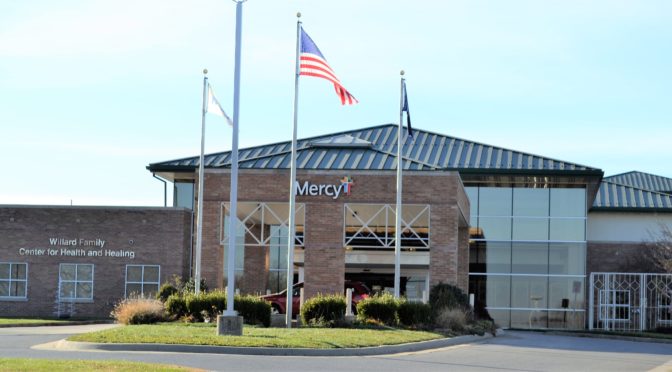
The west end of the former Mercy Hospital, located on South Horton Street at Jayhawk Road.

The Fort Scott City Commission and the Bourbon County Commission signed a contract last week to facilitate Noble Health Corp’s feasibility study of the former Mercy Hospital building.

Mercy Hospital closed its doors in December 2018, following declining patient numbers and shrinking reimbursement.

To view Mercy’s closing announcement:

https://fortscott.biz/news/mercy-hospital-fort-scott-to-close

The building is located just off Hwy. 69 on Fort Scott’s south side at 401 Woodland Hills Blvd.

It currently houses the Community Health Center of Southeast Kansas clinic and the Via Christi Emergency Department. Their leases are ending in 2022.

Noble Health Corp., Kansas City,  announced on June 25, 2021, that it will explore the possibility of reopening an acute care hospital facility in Fort Scott, Kansas.

To view the Noble Health Corp. announcement:

Reopening An Acute Care Hospital In Fort Scott Being Explored by Noble Health

The city will contribute $200,000, the county $800,000 towards the feasibility study,  according to the contract. The local government entities will be using American Rescue Plan money from the federal government for the project, according to Bourbon County Commissioner Clifton Beth.

The American Rescue Plan Act 2021 can be viewed at ARP Act SxS – as of 02.22.21.pdf (house.gov)

The feasibility study will investigate the condition of title to the development property, the physical condition of the property, the zoning, the economic feasibility, and all matters relevant to the acquisition, usage, operation, valuation, and marketability of the property and the project, as the developer deems appropriate

Should the project prove feasible, the county agrees to contribute at least $2,000,000 to finance certain costs and expenses related to and associated with the project, according to the contract.

The following is the agreement that the Fort Scott City Commission and the Bourbon County Commissioners signed with Access Medical Advisors LLC and Noble Health Corp. on July 21, 2021.

Continue reading Former Mercy Hospital Building Being Considered By Noble Health →

The Bourbon County Commission Agenda for July 27

Agenda 

Bourbon County Commission Room 

1st Floor, County Courthouse 

210 S. National Avenue 

Fort Scott, KS 66701 

Tuesdays starting at 9:00 


Date: July 27, 2021 

1st District-Lynne Oharah                                                                Minutes: Approved: _______________ 

2nd District-Jim Harris                                                                      Corrected: _______________________ 

3rd District-Clifton Beth                                                                              Adjourned at: _______________ 

County Clerk-Kendell Mason 


MEETING WILL BE HELD IN THE COMMISSION ROOM. 


Call to Order 


  • Flag Salute 
  • Approval of Minutes from previous meeting 
  • Eric Bailey – Road and Bridge Report 
  • Matt Quick – Resolution to Appointment an Interim Appraiser 
  • Lynne Oharah – KCAMP 
  • Michael Braim – Lynn Oharah’s Outburst at Anne Dare at the Last Meeting 
  • Tiana McElroy – Personnel 
  • Elected Officials Comment 
  • County Counselor Comment 
  • Susan Bancroft, Finance Director Comment 
  • Public Comment 
  • Commission Comment 


1:00pm 2022 Budget Work Session 


Justifications for Executive Session: 

          KSA 75-4319(b)(1) To discuss personnel matters of individual nonelected personnel to protect their privacy 

          KSA 75-4319(b)(2) For consultation with an attorney for the public body or agency which would be deemed privileged in the attorney-client relationship 

          KSA 75-4319(b)(3) To discuss matters relating to employer-employee negotiations whether or not in consultation with the representative(s) of the body or agency 

          KSA 75-4319(b)(4) To discuss data relating to financial affairs or trade secrets of corporations, partnerships, trust, and individual proprietorships 

          KSA 75-4319(b)(6) For the preliminary discussion of the acquisition of real property 

          KSA 75-4319(b)(12) To discuss matters relating to security measures, if the discussion of such matters at an open meeting would jeopardize such security