Category Archives: Government

Bourbon County Commission Agenda for Sept. 7

Agenda

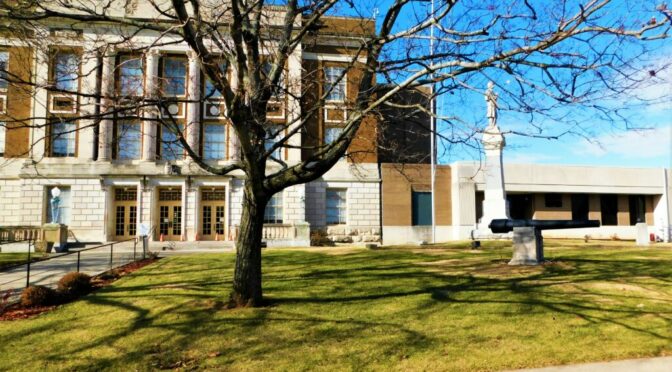
Bourbon County Commission Room

1st Floor, County Courthouse

210 S. National Avenue

Fort Scott, KS 66701

Tuesdays starting at 9:00


Date: September 7, 2021

1st District-Lynne Oharah                                                                Minutes: Approved: _______________

2nd District-Jim Harris                                                                      Corrected: _______________________

3rd District-Clifton Beth                                                                              Adjourned at: _______________

County Clerk-Kendell Mason


MEETING HELD IN THE COMMISSION ROOM WITH NO PUBLIC ATTENDANCE (PUBLIC 

ATTENDANCE VIA YOUTUBE)


Call to Order


  • Flag Salute
  • Approval of Minutes from previous meeting
  • RNR Hearing Rate
  • SEKRPC

CDBG Public Hearing

Adoption of Resolution Certifying Legal Authority to Apply

Adoption of Resolution Assuring KDOC that Funds will be Continually Provided for the Operation and         Maintenance of Improvements to the CRWD2 Waterline System by CRWD2

  • Eric Bailey – Road and Bridge Report
  • CIC Contract
  • County Counselor Comment
  • Susan Bancroft, Finance Director Comment

ARPA Funds

    • Public Comment
    • Elected Officials Comment
  • Commission Comment

Justifications for Executive Session:

          KSA 75-4319(b)(1) To discuss personnel matters of individual nonelected personnel to protect their privacy

          KSA 75-4319(b)(2) For consultation with an attorney for the public body or agency which would be deemed privileged in the attorney-client relationship

          KSA 75-4319(b)(3) To discuss matters relating to employer-employee negotiations whether or not in consultation with the representative(s) of the body or agency

          KSA 75-4319(b)(4) To discuss data relating to financial affairs or trade secrets of corporations, partnerships, trust, and individual proprietorships

          KSA 75-4319(b)(6) For the preliminary discussion of the acquisition of real property

          KSA 75-4319(b)(12) To discuss matters relating to security measures, if the discussion of such matters at an open meeting would jeopardize such security measures.

Governor Updates Drought Emergency, Warnings and Watches for Kansas Counties


The Governor’s Drought Team examines conditions; and recommends updates to the Governor


Today Governor Kelly approved the updated Drought Declarations for Kansas counties with Executive Order #21-26. The declaration includes 87 out of 105 counties either in a warning or watch status.

“Unfortunately, the majority of the state of Kansas has been considered in a drought or abnormally dry conditions for the past several weeks,” said Governor Kelly. “While we are very fortunate to be in a better situation than many states north and west of us, it doesn’t minimize our dry conditions. I encourage Kansans to be mindful of drought conditions, and work to minimize the threat of fires across the state.”

The drought declaration placed 14 counties into a warning status and 73 into a watch status. This action was recommended by Connie Owen, Director of the Kansas Water Office and Chair of the Governor’s Drought Response Team. Kansas has experienced a wide range of precipitation this year. Some areas have seen equal to or more than its normal rainfall while others, such as northwest, central and south-central counties have received less than 60, 70 or 80 percent of the area’s normal precipitation.

“This year we have been in a better situation regarding drought than we were last summer, however it doesn’t diminish the conditions being experienced throughout most of Kansas now,” said Owen. “The Governor’s Drought Response Team will continue to monitor the situation and make recommendations to the Governor as necessary, as future outlooks call for drought-like conditions to persist into the fall, especially for the northwestern counties.”

This Executive Order shall remain in effect for those counties so identified until rescinded by Executive Order or superseded by a subsequent Executive Order revising the drought stage status of the affected counties. Effective immediately:

  • Declare a Drought Emergency, Warning or Drought Watch for the counties identified below;
  • Authorize and direct all agencies under the jurisdiction of the Governor to implement the appropriate watch or warning level-drought response actions assigned in the Operations Plan of the Governor’s Drought Response Team.


The Governor’s Drought Response Team will continue to watch the situation closely and work to minimize the effects the drought has on Kansans.

For more detailed information about current conditions, see the Kansas Climate Summary and Drought Report on the Kansas Water Office website at: www.kwo.ks.gov

County Drought Stage Declarations:

Drought Watch: Atchison, Brown, Butler, Chase, Clark, Clay, Cloud, Comanche, Cowley, Decatur, Dickinson, Doniphan, Douglas, Edwards, Ellis, Finney, Ford, Geary, Gove, Graham, Grant, Gray, Greeley, Hamilton, Harvey, Haskell, Hodgeman, Jackson, Jefferson, Jewell, Johnson, Kearny, Kingman, Kiowa, Lane, Leavenworth, Logan, Lyon, Marion, Marshall, Meade, Morris, Morton, Nemaha, Ness, Norton, Ottawa, Pawnee, Phillips, Pottawatomie, Pratt, Reno, Republic, Riley, Rooks, Rush, Saline, Scott, Sedgwick, Seward, Shawnee, Sheridan, Smith, Stafford, Stanton, Stevens, Sumner, Trego, Wabaunsee, Wallace, Washington, Wichita, Wyandotte

Drought Warning: Barber, Barton, Cheyenne, Ellsworth, Harper, Lincoln, McPherson, Mitchell, Osborne, Rawlins, Rice, Russell, Sherman, Thomas


KDOC ENROLLS 325 RESIDENTS IN COLLEGE


TOPEKA, Kansas. – Classrooms are filling up at the eight Kansas Department of Corrections adult facilities. The department currently has 325 residents enrolled in college and career classes, including CTE (Career Technical Education) programs and associate and four-year degrees.

The Fall 2021 enrollment is an increase of 129 students over the last academic year.

The increase is due in part to Second Chance Pell grants. Kansas Governor Laura Kelly announced last fall that seven Kansas colleges had been awarded $2,229,125 million in Pell funding for incarcerated citizens. This was the second round of awards through the U.S. Department of Education, with 67 colleges selected from 180 applicants. Kansas received the highest number of awards in the nation.

Another four Kansas colleges are expected to apply in early 2022 for Second Chance Pell status. In July 2023, a ban – put in place in 1994 under the Violent Crimes Control and Law Enforcement Act – on Pell grants for those who are incarcerated will be lifted, leading to greater opportunities for more residents to enroll.

“Of the 325 residents in KDOC classrooms this fall, 240 are funded through Pell,” said Dr. Cris Fanning, KDOC Education Director. “By leveraging KDOC funds with Pell and other federal funds, KDOC plans to significantly increase market relevant job certifications for returning citizens.”

The classes are taught by professors from Kansas colleges. The Kansas Consortium for Correctional Higher Education, a partnership between KDOC, the Kansas Board of Regents and 11 Kansas higher education institutions, ensures prison programs are of the same quality as those on campus and that certifications and degrees are geared to high-demand occupations.

CTE programs include welding, sustainable/renewable energy, carpentry and electrical skills. Degree programs include associate of applied science, associate of arts in liberal studies and Bachelor of Science in computer information systems. As funding and space within the facilities allow, more programs and degrees will be added.

Special education and Title I services are also offered, and another 134 residents are enrolled in GED programs.

The connection between education and opportunity is well-documented. According to a recent Rand study, for every $1 spent on educating an incarcerated individual, taxpayers save between $4 and $5 in three-year incarceration costs. KDOC research indicates 75% of those entering prison have weak employment and education histories, and 50% of the reincarcerated were unemployed at the time of re-entry

“There is a direct link to education achievement and success after an individual fulfills their sentence and returns to the community,” said Jeff Zmuda, Kansas Secretary of Corrections. “Job readiness programs, transitional planning, private and correctional industry opportunities, mentors, tutors and many other key partners all play a part, but education and training are the foundation.”

Beyond the benefit to the individual, a skilled, ready-to-work workforce is one of our state’s highest needs.

KDOC releases approximately 6,000 individuals each year who return to their home communities. Providing training and education prior to release increases the labor pool for employers, and this in turn directly benefits local and state economies and improves the quality of life for all involved.

KDOC staff also observe that giving residents meaningful, relevant activities such as education and training leads to improved behavior. This is reflected in fewer rules violations and placements in restrictive housing. It also promotes positive engagement with staff and other residents and contributes to improved mental and physical health.

About the Kansas Department of Corrections

Through its strategic plan, Pathway for Success, the Kansas Department of Corrections’ vision, “Transforming Lives for the Safety of All,” is becoming reality by: (1) Investing in Individuals; (2) Creating an Environment for Change and Well-Being; (3) Enhancing and Maximizing Communication; (4) Fostering Dignity and Safety; and (5) Engaging and Strengthening Our Partnerships. In addition, KDOC now benefits from over four decades of scientific research defining the key principles of reducing crime, principles that align with this statutory purpose. The history of KDOC dates back to the founding of Kansas. More recently, the 1973 Kansas Legislature recodified KDOC’s purpose and current law reads, in part, “…rehabilitate, train, treat, educate and prepare persons convicted of felony in this state for entry or reentry into the social and economic system of the community… .”

Kansas’ Total Tax Revenues $85.5 Million Over Last August

~ August total tax collections net $629.0 million as KDOR monitors implications of online sales tax legislation. ~

TOPEKA – Kansas’ August total tax revenues were $629.0 million. Those collections are $113.6 million, or 22.0%, more than the estimate. The August total tax collections performed $85.5 million, or 15.7%, better than the same month of last fiscal year.

“While these revenue numbers continue to out-pace estimates, we must continue using responsible policies to protect our fiscal health long-term,” Governor Kelly said.

Individual income tax collections were $302.3 million. That is an $82.3 million, or 37.4%, gain for the month. That is also $31.4 million, or 11.6%, more than last August. Corporate income tax collections were $17.2 million, which is $7.2 million, or 71.8%, more than the month’s estimate. Those collections are also $9.8 million, or 133.8%, better than the same month of last fiscal year.

August retail sales tax collections were $16.5 million, or 7.9%, greater than the estimate with $226.5 million collected. That is a $19.4 million, or 9.4%, improvement over August 2020. Compensating use tax collections were $58.5 million, which is $6.5 million, or 12.4%, better than the estimate. Those August collections are $13.1 million, or 28.9%, more than the same month the previous fiscal year.

“The Department is closely monitoring compensating use tax receipts to determine whether such receipts are beginning to reflect payments from online sales now required of marketplace facilitators under legislation passed during the 2021 legislative session,” Kansas Department of Revenue Secretary Mark Burghart said.

It is estimated that $3.5 to $4.0 million would be collected monthly under 2021 S.B. 50, the new marketplace facilitator rules, which apply to remote sales on and after July 1, 2021.

View the tax receipts here.

Kansas DCF Extends Deadline for Pandemic Relief Program

Program provides funds to help eligible young adults in need

TOPEKA – The Kansas Department for Children and Families has extended the deadline to Sept. 10, 2021, for its independent living pandemic relief program, which provides a one-time benefit to help Kansas young adults ages 18 to 26 who experienced foster care, juvenile justice or tribal authority out of home placement at or after the age of 14.

“The pandemic has been difficult for all Kansans,” DCF Secretary Laura Howard said, “and this program provides eligible young adults in need the chance to apply for this benefit and get financial assistance to help them in their daily lives.”

The program was developed after the Consolidated Appropriations Act (PL 116-260) was signed into law on December 27, 2020. The Supporting Foster Youth and Families through the Pandemic Act (H.R. 7947) was included in the Consolidated Appropriations Act and provides funding to every state to support youth and young adults during the COVID-19 pandemic.

Independent living pandemic relief program recipients must meet the following requirements:

  • Currently between the ages 18 and 26
  • Currently residing in Kansas
  • Experienced out of home placement in the custody of one of the following agencies at age 14 or older:
  • Kansas Department for Children and Families (formerly known as Social and Rehabilitation Services)
  • Tribal authority
  • Kansas Department of Corrections- juvenile services (formerly known as juvenile justice authority)
  • Other state child welfare system (verification of custody will be required for young adults who experienced custody in another state.)
  • Not currently participating in the DCF independent living program

Payments for this program will be issued starting in late September.

To complete the program application online, visit http://www.dcf.ks.gov/CAASP/Pages/ILPandemicRelief.aspx. Applicants will be asked to upload a copy or photo of their identifying documentation: State photo ID, social security card, or certified birth certificate. Applicants will need to have these documents accessible while completing the application.

Interested individuals may also print an application form and send the completed form to DCF youth programs via email, mail, fax (785-296-4685), or in-person delivery.

For mailing or in-person, the address is:

DCF Youth Programs Kansas Department for Children and Families Prevention and Protection Services 555 S. Kansas Avenue, 4th Floor​​ Topeka, KS 66603

If applicants do not have access to a printer, please email [email protected] and a copy will be mailed with an envelope for return.

Safer Classrooms Workgroup Announced

Governor Laura Kelly Announces Safer Classrooms Workgroup to Protect Students, Teachers from COVID-19

TOPEKA – To protect Kansas students, teachers, and staff from the threat of the contagious Delta variant of COVID-19, Governor Laura Kelly today announced the Safer Classrooms Workgroup.

The workgroup, composed of highly skilled health professionals from across Kansas, will highlight the urgency of protecting kids from COVID-19 and use the best available science and information to support Governor Kelly’s administration, local governments, and school districts to promote health and safety in our schools.

“Children are catching the virus, being hospitalized, and dying from COVID at increasingly higher rates. There’s nothing more important than keeping our students healthy and in the classroom,” Governor Kelly said. “The Safer Classrooms Workgroup will provide information and guidance to give parents, teachers, school boards, and others the tools they need to make informed decisions to protect our students and our communities.”

The Safer Classrooms Workgroup will be composed of pediatricians, family physicians, school nurses, pharmacists, school psychologists, and other health professionals. They will meet weekly to highlight the urgency of protecting our kids from the delta variant, speaking with educators, parents, and advocates about their experiences as schools work to mitigate the spread of COVID-19.

Every week, the workgroup will release a “School Safety Report” to serve as a resource for media, parents, schools, communities, and policymakers.

Information in this weekly report will include:

  • Timely and relevant policies on testing and masking in schools, and best practices that can be shared across school districts.
  • Updates on school districts with clearly communicated quarantine, testing, and masking policies, to ensure parents and families have what they need to know to keep their children safe.
  • Information on school district vaccination and testing events – with resources to help schools plan, publicize, and implement.
  • County-level data on youth vaccinations, cases, hospitalizations, and deaths.
  • Schools with active outbreaks.

“We got our kids back in school by listening to health professionals, wearing masks, implementing stringent public health protocol, and getting vaccinated,” Governor Kelly said. “We’ll keep them there by continuing to follow the best health practices. I encourage all Kansans to get vaccinated as soon as possible.”

KDOT kicks off 2021 regional Local Consult meetings


The Kansas Department of Transportation is hosting eight public Local Consult meetings this fall as part of the Eisenhower Legacy Transportation Program (IKE) project selection process. All Kansans are invited to participate. Participants will have the opportunity to share their community and region’s transportation priorities and provide input on a list of potential highway expansion and modernization projects. This year’s Local Consult meetings will take place virtually to comply with current state guidance related to COVID-19. Participants can attend the online regional meeting as well as a virtual on-demand option.

Online live Zoom meetings – go to https://www.ksdotike.org/projects/local-consult-process to register for each regional meeting. Participate in live conversations about regional transportation priorities and hear directly from KDOT Secretary Julie Lorenz. The schedule for the online regional and metro meetings is:

  • Southeast Kansas – 1:30 p.m. on Wednesday, Sept. 8
  • Wichita metro – 9:30 a.m. on Thursday, Sept. 9
  • North central Kansas – 1:30 p.m. on Wednesday, Sept. 15
  • Northeast Kansas – 1:30 p.m. on Thursday, Sept. 16
  • Kansas City metro – 9 a.m. on Thursday, Sept. 30
  • South central Kansas – 1:30 p.m. on Monday, Oct. 4
  • Southwest Kansas – 9:30 a.m. on Tuesday, Oct. 5
  • Northwest Kansas – 9:30 a.m. on Wednesday, Oct. 6

Virtual on-demand experience – Allows Kansans to review Local Consult information and provide input on their own schedules. Visit https://www.ksdotike.org/projects/local-consult-process for more information about the schedule for these meetings.

Local Consult is a process that takes place every two years for KDOT to listen to regional needs from the perspective of Kansans who live and work in each of the six districts and two metropolitan areas. The regional discussions will be influenced by the 1,900 Kansans who participated in a survey earlier this summer to share their top transportation interests and concerns.

About the IKE Program – IKE is a 10-year program that addresses highways, bridges, public transit, aviation, short-line rail and bike/pedestrian needs across Kansas. The program and associated projects are focused on making roads safer, supporting economic growth and creating more options and resources for Kansans and their communities. For more information about the IKE program: www.ksdotike.org.

###

This information can be made available in alternative accessible formats upon request.

For information about obtaining an alternative format, contact the KDOT Communications Division,

700 SW Harrison St., 2nd Fl West, Topeka, KS 66603-3754 or phone 785-296-3585 (Voice)/Hearing Impaired – 711.


KS National Guard Deployed to Louisiana

Governor Laura Kelly Sending Kansas National Guardsmen to help in Louisiana

~~Kansas National Guard Providing Critical Aid to Areas Affected by Hurricane Ida~~

TOPEKA –Today Governor Laura Kelly announced Soldiers and Airmen from the Kansas National Guard will be deployed to Louisiana to provide support in and around areas affected by Hurricane Ida. The Guardsmen are deploying as part of an Emergency Management Assistance Compact, a multistate agreement that allows states to send government aid to other states in emergency situations.

“In times of crisis, Kansans have always stepped up to help out our fellow Americans – and today is no different,” Governor Laura Kelly said. “Today, I deployed Kansas National Guard Soldiers and Airmen to Louisiana to help those struggling in the areas affected by Hurricane Ida. We stand ready to provide relief for the impacted families.”

Approximately 280 Soldiers and Airmen will deploy for this mission, which is expected to last 21 days, including travel. The deploying Soldiers and Airmen are members of the Kansas Army National Guard’s 130th Field Artillery Brigade, Manhattan; 1st Battalion, 161st Field Artillery, Hutchinson; 1161st Forward Support Company, Wichita; 169th Combat Sustainment Support Battalion, Olathe; 635th Regional Support Group, Wichita; 891st Engineer Battalion, Iola; and the Kansas Air National Guard’s 184th Wing, Wichita and the 190th Air Refueling Wing, Topeka. The Guardsmen will be taking engineering equipment such as skid steers, dump trucks, chain saws, and excavators. They will also be taking other equipment which includes generators, light medium tactical vehicles, high mobility multipurpose wheeled vehicles, and palletized load system trucks.

“This humanitarian mission is part of what the National Guard is all about,”Maj. Gen. David Weishaar, the adjutant general and director of the Kansas Division of Emergency Management said. “Citizen-Soldiers and Airmen supporting the civil authorities in time of trouble. It’s a mission we do well, are proud to do and one that we have asked our Guardsmen to do quite often the past 18 months. The efforts of these Kansas Soldiers and Airmen will give their Louisiana brothers and sisters in uniform much-needed relief and help the people affected by this disaster get back on their feet that much quicker.”

FS Golf Course Advisory Board Vacancy

The Fort Scott Golf Course Advisory Board has a vacancy.

There is one opening for a city resident.

The function of the Golf Course Advisory Board is to advise the City Commission in all matters referred to them regarding the Woodland Hills Golf Course. They will also independently evaluate all aspects of the operation of the Golf Course and make recommendations to the City Commission and City Manager. They meet on an “as needed” basis.

If you have a desire to serve on this Board and meet the above requirements, please submit a letter of interest to the City Clerk, Diane Clay, 123 S. Main, Fort Scott, Kansas 66701. She will then submit your letter of interest for consideration by the City Commission. All of the boards and commissions serve on a volunteer basis and are not compensated. If you would like more information on any of these boards, please contact Diane Clay, City Clerk at 620-223-0550 or [email protected]. Please submit your letter of interest by September 17th, 2021 at 5:00 p.m.

Bourbon County Commission Budget Work Session Sept. 2

Agenda

Bourbon County Commission Room

1st Floor, County Courthouse

210 S. National Avenue

Fort Scott, KS 66701

Tuesdays starting at 9:00


Date: September 2, 2021

1st District-Lynne Oharah                                                                Minutes: Approved: _______________

2nd District-Jim Harris                                                                      Corrected: _______________________

3rd District-Clifton Beth                                                                              Adjourned at: _______________

County Clerk-Kendell Mason


MEETING HELD IN THE COMMISSION ROOM


Call to Order


  • Flag Salute
  • Budget Work Session


Justifications for Executive Session:

          KSA 75-4319(b)(1) To discuss personnel matters of individual nonelected personnel to protect their privacy

          KSA 75-4319(b)(2) For consultation with an attorney for the public body or agency which would be deemed privileged in the attorney-client relationship

          KSA 75-4319(b)(3) To discuss matters relating to employer-employee negotiations whether or not in consultation with the representative(s) of the body or agency

          KSA 75-4319(b)(4) To discuss data relating to financial affairs or trade secrets of corporations, partnerships, trust, and individual proprietorships

          KSA 75-4319(b)(6) For the preliminary discussion of the acquisition of real property

          KSA 75-4319(b)(12) To discuss matters relating to security measures, if the discussion of such matters at an open meeting would jeopardize such security measures.

New Heirs’ Property Relending Program Accepting Applications

Lenders Can Now Apply for New Heirs’ Property Relending Program 


Manhattan Kansas, August 30, 2021 – Intermediary lenders can now apply for loans through the new Heirs’ Property Relending Program (HPRP). The U.S. Department of Agriculture (USDA) is accepting applications today through October 29, 2021, and cooperatives, credit unions and nonprofit organizations are encouraged to apply for these competitive loans, which ultimately will help agricultural producers and landowners resolve heirs’ land ownership and succession issues.  


Heirs’ property issues have long been a barrier for many producers and landowners to access USDA programs and services, and this relending program provides access to capital to help producers find a resolution to these issues,” said Charles, Pettijohn, Acting State Executive Director, Farm Service Agency (FSA). “USDA is committed to revising policies to be more equitable and removing barriers faced by heirs’ property owners is part of that effort.”  


Through HPRP, FSA loans up to $5 million at a 1% interest rate to eligible lenders. Then, those eligible lenders will reloan funds to heirs to help resolve title issues by financing the purchase or consolidation of property interests and financing costs associated with a succession plan.  


How to Apply 

Intermediary lenders should apply by the October 29, 2021 deadline using the HPRP application form (FSA-2637), which can be submitted to FSA by mail: 


FSA Deputy Administrator for Farm Loan Programs 

Loan Making Division 

STOP 0522 

1400 Independence Avenue, S.W.  

Washington, DC 20250 


Additionally, FSA will host a webinar on September 15 at 2 p.m. ET for interested lenders, who can register or learn more on the FSA Outreach and Education webpage. 


Eligible Lenders 
Intermediary lenders must: 

  • be certified as a community development financial institution, and 
  • have experience and capability in making and servicing agricultural and commercial loans that are similar in nature. 


If applications exceed the amount of available funds, FSA will prioritize applicants that both:  

  • have at least 10 years or more of experience with socially disadvantaged farmers; and 
  • are located in states that have adopted a statute consisting of enactment or adoption of the Uniform Partition of Heirs Property Act (UPHPA). A list of these states is available at farmers.gov/heirs/relending 


More Information 

Frequently asked questions (including those in Spanish, Thai and Chinese), the August 3, 2021 overview webinar, and other resources can be found on farmers.gov/heirs/relending 


After the loans are announced, USDA will distribute information for heirs on how to apply. Information for heirs is also on farmers.gov/heirs/relending 


USDA touches the lives of all Americans each day in so many positive ways. In the Biden-Harris Administration, USDA is transforming America’s food system with a greater focus on more resilient local and regional food production, fairer markets for all producers, ensuring access to safe, healthy and nutritious food in all communities, building new markets and streams of income for farmers and producers using climate smart food and forestry practices, making historic investments in infrastructure and clean energy capabilities in rural America, and committing to equity across the Department by removing systemic barriers and building a workforce more representative of America. To learn more, visit www.usda.gov. 


#

USDA is an equal opportunity provider, employer and lender.