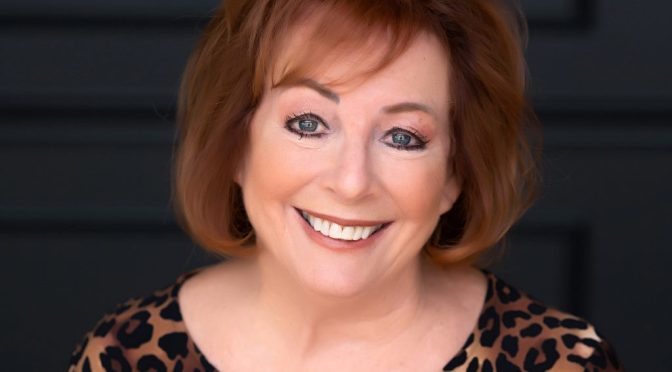
Patricia Margaret “Trish” Scott, age 63, resident of Fort Scott, KS passed away Wednesday, February 19, 2025, at Mercy Hospital in Pittsburg, KS. She was born January 12, 1962, in Brooklyn, NY, the daughter of John Andrew Cleary and Catherine Horne Cleary. Trish worked for Tri-Vally for several years prior to her disability. In her younger years, she enjoyed deep sea fishing. She would regularly welcome neighborhood kids for meals. Trish liked animals especially dogs. She loved spending time with her family.
Survivors include her companion of 21 years, Robert Jones; her children, Frank Scott (Caitlyn) Fort Scott, Kym Drum (Shawn) Elmira, NY, and Kenny Patrick, Leavenworth, KS; a brother, John Cleary (Despina); grandchildren A.J. Drum, Kaisley Scott, and two more on the way; and numerous nieces and nephews. She was preceded in death by 2 sisters, Susan Fischer and Catherine Yuster; and her parents.
There was cremation.
Memorial services are scheduled for 10:00 AM Friday, February 28th at the Cheney Witt Chapel.
The family will receive friends from 5:00 until 7:00 PM Thursday at the funeral home.
Memorial donations are suggested to the Trish Scott Memorial Fund and may be left in care of the Cheney Witt Chapel, P.O. Box 347, 201 S. Main St., Fort Scott, KS 66701. Words of remembrance may be submitted online at cheneywitt.com.
Governor Kelly Announces Over $26M for
Water Projects and Technical Assistance
TOPEKA – Governor Laura Kelly and the Kansas Water Office announced Thursday the award winners for the second round of the Senate Substitute for House Bill 2302 Grant Programs, which provide over $26 million in funding for water projects and technical assistance to communities across Kansas.
“Water is vital to the livelihood of our communities and Kansans,” Governor Laura Kelly said. “This funding is a crucial step in addressing pressing water issues to safeguard our water supply for generations to come.”
In 2023, Senate Substitute for House Bill 2302 increased the amount of state funding for the State Water Plan Fund (SWPF) and created two new water related grant funds: the Technical Assistance Grant Fund and Water Projects Grant Fund. In the first year, 34 municipalities and special districts related to water were rewarded $18 million.
“The expansion of the State Water Plan to include support for municipalities and water districts continues to be a critical component towards ensuring communities across the state have access to a reliable supply of clean water,” said Senator Kenny Titus, Kansas Senate District 18.
The grant program received over 300 applications in its first year, and an additional $10 million was provided in 2024 through the Legislature to address the high demand for funding.
“We are grateful for the Legislature and Governor Kelly for approving this additional funding,” said Connie Owen, Director of the Kansas Water Office. “We received a large number of applications again this year. This funding is necessary to Kansas communities.”
Over 270 communities applied for the 2024 funding period, requesting a total of $237 million. Thirty-nine technical assistance grants and 24 water projects grants were awarded to 70 communities and special districts related to water.
“Our small agricultural towns are the lifeblood of our state,” said Senator Rick Billinger, Kansas Senate District 40. “And this funding will help these communities have the clean and affordable water access they need to thrive.”
A total of $26,287,103 was awarded.
“I am so pleased to see the list of rural communities and rural water districts across Kansas that have been awarded grants to mitigate their specific water issues,” said Representative Lisa Moser, Kansas House District 106. “Water is the lifeblood of our state. Without it, nothing else matters.”
See the full list of funded projects at kwo.ks.gov.
Commerce Unveils Groundbreaking Overhaul of Community Development Block Grant Program
TOPEKA – The Kansas Department of Commerce announced today significant changes to its Community Development Block Grant (CDBG) – Community Facilities program to allow a rolling application process, lower local match requirements and an expanded scope of eligible projects.
“This is a game-changer for Kansas communities,” Lieutenant Governor and Secretary of Commerce David Toland said. “For decades, we’ve seen too many worthy projects stalled due to rigid deadlines and high local match requirements. By streamlining the process and reducing financial burdens, we’re ensuring that cities and counties — large and small — can bring transformative projects to life.”
The revamped CDBG – Community Facilities program opens the door for projects ranging from emergency sirens and ADA upgrades to new libraries and major park developments. Notably, the transition from an annual competition to a rolling application process means that cities and counties can apply for funding year-round, receiving decisions in a matter of weeks rather than waiting months for a single funding cycle. Additionally, the local match requirement has been reduced from its normal 25% to a 10% match for small projects and 20% for large projects.
“This continues the significant shift in the way the Kansas Department of Commerce is approaching community development” Commerce Assistant Secretary Matthew Godinez said. “In 2024, we rebranded the Community Development Division as the Quality Places Division to better reflect our mission of fostering vibrant, connected and resilient communities. We’re removing bureaucratic roadblocks and getting critical dollars where they’re needed faster. This is about leveling the playing field so that smaller or lower-income communities have a real shot at funding transformational projects.”
Key program enhancements include:
Rolling Application Process: Applications will be accepted year-round starting May 1, with monthly reviews and grant agreements executed within five business days of approval.
Reduced Match Requirements:
Small projects ($50,000 to $210,000) require only a 10% local match.
Examples include:
Accessibility and ADA Improvements
Parks and Recreational Facilities
Community Centers and Public Infrastructure
Public Safety and Emergency Service
Large projects ($210,001 to $1.5 million) require only a 20% local match.
Examples include:
Public Infrastructure and Facility Development
Public Safety and Emergency Services
Libraries and Educational Facilities
Pre-Application for Readiness Screening: Cities and counties can submit a short pre-application starting April 1, 2025, to gauge project eligibility and receive feedback within five business days. The full application stage opens on May 1, 2025.
Flexible Project Categories: Communities can apply for any eligible CDBG-funded project, from public safety improvements to large-scale community facility developments.
By expanding access and accelerating the funding process, the Kansas Department of Commerce is ushering in a new era of community investment across the state.
“This is about empowering Kansas communities,” Toland said. “No longer will cities and counties be forced to wait for a single shot at funding each year. We’re making the process flexible, fair, transparent and focused on results.”
For more information about the CDBG program, click here.
About the Kansas Department of Commerce:
As the state’s lead economic development agency, the Kansas Department of Commerce strives to empower individuals, businesses and communities to achieve prosperity in Kansas. Commerce accomplishes its mission by developing relationships with corporations, site location consultants and stakeholders in Kansas, the nation and world. Our strong partnerships allow us to help create an environment for existing Kansas businesses to grow and foster an innovative, competitive landscape for new businesses. Through Commerce’s project successes, Kansas was awarded Area Development Magazine’s prestigious Gold Shovel award in 2021, 2022, 2023 and 2024, and was awarded the 2021 and 2022 Governor’s Cup by Site Selection Magazine.
The three individual county commissioners and six other individuals who are suing the county commissioners and four solar companies claim that there is no conflict of interest for Lawyer Jennifer Hill to represent the county commissioners as an entity.
Jennifer Hill of McDonald Tinker PA in Wichita, KS
On January 30th, Jennifer Hill filed a motion to withdraw from the lawsuit. She was defending the county commission, which now consists of David Beerbower, Leroy Kruger, and Brandon Whisenhunt. Since those three individuals are all plaintiffs in the lawsuit suing the county commissioners, Hill said that trying to represent them would violate KRPC 1.7, which says that a lawyer can’t represent one client if doing so would be directly adverse to another client. An example might be: It would be impossible for Hill to have any private communication with the county commissioners without that communication being known by at least three of the plaintiffs since they are the same people. If disclosing to the plaintiffs conversations that were intended for the defendants could be adverse to the defense, then there would be a conflict.
The plaintiffs (Beerbower, Kruger, Whisenhunt, and the other individuals who are suing the county commissioners) have responded through their lawyer, saying that while the idea of a conflict has some “facial appeal” there is actually no conflict involved.
The motion to withdraw alleges, in effect, that the plaintiffs who are now members of the Board of County Commissioners are the same party as the defendant Board of County Commissioners Ms. Hill represents and, therefore, her continued representation of the Board of County Commissioners would also be a representation of the board members who are plaintiffs. An attorney has a conflict under Rule 1.7(a)(1) when “the representation of one client will be directly adverse to another client.” That analysis may have some facial appeal, but it is incorrect.
Comment 2 to Rule 1.7 teaches that assessing whether there is a conflict begins with clearly identifying the clients or clients. The Board of County Commissioners of Bourbon County is Ms. Hill’s client. It is a corporate entity and by statute is the properly named defendant in actions against a county. See K.S.A. 19-105. Its legal identity does not change depending on who its current members are. Ms. Hill represented the same entity now that she represented at the beginning of the case.
The objection goes on to state that, since the board members have no individual authority as a commission when it comes to county business, the board has a legal identity separate from that of the individuals. Since Beerbower, Kruger, and Whisenhunt are suing the county commissioners in their capacity as individuals, they claim that action is separate from any action they could bring acting together as the county commission. They claim that since Hill is representing the commissioners but not the individual members of the board, there is no conflict with her continuing to provide legal counsel to the board. There is no mention of how Hill could communicate with Beerbower, Kruger, and Whisenhunt in their role as commissioners without the communication being known by Beerbower, Kruger, and Whisenhunt in their role as plaintiffs who filed the lawsuit.
It might not immediately be apparent why the plaintiffs would care why the defense counsel withdraws, but presumably, if the plaintiffs agree that there is a conflict of interest, that conflict may apply to the defense side of the lawsuit as well since the conflict would come from having the same individuals (though acting in different capacities) both pursuing the lawsuit and defending against it. Further, if there is a conflict for Hill, then any lawyer would have the same conflict. If there is a conflict, the conflict derives from the fact that Beerbower, Kruger, & Wisenhunt are on both sides of the lawsuit regardless of whether they are acting as an individual on one side and the commission on the other. Any attempt to replace a lawyer would not affect a conflict based on an overlap of individuals between the plaintiffs and defendants. If there is a conflict with that as the root, it could only be resolved if the three commissioners were somehow no longer a party to one side of the lawsuit.
The plaintiffs go on to state that they are fine with Ms. Hill withdrawing from the case and posit that she might want to leave because she was hired by an insurance company that has now decided there is no coverage to represent the commissioners in the lawsuit. If Hill is allowed to withdraw, they ask that the proceedings wait until Beerbower, Kruger, & Wisenhunt, in their role as commissioners, retain a lawyer who can help defend against the lawsuit from Beerbower, Kruger, Wisenhunt, et al. in their roles as individuals.
Are you a parent navigating the extraordinary journey of raising a child with special needs? You’re not alone. We’re here to inspire, educate, and connect you with others who understand your unique challenges and joys.
Kansas Department for Aging and Disability Services Launches New Programs to Support Alzheimer’s and Dementia Caregivers
TOPEKA – The Kansas Department for Aging and Disability Services (KDADS) recognizes the significant emotional, physical, and financial toll that caring for someone with Alzheimer’s disease or related dementia can take on families. To provide much-needed support, KDADS is launching two new initiatives: the Kansas Respite for Alzheimer’s and Dementia Program (K-RAD) and the Kansas Dementia Roadmap: A Guide for People Impacted by Dementia.
In Kansas, more than 55,000 individuals are living with Alzheimer’s disease or related dementia, and more than 89,000 individuals are providing unpaid care. Families serve as the primary source of support for older adults and people with disabilities across the nation. According to the 2022 National Strategy to Support Family Caregivers report developed by the Recognize, Assist, Include, Support, and Engage (RAISE) Act Family Caregiving Advisory Council and the Advisory Council to Support Grandparents Raising Grandchildren, gaps in the availability of and access to respite care can add to the stress and burden faced by unpaid caregivers. Respite care often comes with high costs and limited availability, leaving caregivers responsible for most expenses.
Kansas has allocated funding for a state-funded respite program to address these challenges. The K-RAD program offers relief to unpaid caregivers of individuals with Alzheimer’s or related dementia by providing temporary care services that replace the direct care given by the caregiver for short or intermittent periods.
“We are excited about the K-RAD program and the ability it provides our agency to help our caregivers with respite care for their loved ones,” Leslea Rockers, Executive Director for East Central Kansas Area Agency on Aging, said.
Caregivers can apply for K-RAD funds to cover respite care costs. More information is available on the KDADS website, and applications can be obtained through local Area Agencies on Aging or by contacting the Aging and Disability Resource Center at 1-855-200-2372.
Additionally, KDADS has introduced the Kansas Dementia Roadmap: A Guide for People Impacted by Dementia. This resource acknowledges that caring for someone with memory loss or dementia is a long and unpredictable journey. The Roadmap provides essential guidance, support, and information for families, helping them navigate the challenges of dementia care.
“This roadmap will help families navigate their dementia journey so that they won’t become lost in the diagnosis,” Jamie Gideon, Kansas Director of Public Policy for the Alzheimer’s Association, said.
The Fort Scott Area Chamber of Commerce’s Chamber Coffee hosted by Trophy Properties and Auction has been canceled due to inclement weather and rescheduled for April 17th at 8am.
The next Chamber Coffee will be on Thursday, February 27th at 8am, hosted by Care to Share Cancer Support Group/The Sharing Bucket. The event will include a Ribbon Cutting to celebrate their new location at 9 E. Wall St.
Contact the Chamber of Commerce at (620) 223-3566 for more information. Visit the Events Calendar and category of Chamber Coffees on fortscott.com for upcoming locations.
Thank you to our Chamber Champion members shown below…
Penelope Sue Reasoner, age 73, resident of Fort Scott, KS passed away Monday, February 17, 2025, at Research Medical Center, Kansas City, MO. She was born on December 23, 1951, in Fort Scott, the daughter of Eugene and Grace Berniece Pottorff Coombs. She attended early school years in St. Paul, KS. Sue graduated from Fort Scott High School with the class of 1970. She married Randy Reasoner on August 17, 1979, in Miami, OK. Sue worked multiple jobs throughout her career including Mercy Hospital, Tri-Valley, Walmart, and Dollar General. She enjoyed different crafts including quilting and diamond art. Sue liked to visit Branson, MO regularly. She loved spending time with her family, especially her grandchildren.
Survivors include her husband Randy of the home; a son, Tim Ames (Chris), Bronson, KS; 2 daughters, Dolly Russell (Chad), Fort Scott, and Molly Giltner (Noah) Abilene, TX; 3 brothers, Paul Hawkins (Connie) Carterville, MO, Hugh “Leo” Hawkins (Brenda) Kearney, MO, and Mike Hawkins (Wanda) Kansas City, MO; 14 grandchildren, Tater Ames, Dawson Russell, Jodee Russell, Cameron Haviland, Hunter Russell, Mackynzee Russell, Rayleea Russell, Zandon Russell, Joseph Wunderly, Amber Johnson, Kincaid Hurst, Issac Hurst, Meda Hurst, and Trinity Giltner; 8 great grandchildren; and numerous nieces and nephews. She was preceded in death by a daughter, Melisa Wunderly; a sister, Carol Hull; 3 brothers, Jerry “Butch”, Gary, and Larry Coombs; and her parents.
Rev. Kevin Moyers will conduct funeral services at 11:30 AM Tuesday, February 25th at the Cheney Witt Chapel. Burial will follow in the U. S. National Cemetery. The family will receive friends from 10:30 until service time Tuesday at the funeral home. Memorials are suggested to help with animal care at either Mill Creek Veterinary Clinic or Animal Care Center and may be left in care of the Cheney Witt Chapel, P.O. Box 347, 201 S. Main St., Fort Scott, KS 66701. Words of remembrance may be submitted online at cheneywitt.com.
The Feb. 20 performance of Fort Scott High School’s play “And Then They Came for Me: Remembering the World of Anne Frank” is rescheduled for 7 p.m. on Feb. 23.
The rescheduling is due to the weather forecast for the week. Tickets previously sold for the Feb. 20 performance will be transferred or refunded, please contact Angie Bin, [email protected] or 620-719-9622. Other performances should run as scheduled at 7 p.m. on Feb. 21 and 22 in the FSHS Auditorium.
Left to right: Clark Uttinger, Sypher Cannon, Gianna Gorman, Tray Maloun.Submitted photo.
The production, by James Still, is a multi-media performance with live sound bytes and videos from the actual Holocaust survivors portrayed in the play as well as real video footage from the time period.
Left to right: Cooper George, Mykael Lewis, Gianna Gorman, Sypher Cannon. Submitted photos.
In addition to the performance, the lobby will feature many items of interest to the audience. A collection of Holocaust memorabilia from local historian Ronda Hassig will be on display in the Art Gallery.
Left to right: Gianna Gorman, Sypher Cannon
Students in the Advanced Drama class are displaying research on groups of oppressed peoples and plays that have been written to speak up for those groups, much like how “And Then They Came for Me” speaks for victims and survivors of the Holocaust.
Left to right: Kaiden Clary, Levi Fairchild. Submitted photos, all taken during dress rehearsal.
Students in Jon Barnes’ Government and Current Events classes, after reading and listening to Martin Luther King Jr.’s “Letter From a Birmingham Jail,” wrote “A Letter From a Fort Scott Classroom” about a time in their lives that they felt discriminated against.
Many of these letters will be available to read.
The Technical Theatre class also built white models of set designs for the play that are on display.
Cast and crew members of the play were educated about the real lives of their characters through research and a presentation by Hassig. Hassig has personally visited sixty concentration camps and she shared her knowledge and photos with the students to help them better understand their characters and the world of the play.
Senior Kaiden Clary plays one of the Holocaust survivors, “Performing Young Ed gave me a chance to look into how a Jewish person was treated during WWll, how this person had to hide from SS guards to even be with his grandparents, how he had to try to escape time and time again. After learning about and discussing him, it is hard to believe that people actually had to go through many of these things, especially not seeing his parents for almost four years.”
Tickets for “And Then They Came for Me: Remembering the Life of Anne Frank” are $5 for students and $7 for adults and available at fortscotthighschool.ludus.com or at the door. Doors open thirty minutes prior to showtime.
The play is directed by FSHS Theatre Director Angie Bin with Mesa Jones serving as Assistant Director. It is produced by special arrangement with The Dramatic Publishing Company of Woodstock, Illinois.
Left to right: Sypher Cannon, Cooper George, Gianna Gorman, Mykael Lewis, Mary Racer, Kaiden Clary, Clark Uttinger, Junie Fisher.