
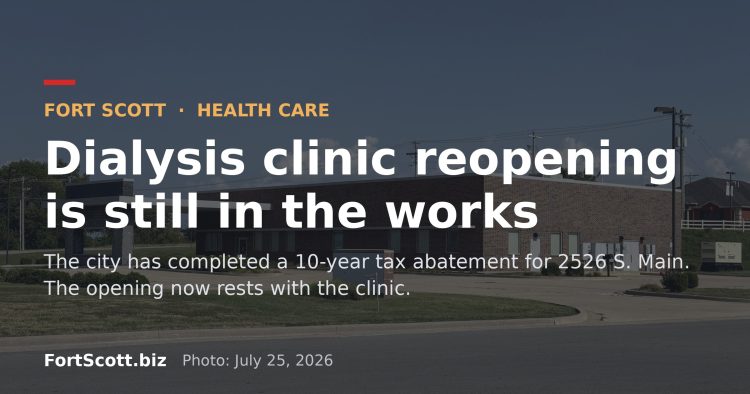
Late in 2025 the Fort Scott City Commission approved a property tax break of up to ten years for the vacant dialysis clinic at 2526 S. Main, to help a Joplin kidney specialist reopen it. Fort Scott has had no dialysis center since 2019. Patients drive to Pittsburg or Chanute, three times a week.
This week, FortScott.biz checked with those involved. City officials say their part is finished. The commission awarded the abatement, the bond paperwork is complete, and nothing more is pending at City Hall. The reopening is now in the hands of the physician who will run the clinic.
The building itself is quiet for now. A July 25 visit found no signage or activity yet, and county records show the property’s 2025 tax bill of $65,343.80 was paid in full. That fits the timeline in the city’s documents, which say the exemption cannot appear before the 2026 tax statement.
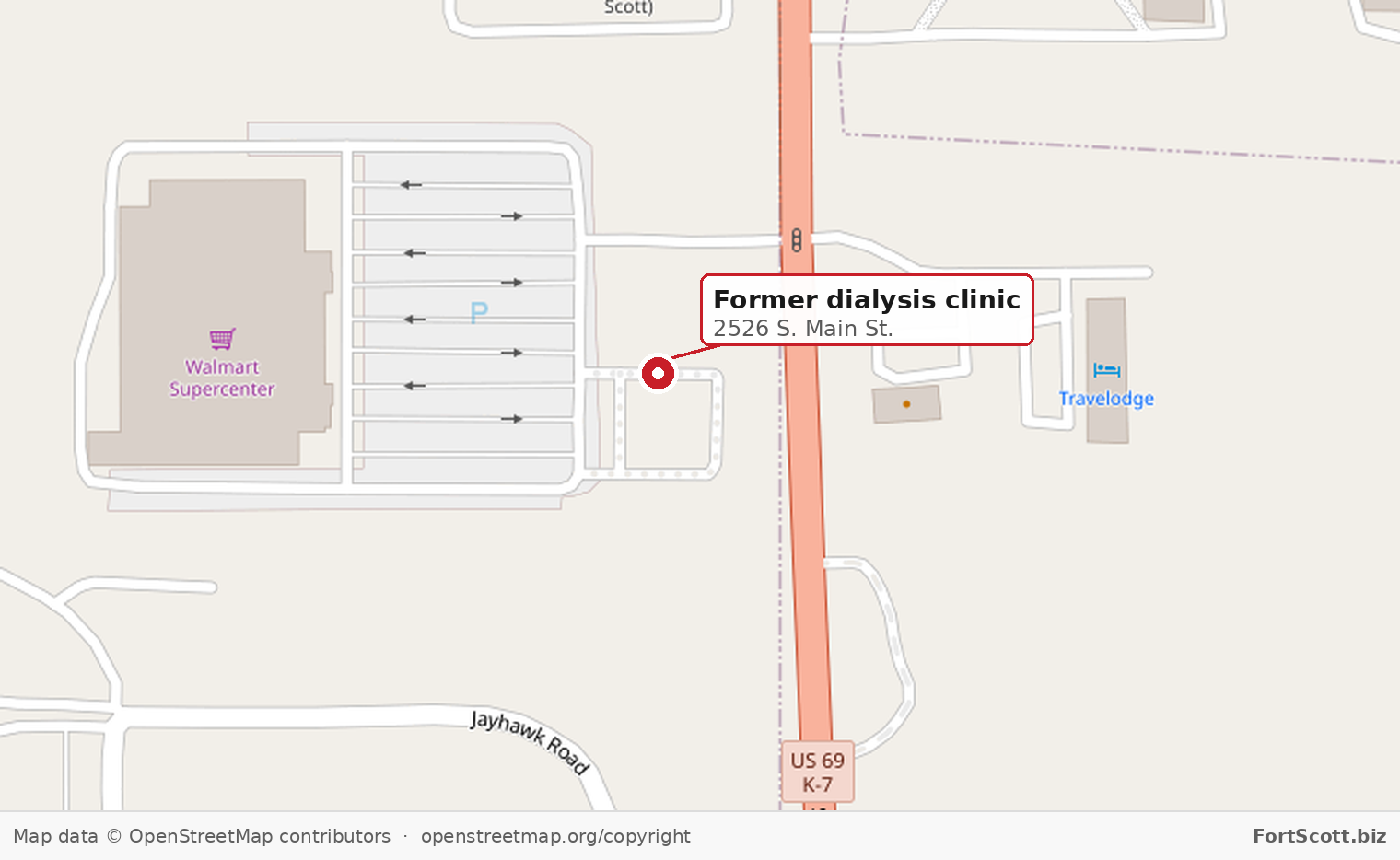
Where the building is
Most people know it as the low brick building in front of Walmart.


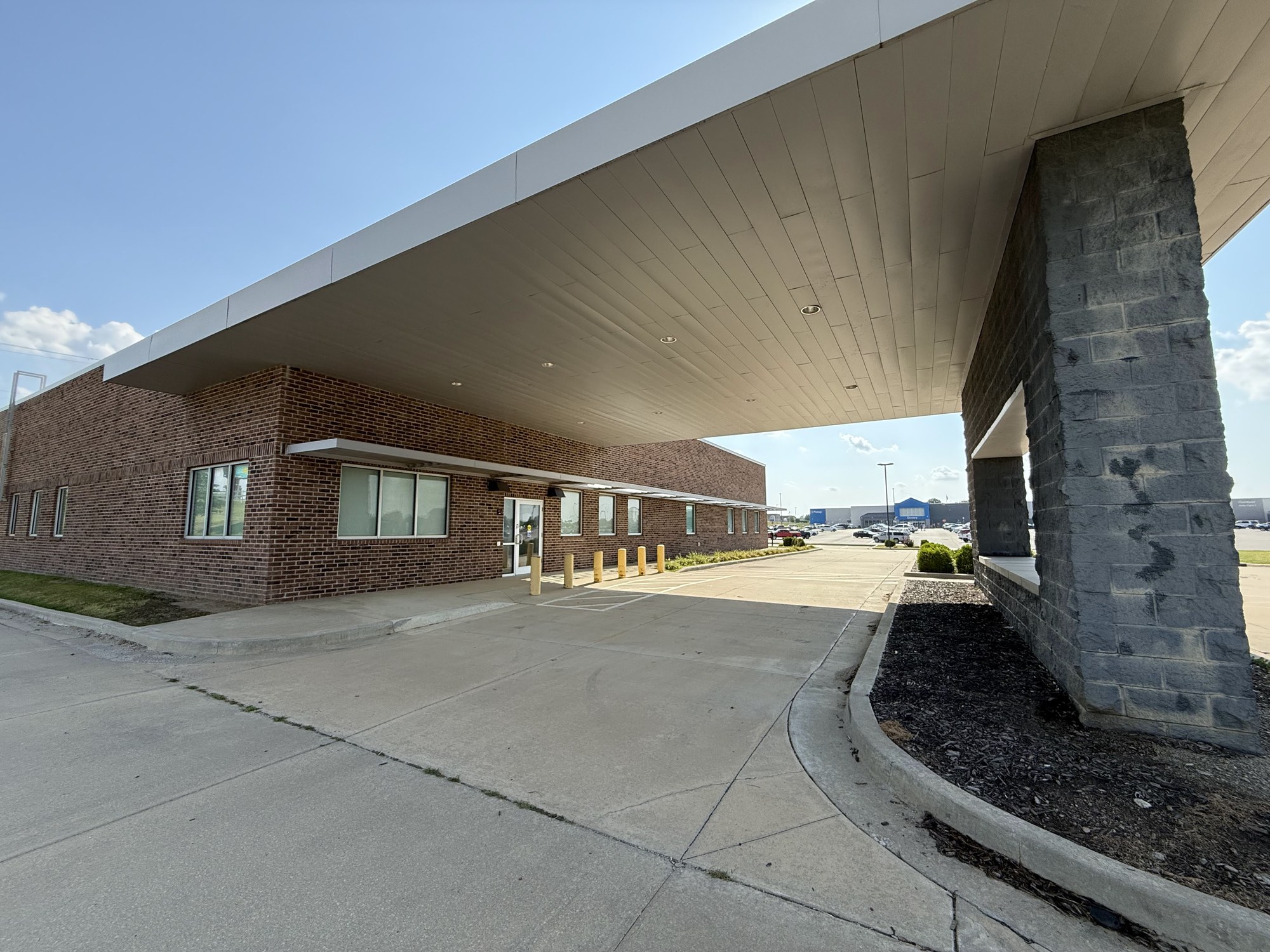
Bourbon County’s tax record for the parcel (tax ID 002-FS10762B, in the Wal-Mart Plaza Pointe subdivision) answers the abatement question directly.
The building did change hands. The county lists Moka Rentals LLC as the current owner and taxpayer of record. That is the company named in the city’s bond documents as the tenant. Before Moka, the record shows Phoenix Fort Scott LLC, and before that Wal-Mart Stores and Wellington Ft Scott Ltd.
The 2025 taxes were paid in full, with no exemption. For tax year 2025 the county appraised the property at $1,400,000 ($193,790 in land, $1,206,210 in building) for an assessed value of $350,001. At a mill levy of 186.696 that produced a bill of $65,343.80, paid on December 18, 2025.
| Tax year | Owner of record | Assessed value | Total tax |
|---|---|---|---|
| 2025 | Moka Rentals LLC | $350,001 | $65,343.80 |
| 2024 | Phoenix Fort Scott LLC | $377,331 | $72,397.38 |
| 2023 | Phoenix Fort Scott LLC | $422,346 | $80,914.32 |
| 2022 | Phoenix Fort Scott LLC | $413,983 | $79,080.28 |
| 2021 | Phoenix Fort Scott LLC | $395,233 | $78,653.34 |
| 2020 | Phoenix Fort Scott LLC | $389,186 | $77,981.20 |
| 2019 | Phoenix Fort Scott LLC | $396,485 | $80,160.54 |
So when does the abatement take effect? By the terms of the city’s own documents, the earliest it can apply is tax year 2026. Both the resolution and the ordinance say the exemption runs for ten years “commencing in the calendar year following the calendar year in which the Bonds are issued.” The draft bond documents date the bonds December 23, 2025. If they were issued on schedule, the first year the exemption could show up on a tax bill is 2026. Kansas tax statements for 2026 don’t go out until November.
That makes this November’s statement for 2526 S. Main the first place the exemption can appear in the public record.
The county’s appraisal record still lists the structure under its old name, “Fresenius Medical Care Dialysis,” a 7,992-square-foot medical office building put up in 2014.
The deal ran through taxable industrial revenue bonds. Despite the name, the city borrows nothing and owes nothing; it acts as a pass-through so a private project can reach two state-level tax breaks, a property-tax exemption and a sales-tax exemption on construction.
On November 18, 2025, after a public hearing, the commission voted 5-0 to move forward with Resolution 40-2025, declaring it advisable to issue about $800,000 in bonds to acquire, renovate, furnish and equip the building and lease it to Moka Rentals LLC (resolution; minutes).
Dr. Nadine Aboul-Magd, a kidney specialist with Joplin Nephrology Consultants who the minutes say served Fort Scott from 2015 to 2019, told the commission the abatement was essential to the project. The minutes record her saying the reopened clinic would employ at least seven people initially and would add two kidney physicians (minutes).
Steve Robb of Municipal Consulting LLC, who prepared the cost-benefit study Kansas requires before a city grants this kind of exemption, told commissioners the deal would return $9.67 for every dollar the city gave up, well above the 1.3 he called the cutoff for a worthwhile deal, mostly because a dialysis clinic uses a great deal of city water (minutes).
On December 16, 2025, the commission took up Ordinance No. 3792, which authorizes the bonds (ordinance). “There were no changes from what was discussed,” Mayor Tim Van Hoecke said as he introduced it (video, 2:07:39). A staff member called it “just procedural.” The commission voted and the mayor moved on. The city has not posted approved minutes for that meeting, so the exact tally is not on the public record.
Two details in the paperwork are worth knowing:
- The break covers the bond-funded share of the property. The exemption applies only to the part of the property paid for with bond money, and it must be applied for. The one levy it cannot touch is the school district’s capital outlay levy, under the statute the resolution cites, K.S.A. 72-53,113 (resolution, § 4). For USD 234 that levy is 7.998 mills (about 4.3% of the 186.696 total on this parcel). Everything else can be abated, including Bourbon County’s share. This parcel sits in tax unit 002, which is made up of the state, Bourbon County, Fort Scott Community College, the city of Fort Scott, USD 234 and the Southwind Extension District (2025 Bourbon County levy sheet). The minutes record the city’s consultant telling commissioners that most taxing entities come out ahead, with minimal impact on the extension district and the community college (minutes).
- The break is tied to actually running a dialysis center. The lease says that “[s]ubject to the Project being continually operated as a dialysis center,” the city will make the filings needed to keep the exemption alive for the full ten years (project lease, § 7.4).
What the city, the county and the doctor’s office said this week
On July 29, Mary Wyatt, Fort Scott’s Planning, Housing and Business Development Director, told FortScott.biz the city’s part of the deal is done. The commission voted to award the ten-year abatement, and the paperwork between the city’s bond counsel and the owner has been completed. “It’s all in the hands of the owner at this point,” she said. “The ball is just in their court to get their operations up and running.”
Wyatt said she had not heard from the owner recently. In their last conversation, she said, the owner told her that opening a dialysis clinic is a legally involved process, lining up physicians in particular, and that she wants to go about it carefully, given the building’s history of closing.
Bourbon County Appraiser Matt Quick confirmed that no exemption yet appears in county records. Once the remaining paperwork is complete, he said, the property goes into exempt status for ten years. Quick described the city as the lead on the bond arrangement.
Wyatt said the approval that mattered came from the city commission, because the city is the entity abating the taxes locally. The state’s remaining role, as she described it, is a document that “has to be acknowledged at the state level.”
Quick also sent FortScott.biz pages from the state Division of Property Valuation’s guide to these exemptions, which fills in the steps between the city’s vote and a smaller tax bill. After the bonds are issued, the applicant files an exemption application, called the IRBX form, with the county appraiser, who forwards it with comments to the Board of Tax Appeals. The exemption is deemed approved unless the board schedules a hearing within 30 days of receiving all the information. The break is not automatic once granted. The owner must file a claim with the county appraiser by March 1 each year of the ten; miss the filing, and the property goes back on the tax roll. Those filings square with what the city describes. Under the lease, keeping the exemption in place is tied to the building operating as a dialysis center.
At Joplin Nephrology Consultants, practice manager Heather said there are “no updates as of right now” on the Fort Scott clinic, which she described as Dr. Nadine’s project, and confirmed the reopening is still in the plans.
What the building looks like now
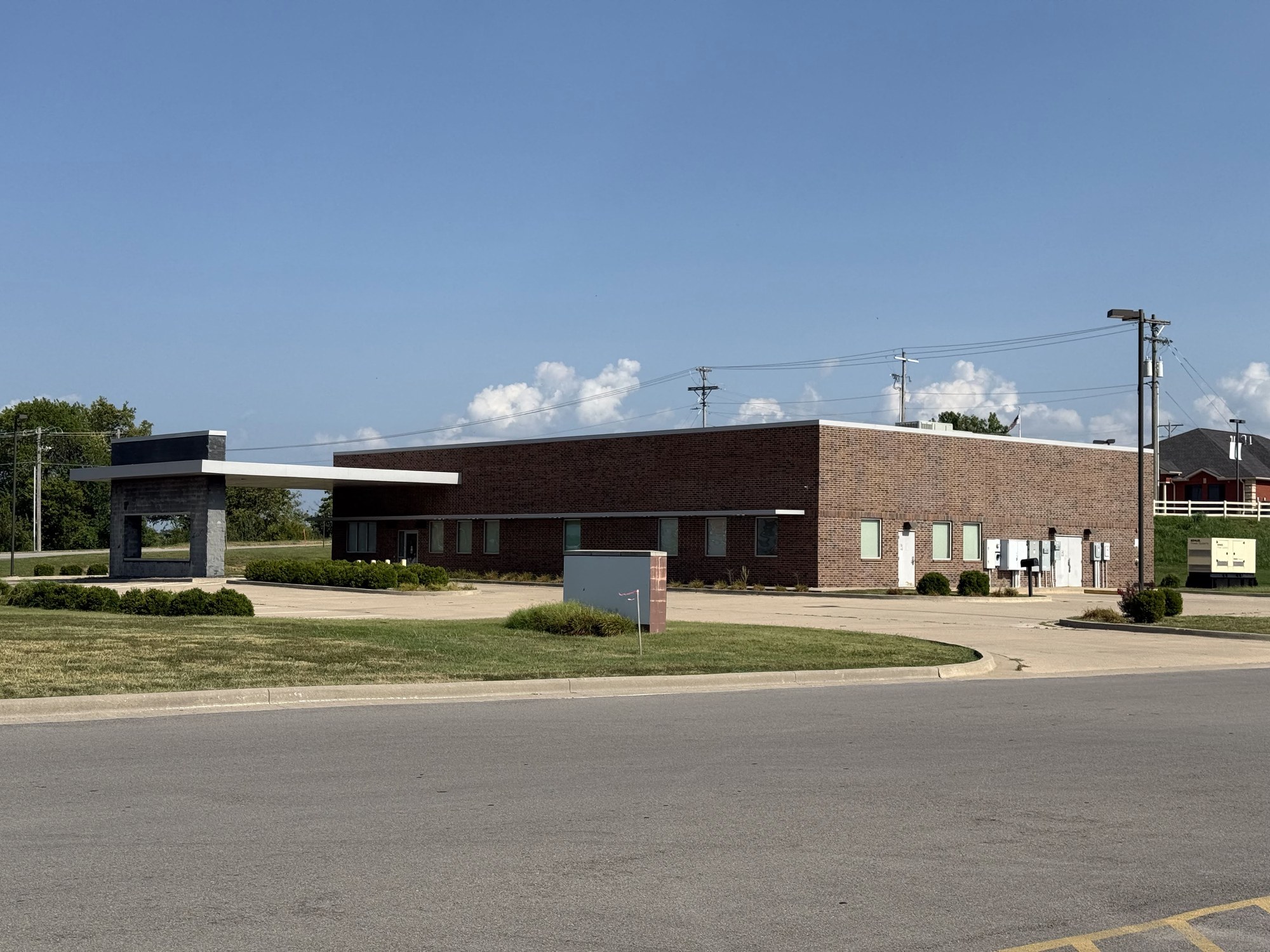
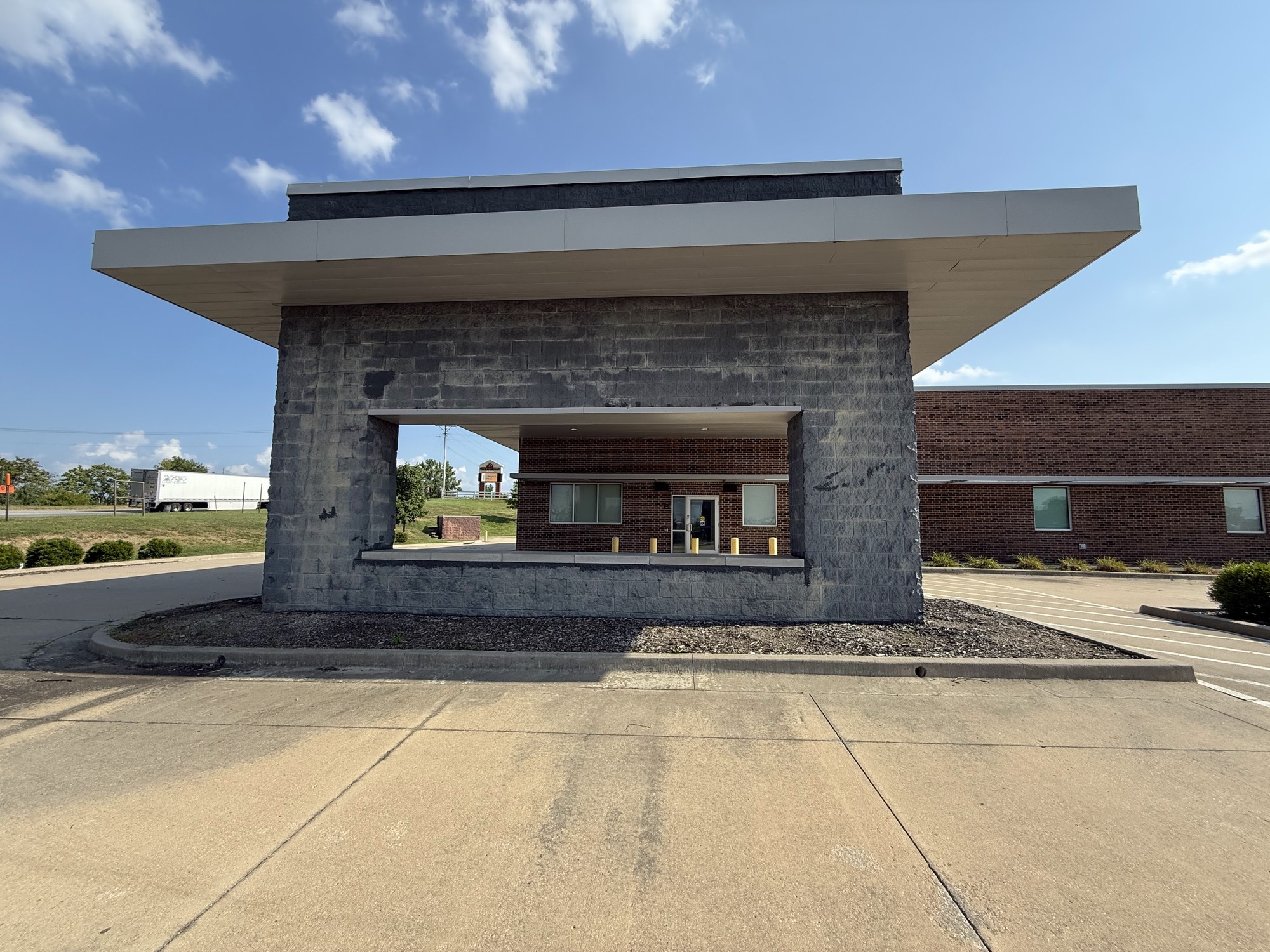
The lot was empty on the afternoon of July 25. There is no signage on the building or at the street, the blinds are drawn, and the covered patient drop-off, the giveaway that the place was built as a clinic, sits unused.
Fort Scott has been losing health care since 2018. Mercy announced that October that it would close the hospital it had run in town since 1886 (FortScott.biz, Oct. 3, 2018). The dialysis center closed the following September. Fresenius did not publicly give a reason for the closure. “I have talked to Fresenius,” then-City Manager Dave Martin said at the time. “They haven’t made money to the point of, they can’t stay open” (FortScott.biz, Aug. 30, 2019). Ascension Via Christi closed the emergency department in December 2023 (FortScott.biz, Dec. 18, 2023). Freeman has been working toward a hospital and emergency department here (FortScott.biz, Jan. 8, 2025).
The building has been empty since Fresenius Medical Care closed it on Sept. 30, 2019. As late as May 2023, its owner at the time said it was still looking for a tenant (FortScott.biz, May 2, 2023).
If the project comes together, that vacancy — and the three-times-a-week drives to Pittsburg or Chanute — would end.
Sources: Bourbon County tax and appraisal records for parcel 002-FS10762B, retrieved July 25, 2026; City of Fort Scott agenda packets and minutes for Nov. 18 and Dec. 16, 2025; city meeting recordings for Nov. 18 and Dec. 16, 2025. Notices ran in the Fort Scott Tribune on Nov. 8 and Dec. 20, 2025. Telephone interviews July 29, 2026, with Bourbon County Appraiser Matt Quick, Fort Scott Planning, Housing and Business Development Director Mary Wyatt, and Joplin Nephrology Consultants; pages from the Kansas Division of Property Valuation’s property-tax exemption guide provided by the appraiser’s office. Photos and map by FortScott.biz; map data © OpenStreetMap contributors.