
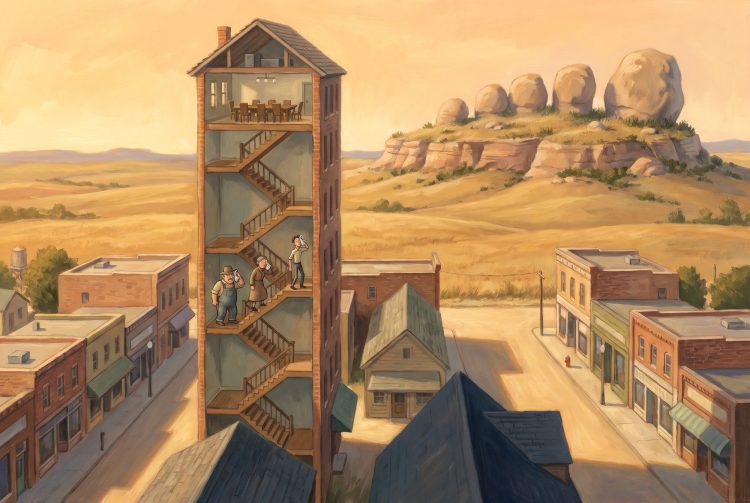
Imagine a fictional small town, Dusty Toe, KS. Dusty Toe has a small school system and that school system holds regular meetings. Originally the location of the school board meetings was a bit hard to reach. It was at the top of the tallest building in Dusty Toe, a full 15 stories high. While the floor offered a great view of the school buildings, the rolling plains beyond, and the odd toe-shaped rock formation that gave the town its name, the real reason that the board members met on the top floor was because the building had been constructed without a budget for elevators. Since the school board only meets once a month, they took the highest floor. The board members only had to climb the stairs once a month for their meeting and felt it was fairer than putting other school employees on the floor that would need to scale the heights every day.

But a few years ago things changed. Concerned that 15 stories of stairs might make it harder for members of the community to see what was going on in the meetings, the Dusty Toe school district invested some tax money in an elevator. They also replaced the uncomfortable benches that had been used for seating with soft comfortable chairs.
The changes were a hit. Many people who previously didn’t have any idea what the school board was doing now started coming. More people in the community were aware of what was going on and talking about the decisions being made. Even people who didn’t attend the meetings became more aware of the decisions and discussions that were shaping the community’s educational environment.
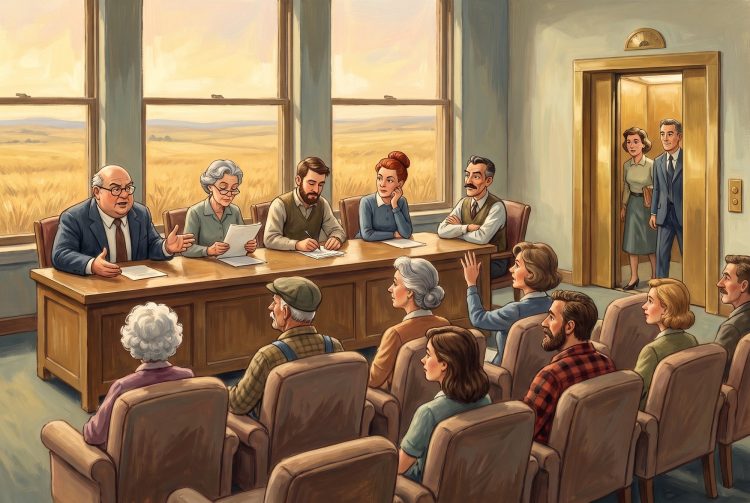
Most people in Dusty Toe thought that more people knowing what was going on was a good thing. Most, but not all. There was a small minority that felt that the more people watching the meetings, the harder it was to do the things they wanted to do. The old timers on the board talked about BECC days (Before Elevator and Comfy Chairs) when very few people came to the meetings. Unlike what they saw as the good old BECC days, it was a lot harder to get things done. With so many community members at the meetings, the board was having to follow the rules much more closely than in the past.
None of the board members from the BECC days could ever remember there being an issue with having executive sessions for anything they pleased, but now that more people were attending the meetings, they regularly got challenged about whether things were being done appropriately or not and had even been reprimanded by the state and required to attend open meetings training!
It wasn’t just executive sessions. In one particularly heated meeting, old time board member John Figglesnip called the principal a “good fer nothing two bit hack of an educationalist that couldn’t teach a passel of possums how to play dead.” This comment was the talk of the town and Figglesnip took quite a bit of heat for his highly quotable outburst. The phrase could be heard repeated and discussed in restaurants and coffee shops for several weeks.
Figglesnip blamed his new found infamy on having so many people at the meetings. “This would never have been an issue in BECC days!” he complained to some of his friends who shared his assessment of the principal’s skill in mentoring marsupials.
Eventually Figglesnip found himself telling his transparency troubles to a lawyer who offered a simple solution. “Why don’t you remove the comfy seats?”
“But don’t people have a right to attend the meetings?” asked Figglesnip.
“Sure,” said the lawyer, “but why make it easy for them.”
“But where would they sit?”
“What concern is it of yours if they have a place to sit? Let them bring their own lawn chairs. The more difficult you make it to know what is going on in the meeting, the fewer people will know enough to complain. Problem solved,” said the lawyer.
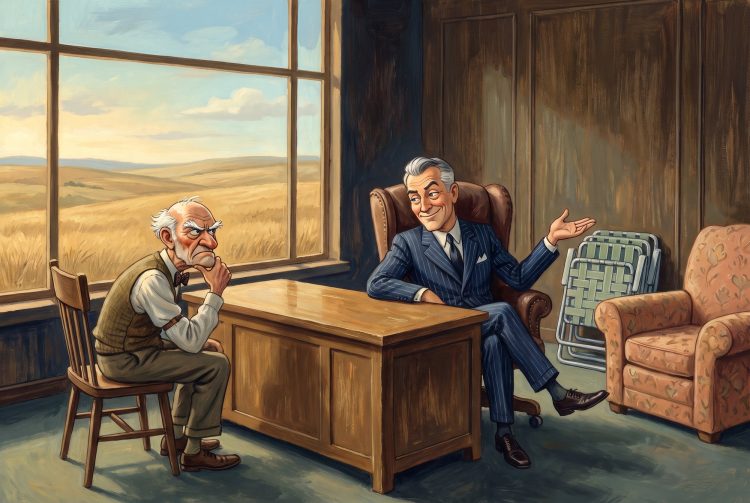
Figglesnip thought this over and then said, partially to himself and partially to the lawyer, “But don’t you think people would complain that we spent tax money to make things more transparent and now that money is just being wasted trying to make it less transparent?”
“Maybe,” said the lawyer, “but it won’t take them long to forget. Maybe someone in the city government will make a comment about an employee who can’t wrangle rabid raccoons, and everyone will forget all about the chairs,” the lawyer said with a wry smile.
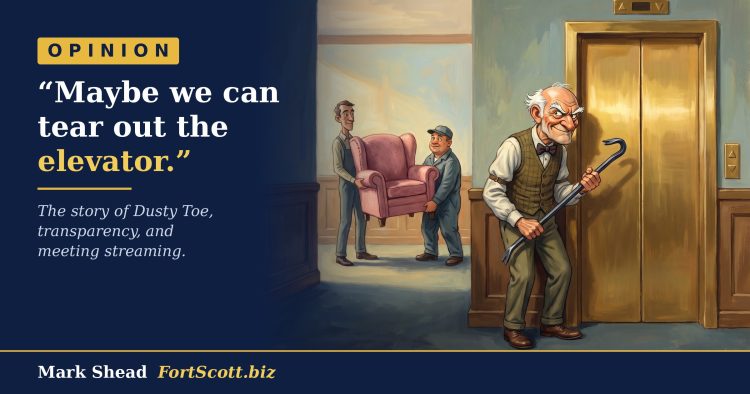
Figglesnip didn’t like the raccoon comment, not one little bit. But he was very much liking the idea of removing the chairs. Visions of meetings with virtually no one in attendance formed in his mind. “Maybe…” he said as a not fully formed thought flitted across his mind, gathered shape and bounced back as a fully formed idea. “Maybe we can tear out the elevator too!”

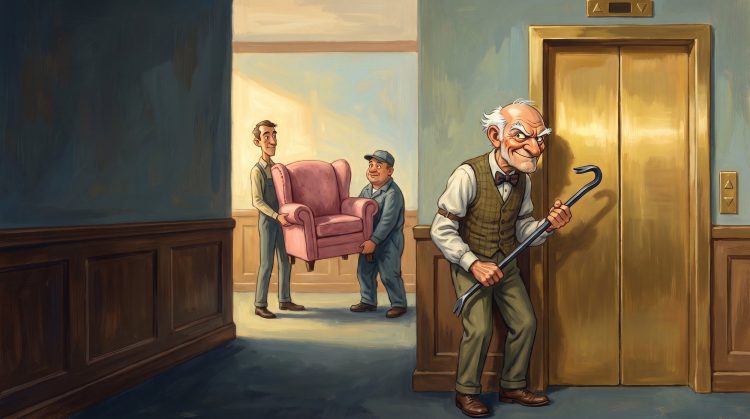
While Dusty Toe is a fictional town and there is no Mr. Figglesnip (that I know of) wanting to tear out a perfectly good elevator, the idea that the school board’s interests might be better served if some of the taxpayer-purchased technology making it easier for the community to watch the meetings were disabled was actually floated at the last USD 234 meeting. The discussion item suggested that lawyers thought the school board should stop streaming their meetings.
The idea was that if you wanted to see what was happening in the meetings, you’d have to come in person. Members of the community would be free to stream the meeting, but it would no longer be done by the board using the equipment that the taxpayers invested in to make it easier for people to watch the meeting.
Now if you take the position that more transparency is a bad thing you might notice that the higher the barrier to people being able to see what is happening in a school board meeting, the lower the chance of people knowing something you don’t want them to know. On the other hand, if you take the position that more transparency is a good thing, the easier it is for the community to see the meetings, the more the community will be able to understand what is going on.
One can probably make a case that a video of the board meetings might show something that would open the board to a lawsuit. That is definitely a legitimate concern—if the board is doing the types of things that might lead to a lawsuit. On the other hand, videos of meetings can just as easily be used to show that the board is following all the rules and defend against a lawsuit. Whether videos of the meetings will get the board into trouble or keep the board out of trouble depends on what the board is doing.
There is the story of little Tommy who was getting in trouble for pulling Suzie’s hair, and this wasn’t the first time it had happened. Tommy’s teacher says, “Now, Tommy, what did I tell you last time you did this?”
Tommy looks at his feet and says, “You told me you didn’t want to catch me pulling Suzie’s hair ever again!”
The teacher says, “That’s right I did, now…”
Tommy interrupts, looking back at the teacher with tears in his eyes and says, “I’m so sorry you caught me again!”
Tommy is confused about the actual root of the problem. Regardless of how the teacher worded her warning, getting caught pulling Suzie’s hair wasn’t the issue. The issue was pulling her hair at all.
According to polls, most police see body cameras as a way to protect themselves against false accusations. They see the recordings as the thing that will prove they are following the rules as they serve the public. A minority of police officers see the cameras as something that will get them into trouble. Which type of officers would you rather have serving your community?
In future conversations about streaming the school board meetings, you’ll probably see something similar. Board members are going to fall into the same two groups. There will be ones who think the streaming videos will show that they are doing what is right and keep them out of trouble and welcome the transparency it brings. Then there will be ones who think the videos show what they are doing wrong and will get them into trouble. That group is going to welcome moving away from the transparency we have today.
Mark Shead
Note: FortScott.biz publishes opinion pieces with a variety of perspectives. If you would like to share your opinion, please send a letter to news@fortscott.biz.