I was recently in another state visiting a county, not all that different from Bourbon, and looked at their taxes. Property taxes were double what I pay in Bourbon County for a house with a similar appraised value. As high as taxes seem locally, there are places that have grown the size of their government to where they are much higher.
When confronted with the fact that other people are paying twice as much in property taxes, you probably had one of two reactions. If you like bigger government, you might think, “Wow, think how much more our county could spend if we could double property taxes!” If you like smaller government, you probably think, “Wow, how do we keep our county from becoming like that?”
A few months before George Washington took office, Jefferson wrote, “The natural progress of things is for liberty to yield, and government to gain ground.” Whether you fall into the “bigger government is better” camp, or you are aligned with “smaller is better,” Jefferson’s quote gives you a blueprint. If you want a bigger, more powerful government, you simply have to let government take its natural course and undermine efforts by anyone who wants to prioritize liberty that would constrain government growth and spending.
On the other hand, if you want a small government, you have a much harder job. Why is it so much harder? You have to be willing to give up having control of some things that you consider good, in exchange for keeping government small.
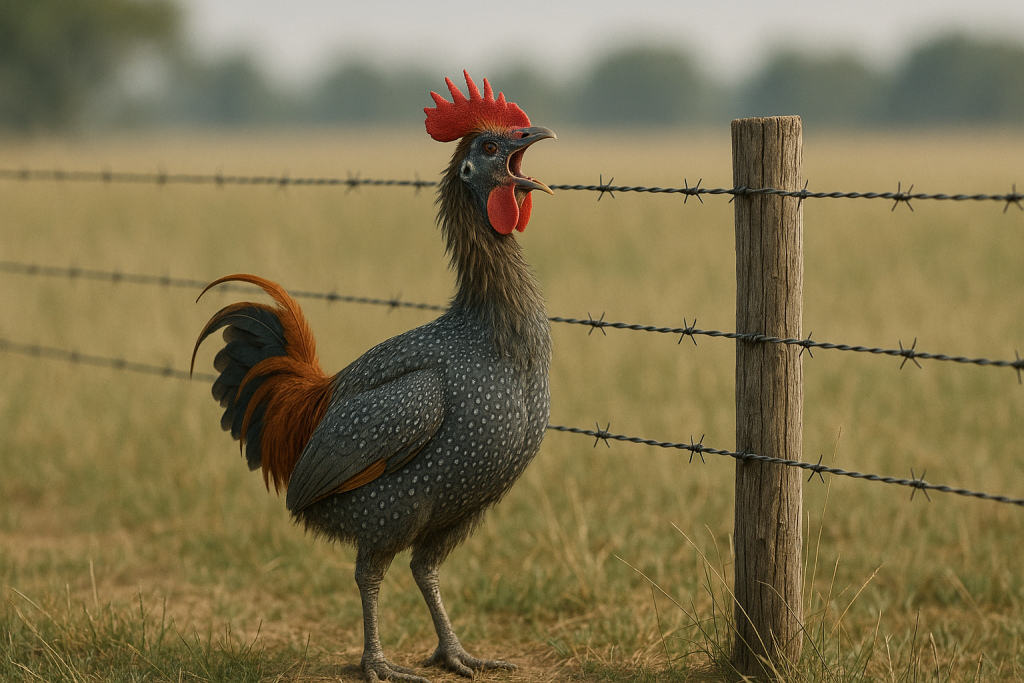
For example, if Bob built his house right next to his neighbor’s property line and the neighbor decides his life goal is crossing roosters, guineas, and emus to try to set a world record for the world’s loudest bird, Bob might be inclined to support some type of county-wide noise ordinance.

If Jane really wants a county-run indoor skydiving facility, she might be inclined to support a new sales tax so she can get other people to pay for it. If John feels that the ~$20,000 spent on his little Johnny in the public school is half as much as he’d like to see spent, he might support dramatic increases in property taxes to drive it up to $40,000—especially if John doesn’t own much property and thinks the burden will fall more on his neighbors.
While those may seem like silly examples (though I have heard people supporting the school spending one), they illustrate the fact that everyone has things they would like to see the government demand of or take from their neighbor.
This is the natural progression that Jefferson describes. Citizens that think controlling or taking money from their neighbor is more important than keeping government small will end up with a very large government and a large tax bill. Citizens that feel that their neighbor’s liberty is more important than their own personal convenience have a shot at keeping government small and their tax bill constrained.
This is one of the reasons I am opposed to Bourbon County exceeding the revenue-neutral rate. Spending has grown by 11.2% over the last two years. If we start by asking “What do we want to pay for?” the budget will always go up. If we start by saying, “Here is how much we have to spend,” then careful prioritization will make sure we retain the most important functions while constraining the growth of government.
This is also one of the reasons I’m opposed to the commissioners’ current efforts to implement zoning in Bourbon County. While I can see some ways that zoning might be beneficial, even some things that would benefit me personally, making the county government even bigger in our current situation comes with a cost, both in dollars and loss of freedom, that far outweighs any benefit.
Mark Shead
Note: FortScott.biz publishes opinion pieces with a variety of perspectives. If you would like to share your opinion, please send a letter to news@fortscott.biz.