
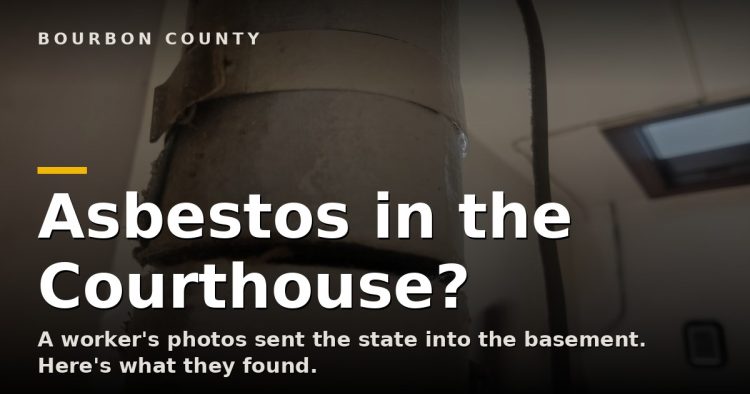
A former maintenance worker’s photos of crumbling pipe insulation prompted a Kansas environmental official to walk the building. The early word, relayed by the county’s emergency manager, was that nothing looked like an immediate hazard as long as the material stays undisturbed. No samples have been taken, and the state is still reviewing.
Questions about asbestos in the Bourbon County Courthouse, raised publicly this week by a former maintenance worker who photographed deteriorating pipe insulation in the basement, led to a visit from a representative from the Kansas Department of Health and Environment (KDHE) to the nearly century-old building. According to the county’s emergency manager, the representative said during the walkthrough that he did not see anything hazardous that had to be addressed right now, as long as the material is not disturbed. The representative is conferring with others at the agency and will get back to the county with more detail about what actions or precautions should be taken.

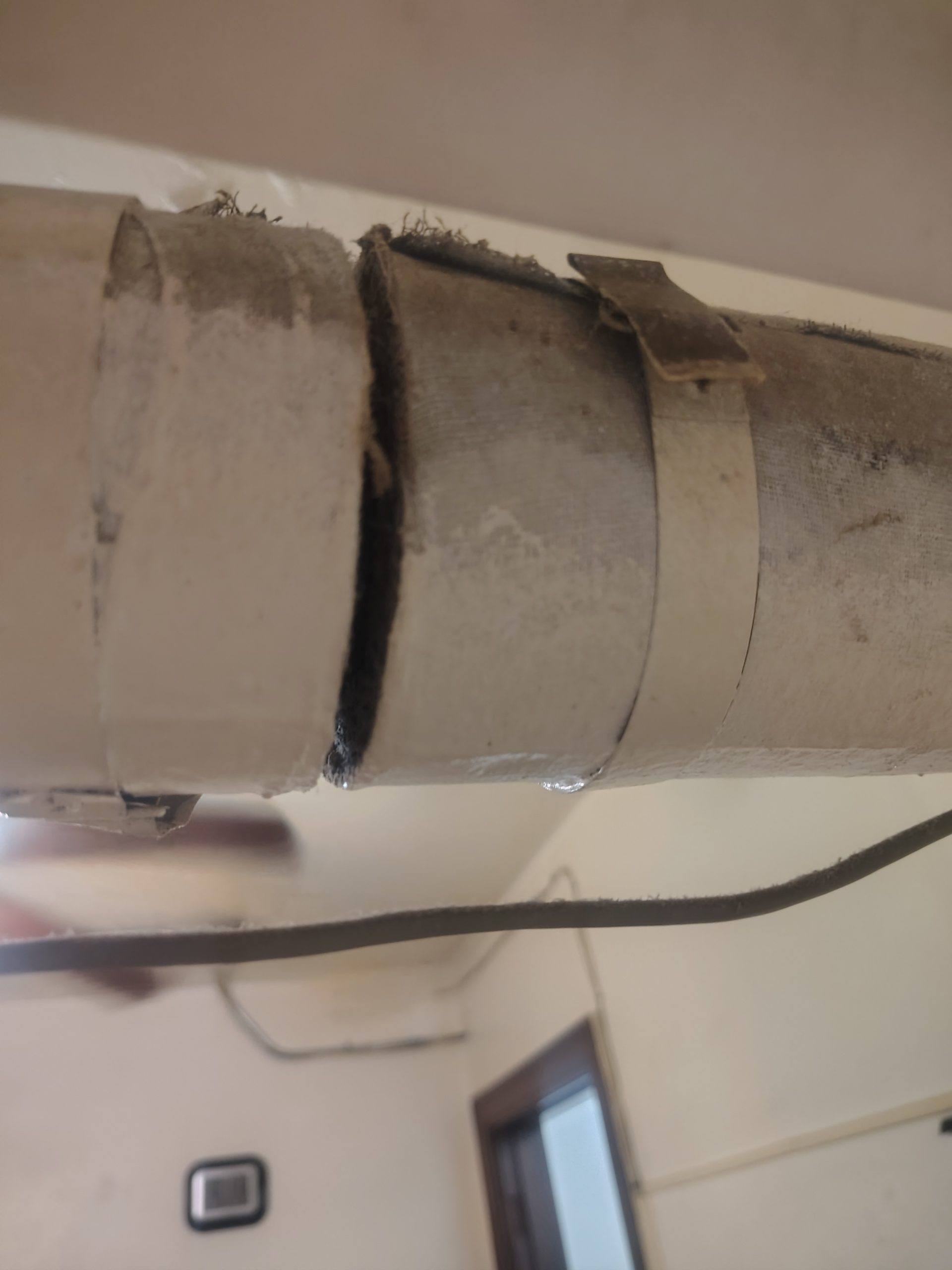
The courthouse was built in the 1930s, and asbestos is common in buildings of its era. None of the officials contacted for this story disputed that it is likely present. The question residents have been asking is a different one. Is it dangerous, and is anything being done about it?
Asbestos is generally most dangerous when it is crumbling or broken up and its fibers become airborne, where they can be breathed in. Whether the courthouse material is in fact asbestos, and whether it is releasing any fibers, has not been determined, because no samples have been collected and tested. A visual walkthrough cannot answer that on its own.
How the concern surfaced
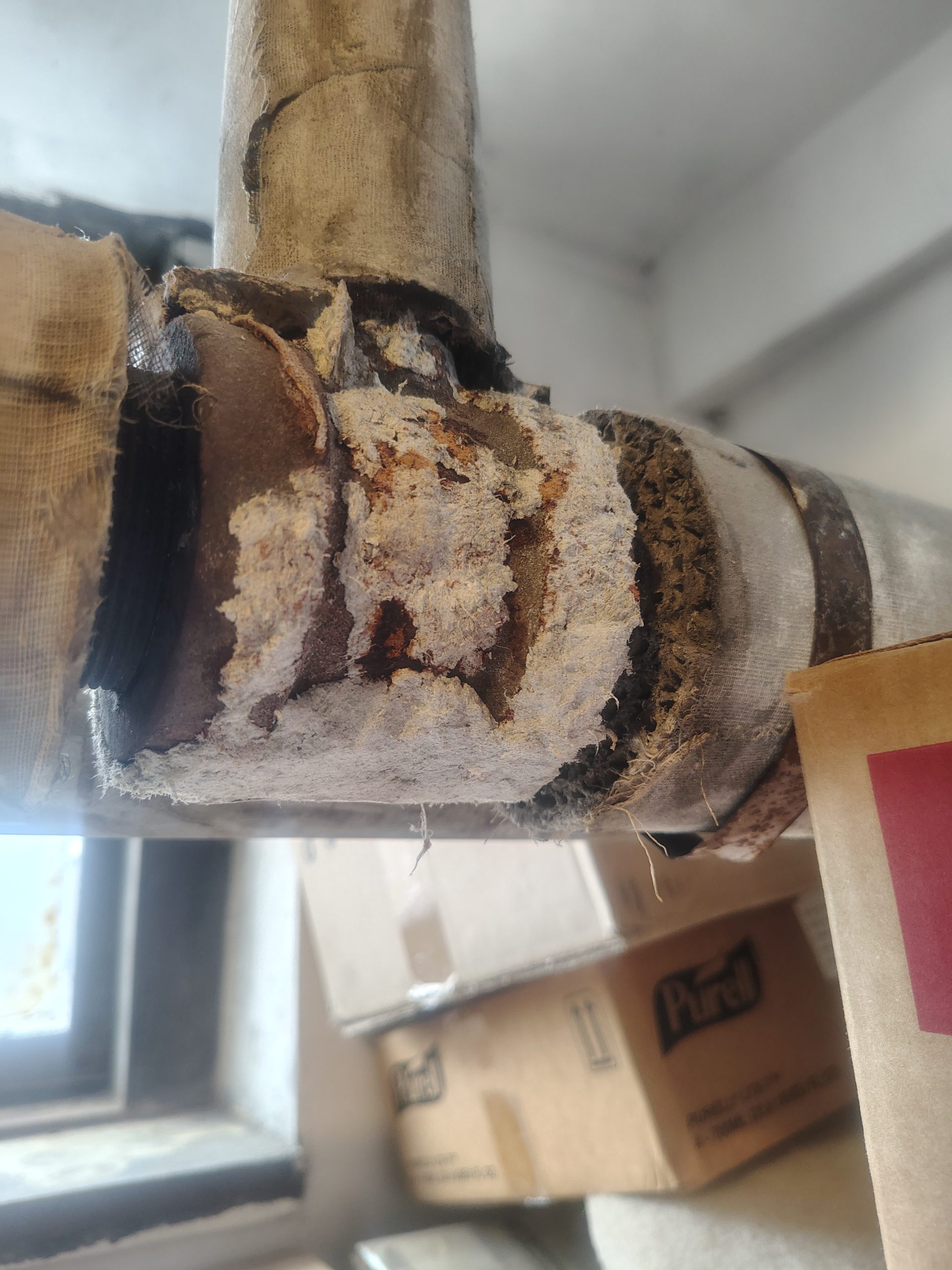
The issue was raised by William Jackson, who worked in the courthouse maintenance this spring. He said he found insulation and ceiling tiles he believed were asbestos deteriorating in the basement, with dust collecting on supplies and on workers’ desks, and that he could not find any asbestos records in the county’s maintenance files. He sent his supervisor a written request for permission to have the material tested.

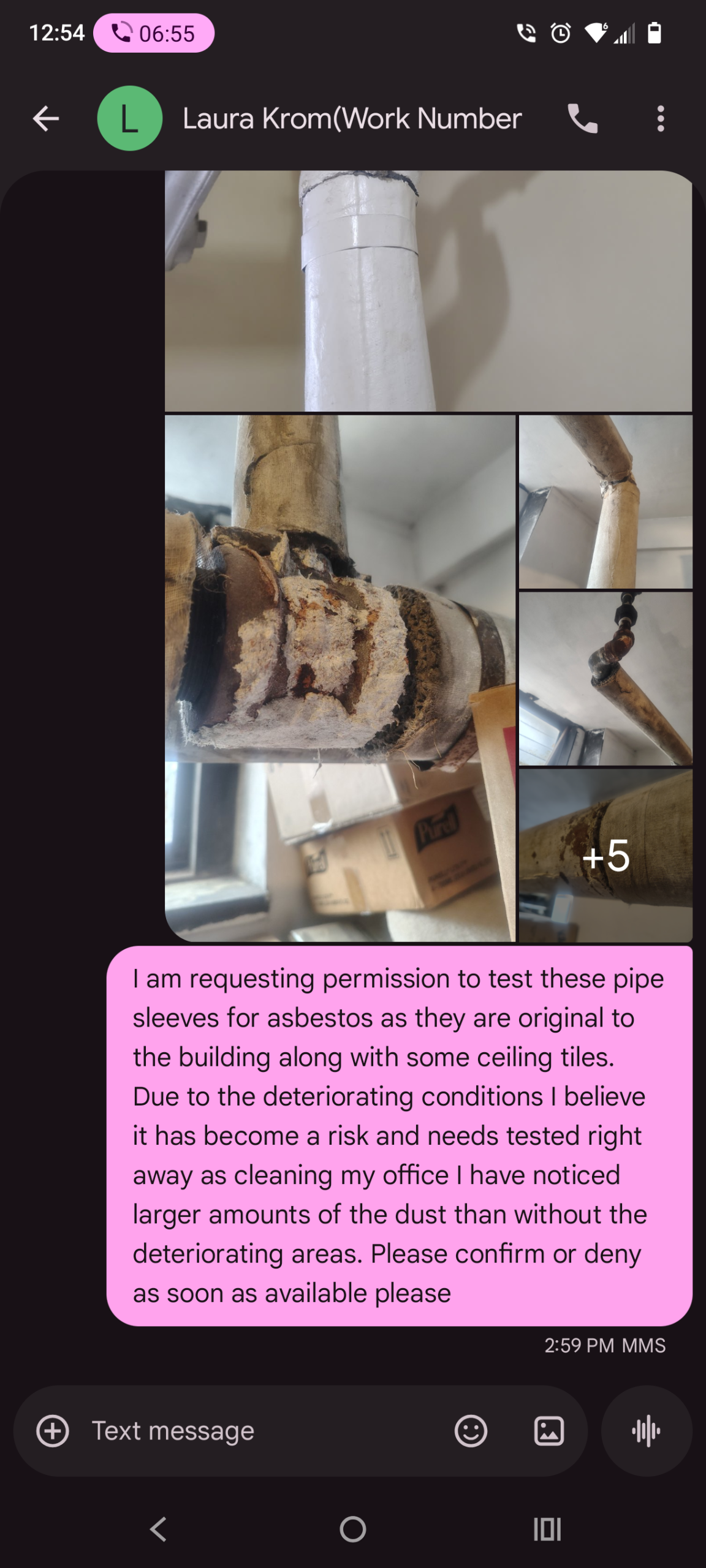
Jackson said he sent the request Friday and was fired Saturday morning. He believes the two were connected and that he was let go for raising the concern. County officials declined to comment on his departure.
What the state found
After Jackson’s photos circulated, Bourbon County Emergency Manager Lou Howard walked the building with a KDHE representative, who also had the photos that had been sent to the agency.
“He stated that at the time he looked, he did not see anything that was concerning,” Howard said. “They did not see anything that was hazardous right now that had to be addressed.”
“He did say that if there was active construction going on at the time, then it would be a concern. But nothing is being disturbed. Everything is as it should be.”
Lou Howard, Bourbon County Emergency Manager
Howard said she offered to walk the representative through the rest of the courthouse and that he said he did not need to, based on what he had already seen. She said in the past an area basement had been used as the county’s emergency operations center until other space became available. The review is not finished. The representative was passing the information and photos to a supervisor, and the county is waiting to hear what action it should take, which could include further testing.
More photos from the basement
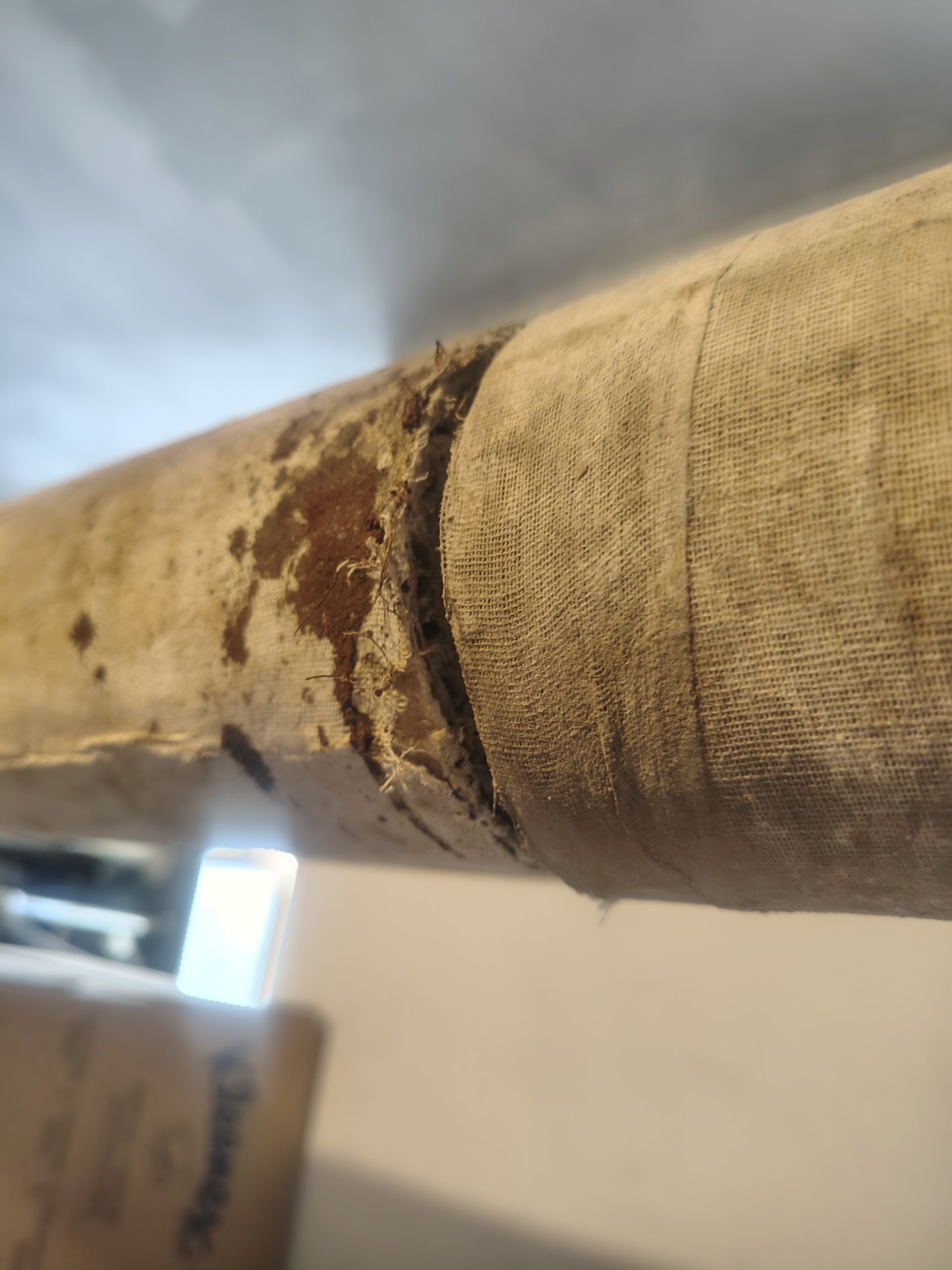
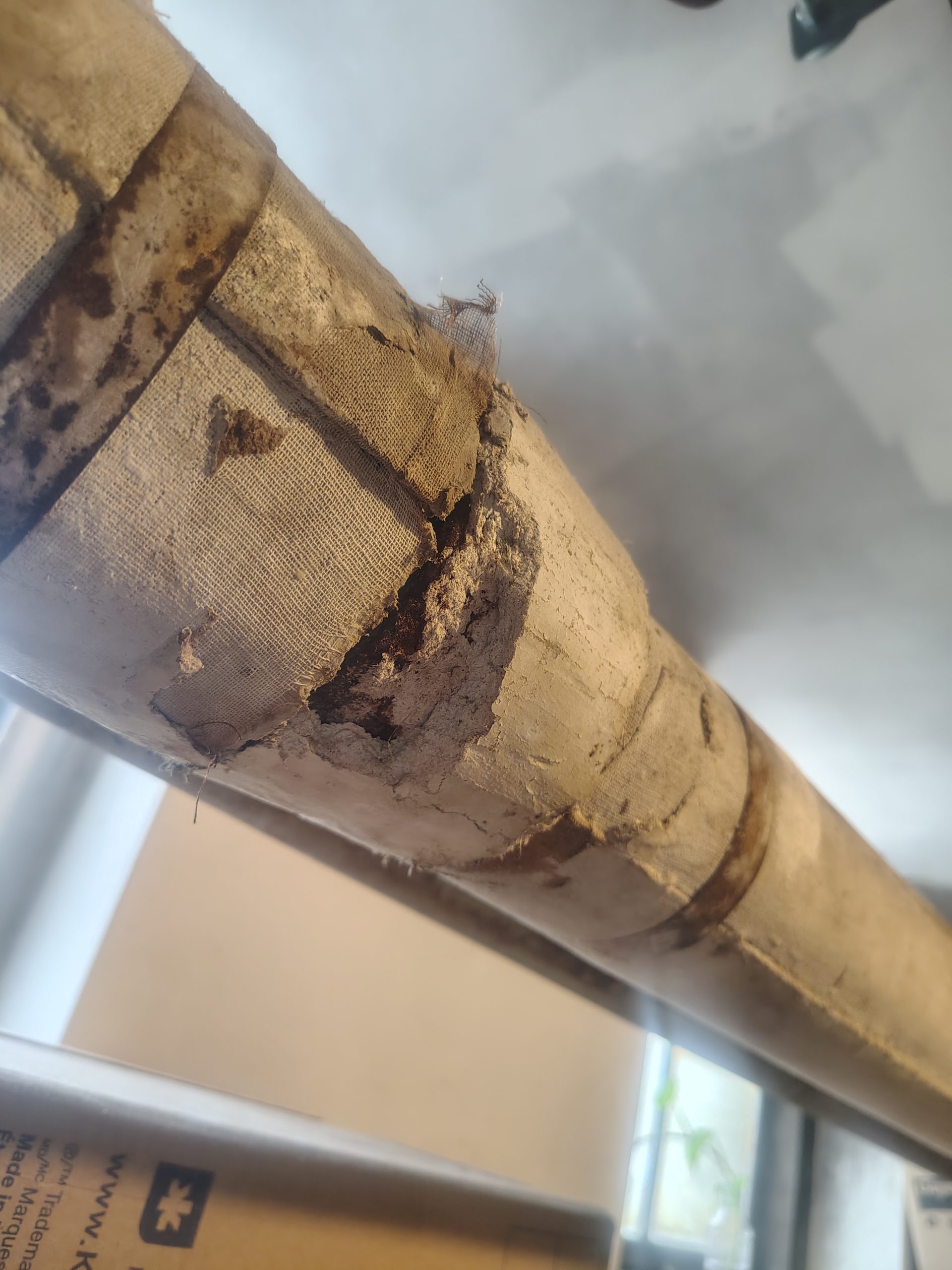
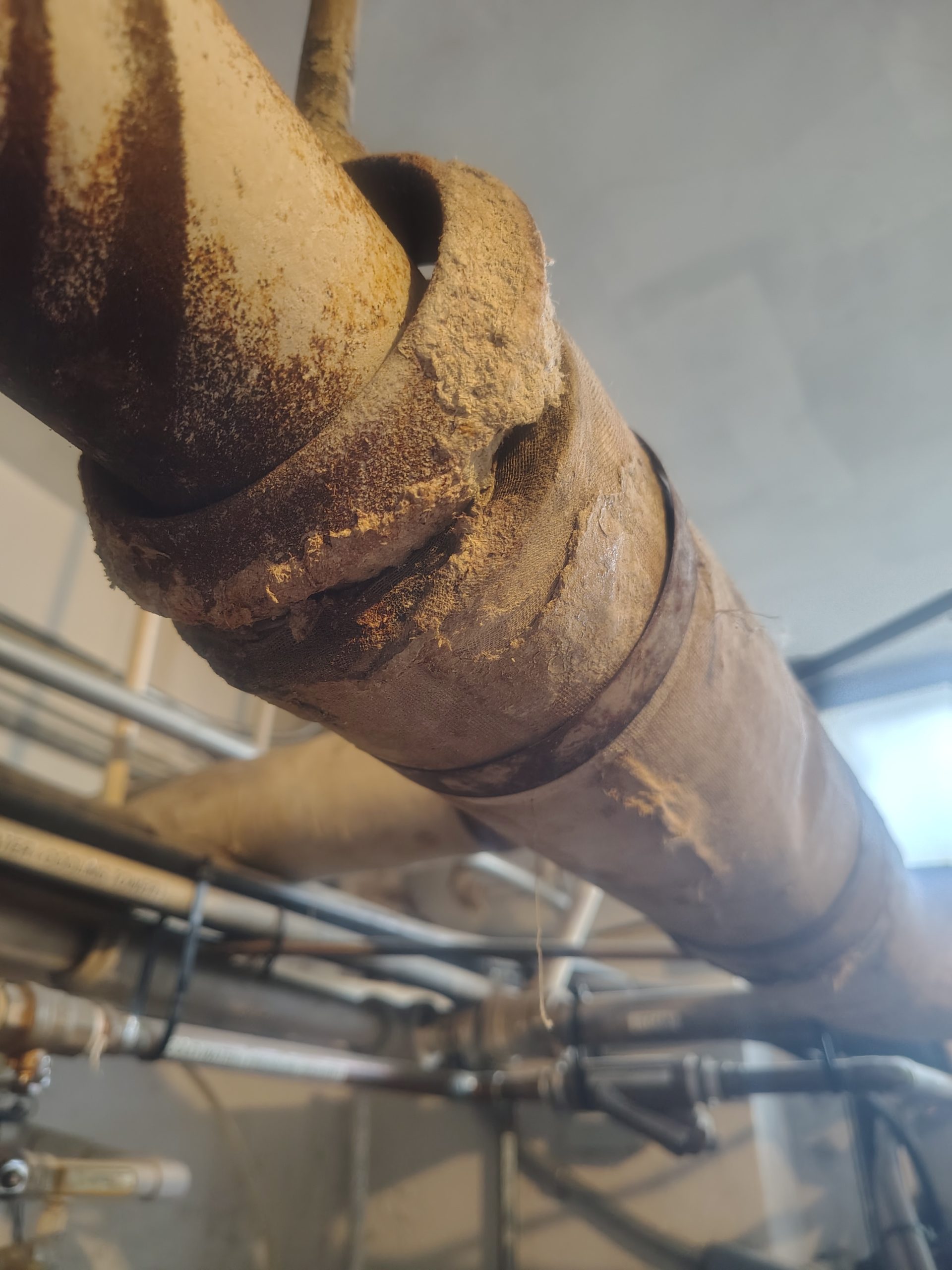
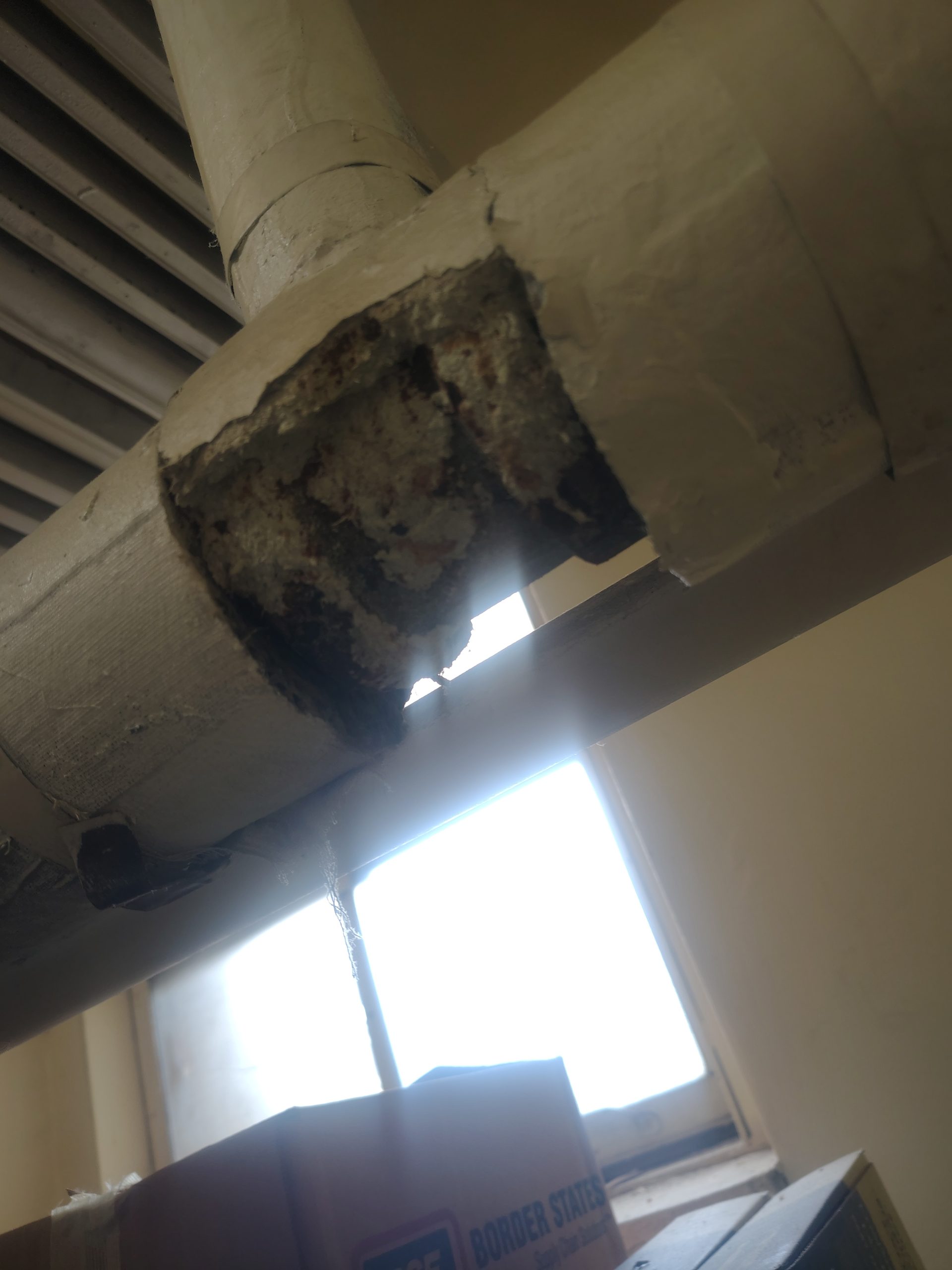
What this does and doesn’t settle
Howard’s account is the most direct word so far on the courthouse. However, it was a visual walkthrough, not laboratory sampling. No material was collected and tested, and the representative did not view the entire building. Some residents have worried that deteriorating material in the basement could send fibers into the building’s heating and cooling system and on to other floors. The walkthrough did not include air sampling or an evaluation of that system, and the state’s guidance to the county is still pending.
The caution about disturbed material is also the heart of the original complaint. Jackson’s concern was that the insulation is already breaking down. Confirming whether that is releasing any asbestos fibers would require testing.
For now, the practical takeaway for residents and courthouse employees is limited but real. The early, visual look reported by the county found nothing requiring immediate action, the chief risk would come from disturbing the material, and a final determination from the state is still to come.
FortScott.biz will update this story when KDHE provides further guidance.