
FROM THE BLEACHERS-741
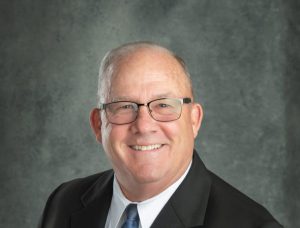
BY DR. JACK WELCH
Community Colleges: The Open Door Our Communities Cannot Afford to Close
Community colleges and K–12 public schools share a common mission, but they are not identical. Both exist to serve the public and to provide opportunities to all students, not just those who fit a narrow definition of readiness or success. Public K–12 education is fully funded and mandated to educate every child.
Community colleges, while grounded in the same spirit of access and inclusion, operate under financial constraints that limit how broadly they can serve, based largely on what the state provides.
Community colleges exist for one central purpose: to serve all students with opportunity. In that sense, they closely resemble our public K–12 schools. Public education does not select who deserves to learn; it accepts the responsibility to educate everyone, students who are accelerated, students with special education needs, and students who require additional support. Although not the same, community colleges carry that same public trust into higher education, striving to meet student needs within the realities of limited funding.
For many students, the community college is the bridge between where they are and where they hope to be. If a student never graduated from high school, community colleges provide preparation and pathways to earn a GED. If a student struggles in core disciplines such as math, reading, or writing, community colleges offer tutoring and remedial education designed to strengthen foundational skills. These services are not optional extras; they are essential tools for educating and building a capable workforce.
Yet, instead of embracing this mission, some states have chosen not to properly fund remedial education. This decision raises a fundamental question: what is the alternative? If we deny educational support to those who need it most, we are not solving a problem, we are shifting it elsewhere. When people are excluded from education, communities pay the price through higher unemployment, increased dependence on public assistance, and, ultimately, higher crime rates. Education has always been the better, more cost-effective alternative.
The comparison to K–12 education is instructive. Public schools are legally and morally obligated to educate all students, regardless of ability or circumstance. Private schools, by contrast, are not required to accept everyone. The same divide is emerging in higher education.
Four-year institutions are increasingly offering associate degrees, yet they are not structured like community colleges. Large class sizes limit meaningful teacher-student relationships, and remedial tutoring systems are often inadequate or nonexistent. Many students are taught by graduate assistants rather than senior faculty, especially in the early years.
Community colleges do it differently, and better for this population. Faculty members are highly educated and focused on teaching. They instruct freshmen and sophomores with the same care and expertise that four-year universities reserve for juniors and seniors. Smaller class sizes, accessible professors, and built-in academic support give students a real chance to succeed from the start.
Community colleges are not lowering standards; they are raising people. If we truly believe in opportunity, public safety, and economic vitality, we must fund and support the institutions that educate everyone. Closing the door to remedial education does not strengthen our system, it weakens our communities.
Thought for the Week, “When we choose education over exclusion, we invest not only in individual potential but in the strength, safety, and future of our entire community.” Jack Welch, President of Fort Scott Community College.
Jack Welch, Ed.D
President
Fort Scott Community College
254-368-7447